Fiber in Plant Based Foods
2,605 plant foods ranked by fiber per 100 g. Search a food, pick a food group or keep whole foods only.
- 2,605 plant foods with fiber data
- Source: USDA FoodData Central
- Units: g total dietary fiber per 100 g
- RDA: 25 g/day (women) · 38 g/day (men)
Top 50 of 817 whole foods (2,605 with the switch off), per 100 g unless marked.
| # | Group | ||
|---|---|---|---|
| 1 | Corn bran, crude | Grains | |
| 2 | Fungi, Cloud ears, dried | Vegetable Products | |
| 3 | Spices, cinnamon, ground | Spices and Herbs | |
| 4 | Spices, savory, ground | Spices and Herbs | |
| 5 |  Wheat bran, crude Wheat bran, crude | Grains | |
| 6 | Spices, rosemary, dried | Spices and Herbs | |
| 7 | Spices, oregano, dried | Spices and Herbs | |
| 8 | Spices, coriander seed | Spices and Herbs | |
| 9 | Spices, marjoram, dried | Spices and Herbs | |
| 10 | Spices, sage, ground | Spices and Herbs | |
| 11 | Spices, fennel seed | Spices and Herbs | |
| 12 |  Spices, caraway seed Spices, caraway seed | Spices and Herbs | |
| 13 | Spices, basil, dried | Spices and Herbs | |
| 14 | Spices, thyme, dried | Spices and Herbs | |
| 15 | Sorghum bran, white, unenriched, dry, raw | Grains | |
| 16 |  Spices, paprika Spices, paprika | Spices and Herbs | |
| 17 |  Seeds, chia seeds, dried Seeds, chia seeds, dried | Seeds | |
| 18 | Spices, cloves, ground | Spices and Herbs | |
| 19 | Parsley, freeze-dried | Vegetable Products | |
| 20 |  Spearmint, dried Spearmint, dried | Spices and Herbs | |
| 21 | Peppers, hot chile, sun-dried | Vegetable Products | |
| 22 |  Spices, cardamom Spices, cardamom | Spices and Herbs | |
| 23 |  Seeds, flaxseed Seeds, flaxseed | Seeds | |
| 24 | Spices, pepper, red or cayenne | Spices and Herbs | |
| 25 | Peppers, pasilla, dried | Vegetable Products | |
| 26 | Spices, parsley, dried | Spices and Herbs | |
| 27 |  Spices, bay leaf Spices, bay leaf | Spices and Herbs | |
| 28 | Spices, pepper, white | Spices and Herbs | |
| 29 | Chives, freeze-dried | Vegetable Products | |
| 30 | Winged beans, mature seeds, raw | Legumes | |
| 31 |  Hyacinth beans, mature seeds, raw Hyacinth beans, mature seeds, raw | Legumes | |
| 32 |  Spices, pepper, black Spices, pepper, black | Spices and Herbs | |
| 33 | Beans, french, mature seeds, raw | Legumes | |
| 34 |  Beans, yellow, mature seeds, raw Beans, yellow, mature seeds, raw | Legumes | |
| 35 |  Broadbeans (fava beans), mature seeds, raw Broadbeans (fava beans), mature seeds, raw | Legumes | |
| 36 |  Beans, small white, mature seeds, raw Beans, small white, mature seeds, raw | Legumes | |
| 37 |  Beans, cranberry (roman), mature seeds, raw Beans, cranberry (roman), mature seeds, raw | Legumes | |
| 38 | Spices, fenugreek seed | Spices and Herbs | |
| 39 | Radishes, oriental, dried | Vegetable Products | |
| 40 | Carrot, dehydrated | Vegetable Products | |
| 41 | Flaxseed, ground | Seeds | |
| 42 | Spices, turmeric, ground | Spices and Herbs | |
| 43 | Peas, green, split, mature seeds, raw | Legumes | |
| 44 | Spices, allspice, ground | Spices and Herbs | |
| 45 | Peppers, ancho, dried | Vegetable Products | |
| 46 | Peppers, sweet, red, freeze-dried | Vegetable Products | |
| 47 | Spices, dill seed | Spices and Herbs | |
| 48 | Rice bran, crude | Grains | |
| 49 | Spices, nutmeg, ground | Spices and Herbs | |
| 50 |  Beans, great northern, mature seeds, raw (Includes foods for USDA's Food Distribution Program) Beans, great northern, mature seeds, raw (Includes foods for USDA's Food Distribution Program) | Legumes |
Everyday foods rich in fiber
Whole foods with their own page, per 100 g; spices and dried herbs left out.
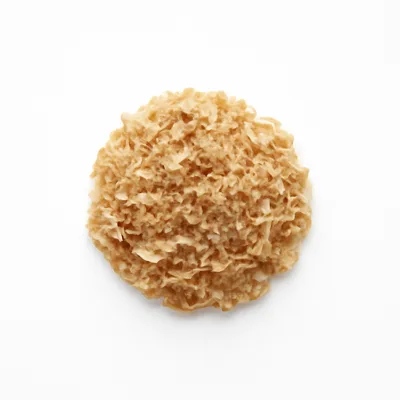 Wheat bran, crude
 Seeds, chia seeds, dried
 Seeds, flaxseed
 Hyacinth beans, mature seeds, raw
 Beans, yellow, mature seeds, raw
 Broadbeans (fava beans), mature seeds, raw
 Beans, small white, mature seeds, raw
 Beans, cranberry (roman), mature seeds, raw
Good to know
Soluble & insoluble fiber
Soluble fiber (oats, legumes, flaxseeds) dissolves in water, lowers LDL cholesterol, and stabilises blood sugar. Insoluble fiber (bran, whole grains, vegetables) promotes bowel regularity and adds bulk. Resistant starch (cooked-and-cooled legumes/grains, green bananas) feeds beneficial gut bacteria and produces short-chain fatty acids that fuel colon cells.
Questions
How much fiber do I need per day?
Dietary guidelines recommend 25 g/day for women and 38 g/day for men. Most people eating a whole-food plant based diet easily reach or exceed these targets — often 40–80 g/day. A cup of cooked lentils (~8 g), a bowl of oats (~4 g), an avocado (~10 g), and a side of broccoli (~5 g) approaches the daily target across just three foods.
What is the difference between soluble and insoluble fiber?
Soluble fiber dissolves in water to form a gel that slows digestion, stabilises blood sugar, and reduces LDL cholesterol. Top plant sources include oats (beta-glucan), barley, flaxseeds, psyllium, apples, and legumes. Insoluble fiber adds bulk and speeds transit through the colon, supporting bowel regularity. Whole grains, bran, and vegetables provide it abundantly. Most whole plant foods contain a mix of both types.
What is resistant starch and which plant foods have it?
Resistant starch passes through the small intestine undigested and acts as a prebiotic in the colon. Best sources include slightly underripe green bananas, cooked-and-cooled potatoes or rice, oats, and legumes. Cooling cooked starchy plant foods overnight significantly increases resistant starch content — even after reheating — making meal prep a useful strategy for gut health.
Does cooking affect fiber content in plant foods?
Cooking softens fiber structures but preserves total fiber content well. Boiling and draining can leach some soluble fiber into cooking liquid, so using legume cooking liquid in soups and stews is beneficial. Whole intact grains always retain more fiber than their processed or ground counterparts — whole oats have roughly double the fiber of oat flour.
Related tools
Recipes with the most fiber
-
 Ukrainian Raw Vegan Borscht 2 h 30 min · 434 kcal per serving Whole foodOil freeGluten freeTree nut free+4 more
 -
 Lentils with rice and plantains 509 kcal per serving SOS freeWhole foodLow fatGluten free+4 more
 -
 Cold Almond Soup 10 min · 201 kcal per serving SOS freeWhole foodQuickGluten free+3 more
 -
 Italy Pasta with napoli style tomato sauce 543 kcal per serving Low fatOil freeTree nut freeSoy free+3 more