
![Potassium on a Plant-Based Diet: The Heart-Protective Nutrient You’re Already Getting [2026]](https://makeitplantbased.com/images/articles/potassium-plant-based-diet/potassium-plant-based-diet-featured.webp)
When people transition to a plant-based diet, they worry about the big three: protein, B12, and iron. But here’s what rarely gets discussed—and what researchers are increasingly alarmed about: 98% of Americans are potassium-deficient, yet plant-based eaters are naturally hitting levels that rival ancestral populations. While the rest of the country struggles with cardiovascular disease, hypertension, and stroke risk, WFPB dieters are quietly protecting their hearts through a nutrient they’re probably already getting in abundance.
The evidence is undeniable: adequate potassium intake reduces systolic blood pressure by 8.0 mmHg and diastolic by 4.1 mmHg—and could prevent 150,000 strokes annually in the U.S. alone. For plant-based eaters, it’s not a deficiency concern. It’s a competitive advantage.
Table of Contents
What Is Potassium? Understanding the Electrolyte That Powers Your Body
Potassium is a mineral and electrolyte—one of the key charged particles your body uses to conduct electrical signals. Without it, your heart couldn’t beat, your muscles couldn’t contract, and your nerves couldn’t fire. At the cellular level, potassium lives mostly inside your cells (about 98% of body potassium), while sodium lives outside, creating the electrical potential that drives muscle contraction and neurotransmitter release.
The Sodium-Potassium Pump: Your Cells’ Energy Engine
One of the most critical mechanisms in human physiology is the sodium-potassium pump (also called the Na-K-ATPase pump). This pump actively transports sodium out of cells and potassium into cells, maintaining the electrical gradient that all cellular function depends on. It uses significant energy—about 20-30% of your resting metabolic rate—to maintain this gradient. Without adequate potassium, your cells cannot maintain proper electrolyte balance, and cellular dysfunction cascades throughout your body.
Nerve Transmission and Muscle Contraction
Potassium’s electrical properties make it essential for nerve impulse transmission. When a nerve fires, potassium moves out of the nerve cell, and sodium moves in, creating an action potential that travels down the nerve fiber. This mechanism is responsible for every conscious thought, every muscle contraction, and every sensation you experience. In muscles specifically, potassium-sodium imbalance causes weakness, cramping, and irregular contractions. This is why athletes and people with intense physical demands need particular attention to electrolyte balance—the daily demands on the sodium-potassium gradient are enormous.
Daily Requirements and RDA
The Recommended Dietary Allowance (RDA) for potassium is 2,600 mg daily for women and 3,400 mg daily for men. These numbers come from research on intake levels that prevent deficiency diseases and support normal cellular function. However, many plant-based nutrition researchers argue that 3,400-4,700 mg is optimal for cardiovascular disease prevention. Ancestral populations consumed 10,000 mg or more daily, suggesting human physiology may be adapted to higher intakes. Most plant-based eaters easily exceed the RDA without special effort—one cup of white beans alone provides 38% of the daily requirement.
Blood Vessel Function and Vascular Health
Beyond basic electrolyte function, potassium directly affects blood vessel elasticity and tone. Higher potassium intake relaxes blood vessel walls (vasodilation), reducing the pressure needed to pump blood through your arteries. It also helps your kidneys excrete excess sodium, which compounds its blood-pressure-lowering effect. The mechanism involves potassium’s effects on endothelial nitric oxide production—the signaling molecule that causes blood vessels to relax. For heart health specifically, this is where potassium becomes absolutely critical.
The Banana Myth: Why Bananas Aren’t Actually the Potassium Goldmine You’ve Been Told
A medium banana contains approximately 422 mg of potassium. That’s respectable. But here’s what marketing has successfully hidden from most people: bananas aren’t even close to the best plant sources of potassium. The “banana equals potassium” narrative is one of the most persistent marketing successes in nutrition history—but the science tells a very different story.
The Real Comparison Data
To understand the banana myth, you need to see the actual numbers side-by-side. Consider these comparisons:
- White beans (1 cooked cup): 1,004 mg — 2.4x more potassium than a banana
- Swiss chard (1 cooked cup): 961 mg — 2.3x more potassium than a banana
- Sweet potato (1 medium, baked): 950 mg — 2.25x more potassium than a banana
- Black beans (1 cooked cup): 900 mg — 2.1x more potassium than a banana
- Spinach (1 cooked cup): 888 mg — 2.1x more potassium than a banana
- Avocado (1 whole): 485 mg — 1.15x more potassium than a banana
- Coconut water (1 cup): 600 mg — 1.4x more potassium than a banana
Even foods you might not associate with potassium powerhouses outpace bananas. A single cup of cooked white beans delivers more than twice the potassium of a banana. A baked sweet potato contains 2.25 times more. Yet the phrase “eat a banana for potassium” has become cultural common sense.
Why Did Bananas Become the “Potassium Food”?
The banana-potassium association didn’t emerge from nutrition science. It emerged from marketing infrastructure. In the 1980s, when concerns about sodium and blood pressure were rising, banana companies invested heavily in advertising bananas as the natural electrolyte food. The narrative was simple, memorable, and easy to brand. A banana is portable, shelf-stable, and visually appealing—perfect for commercial marketing. Legumes and leafy greens lack the same marketing appeal. They’re less photogenic, require more preparation, and no global industry was funding their promotion.
The scientific reality is that bananas contain a respectable amount of potassium for a fruit, but they’re mediocre as a potassium source compared to staple plant foods. A plant-based eater eating beans, greens, and potatoes gets 5-10 times more potassium per meal from their base diet than from any banana-focused approach.
For Plant-Based Eaters: The Real Winners
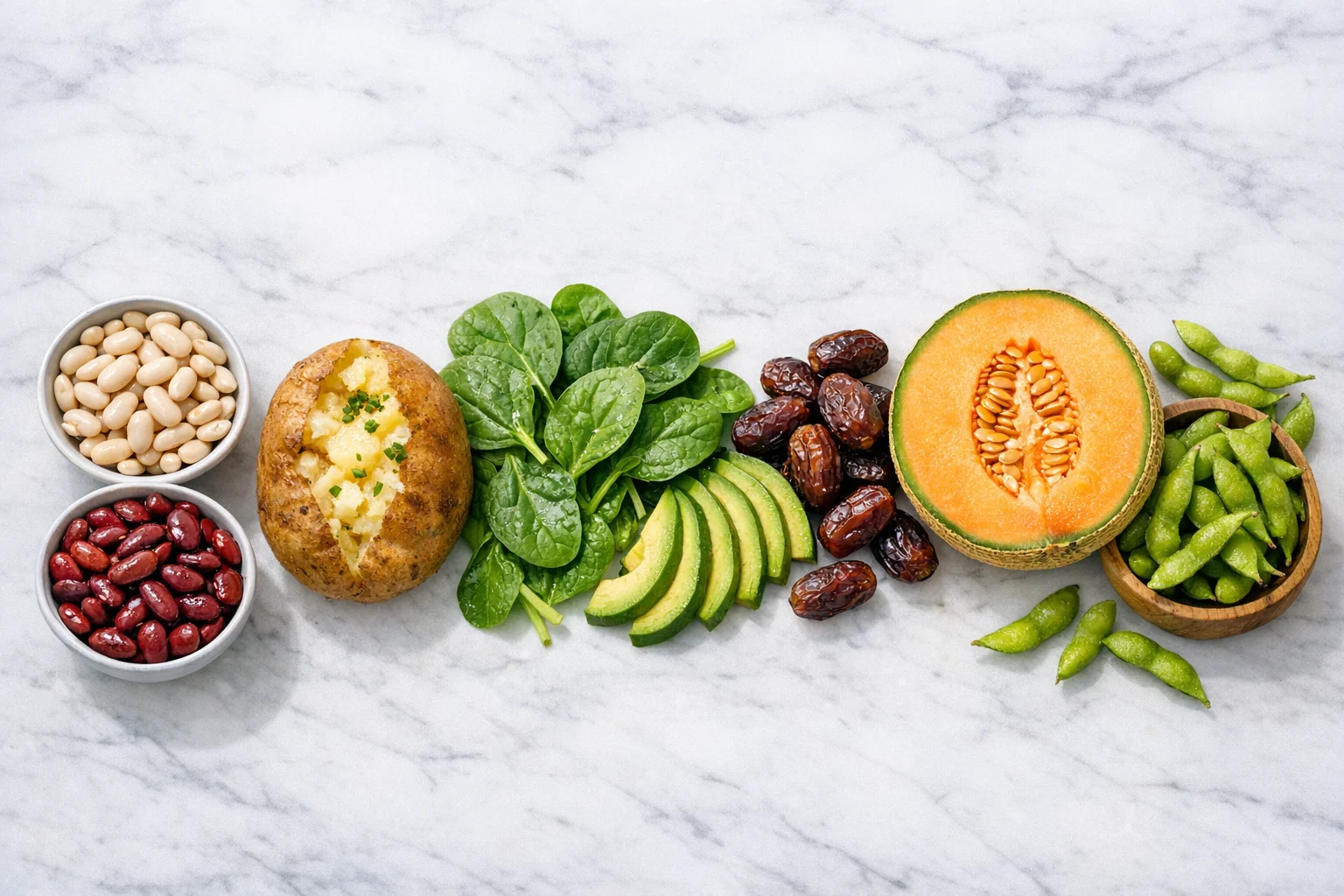
The actual heroes of plant-based potassium are legumes, leafy greens, and starchy vegetables—which are the backbone of a WFPB diet. You’re already winning the potassium game without needing special supplements or worrying about bananas. One serving of beans, one serving of greens, and one starchy vegetable daily puts you well above the RDA. You don’t need to think about bananas at all.
Research & Statistics: The Numbers Behind Potassium Deficiency and Disease Prevention
Let’s look at what the data actually shows about potassium, deficiency, and health outcomes.
The American Potassium Crisis
According to the National Health and Nutrition Examination Survey (NHANES), 98% of American adults don’t meet the Recommended Dietary Allowance (RDA) for potassium. The RDA is 2,600 mg for women and 3,400 mg for men—goals that sound reasonable until you realize the average American is only consuming around 2,500 mg daily. That’s a population-wide shortfall of 900-1,400 mg per day for most people.
This deficiency didn’t happen by accident. The Standard American Diet is engineered around processed foods, which are typically high in sodium and stripped of potassium. Refining grains removes potassium-rich bran. Processing vegetables removes fiber and minerals.
Blood Pressure: The Most Dramatic Benefit
The DASH (Dietary Approaches to Stop Hypertension) diet, which emphasizes potassium-rich plant foods, has been extensively studied. Results show that individuals who increase potassium intake to adequate levels experience:
- 8.0 mmHg reduction in systolic blood pressure (the top number)
- 4.1 mmHg reduction in diastolic blood pressure (the bottom number)
These reductions rival first-line blood pressure medications. For someone with Stage 1 hypertension (130-139 systolic), adequate potassium intake alone could bring them below the hypertension threshold. And because potassium works through a different mechanism than drugs, it can stack with medication when both are needed.
Stroke Prevention: The Public Health Impact
The Centers for Disease Control estimates that approximately 150,000 strokes could be prevented annually in the U.S. if the population achieved adequate potassium intake. That’s a substantial public health impact. Strokes happen when blood vessels in the brain become blocked (ischemic stroke) or rupture (hemorrhagic stroke). Both are directly influenced by blood pressure, arterial elasticity, and electrolyte balance—all of which are improved by adequate potassium.
Sodium-Potassium Ratio: The Ratio Matters More Than Either Nutrient Alone
Here’s something important: it’s not just about potassium in isolation. The ratio of sodium to potassium matters more than either nutrient alone. Ancestral diets contained roughly 10:1 potassium-to-sodium ratios (high potassium, minimal sodium). Modern processed food diets are inverted: high sodium, low potassium. Plant-based eaters who naturally avoid processed foods restore this ratio without any special effort.
The Ancestral Perspective
Our ancestral human diets contained approximately 10,000 mg of potassium daily, obtained primarily from plant foods, roots, and tubers. Over the past 100 years, this has plummeted to 2,500 mg. Your cardiovascular system essentially evolved expecting 10,000 mg. Plant-based eaters, particularly those eating whole foods, are actually restoring the potassium intake our bodies were designed for.
What Plant-Based Doctors Recommend: Evidence-Based Guidance from 7 Leading Experts
When it comes to potassium on a plant-based diet, you’re not operating in a knowledge vacuum. Some of the most accomplished plant-based physicians in the world have built their clinical practices and research around potassium-rich plant foods. Here’s what they recommend.
Caldwell Esselstyn: Leafy Greens as Medicine
Dr. Caldwell Esselstyn, former head of cardiovascular disease prevention at Cleveland Clinic, proved that plant-based diets can reverse advanced coronary artery disease. His landmark research showed 91% of patients achieved arrest or reversal of atherosclerosis. His clinical protocol recommends leafy greens six times daily—not arbitrarily, but because they’re potassium powerhouses that directly protect arterial endothelial function and trigger vascular healing. The potassium, combined with antioxidants and fiber, creates conditions for actual reversal of arterial damage rather than merely slowing progression. (NutritionFacts.org — Potassium) (PCRM — High Blood Pressure) (DrFuhrman.com — Osteoporosis and Osteopenia) (DrMcDougall.com — The Power of Potatoes) (Ornish Lifestyle Medicine — Sodium and Potassium Balance)
Dean Ornish: Heart Disease Reversal Through Potassium-Rich Foods
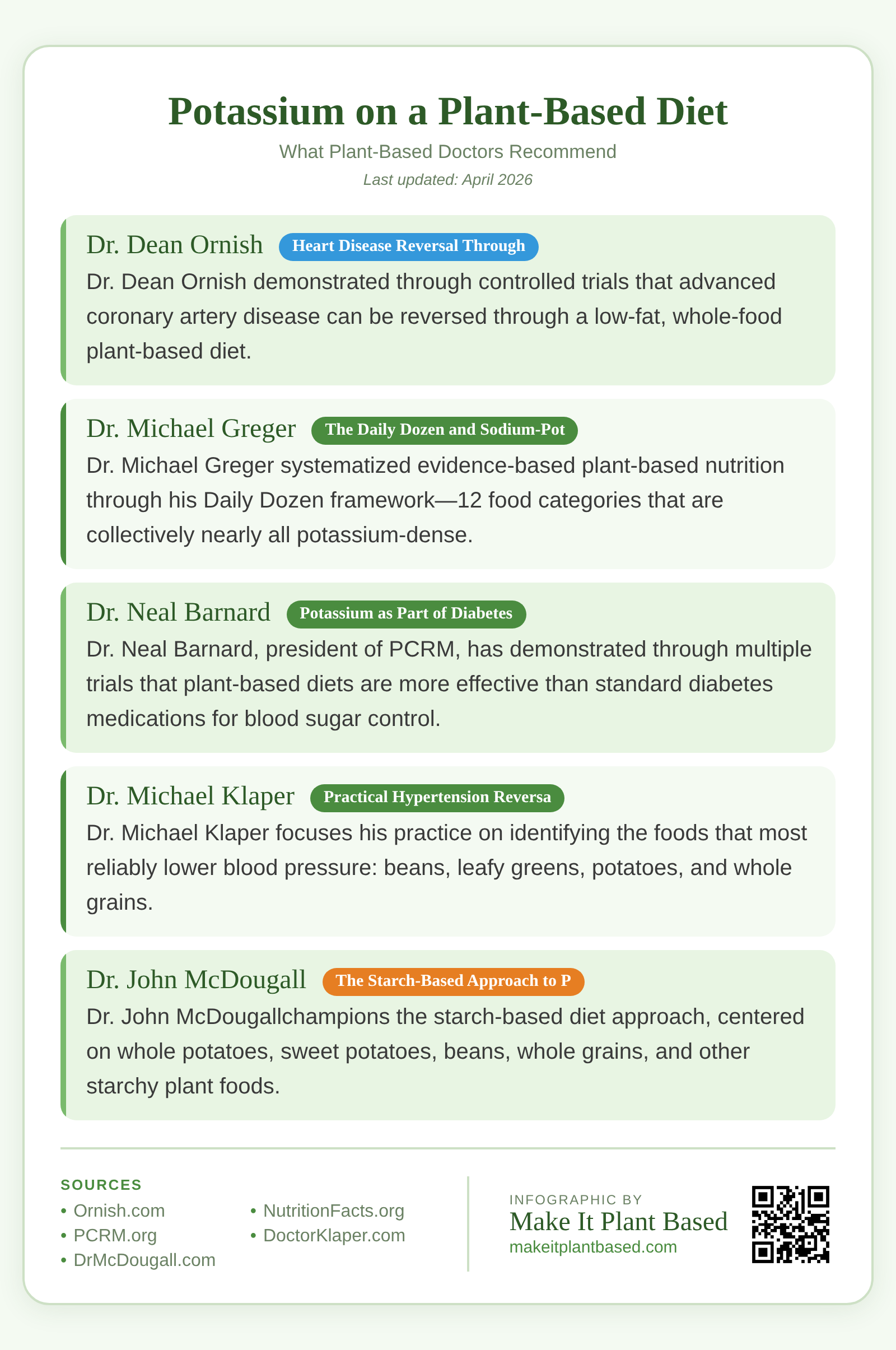
Dr. Dean Ornish demonstrated through controlled trials that advanced coronary artery disease can be reversed through a low-fat, whole-food plant-based diet. His patients achieved measurable regression of arterial blockages. The mechanism partially depends on potassium’s role in restoring vascular function and electrolyte balance. Plant-based foods create the precise electrolyte environment—high potassium, adequate sodium—necessary for vascular healing and actual reversal of atherosclerotic lesions that were previously considered permanent.
Michael Greger: The Daily Dozen and Sodium-Potassium Ratio Optimization
Dr. Michael Greger systematized evidence-based plant-based nutrition through his Daily Dozen framework—12 food categories that are collectively nearly all potassium-dense. The system includes legumes, leafy greens, whole grains, and starchy vegetables. Following the Daily Dozen automatically optimizes the sodium-potassium ratio without requiring manual tracking or calculations. Greger’s data-driven approach shows that people who complete all 12 categories daily consistently hit 4,000-5,000 mg potassium while keeping sodium low, creating the electrolyte profile associated with lowest disease risk.
Neal Barnard: Potassium as Part of Diabetes and Hypertension Management
Dr. Neal Barnard, president of PCRM, has demonstrated through multiple trials that plant-based diets are more effective than standard diabetes medications for blood sugar control. Adequate potassium intake is part of this mechanism—potassium improves insulin sensitivity, reduces insulin resistance, and prevents the secondary hypertension that accompanies diabetes. His research shows plant-based eaters achieve better A1C levels and blood pressure control than patients on medication, partly because dietary potassium addresses underlying metabolic dysfunction rather than just managing symptoms.
Joel Fuhrman: The Nutritarian Approach to Potassium Maximization
Dr. Joel Fuhrman developed the “Nutritarian” framework that prioritizes nutrient density per calorie—eating foods with maximum micronutrient content for the calories consumed. His GBOMBS acronym (Greens, Beans, Onions, Mushrooms, Berries, Seeds) serves as a practical guide toward foods highest in potassium density and overall nutrient concentration. The framework specifically selects for potassium alongside other cardioprotective compounds like polyphenols and fiber. Fuhrman’s clinical experience shows that patients following Nutritarian principles achieve optimal potassium intake while naturally reducing disease risk factors.
Michael Klaper: Practical Hypertension Reversal Through Plant Foods
Dr. Michael Klaper focuses his practice on identifying the foods that most reliably lower blood pressure: beans, leafy greens, potatoes, and whole grains. His clinical experience demonstrates that hypertension reversal on a potassium-rich plant-based diet is fast and reliable—often achieving normal blood pressure within weeks rather than months. Klaper’s approach is notably practical: he doesn’t require patients to track potassium numbers or follow complex protocols. Simple dietary changes—adding beans, removing processed foods, eating whole starch-based meals—consistently reverse hypertension through mechanisms driven partly by restored potassium status.
John McDougall: The Starch-Based Approach to Potassium Adequacy
Dr. John McDougall champions the starch-based diet approach, centered on whole potatoes, sweet potatoes, beans, whole grains, and other starchy plant foods. His decades of clinical data show that eating whole starchy foods rather than refined versions automatically provides adequate potassium alongside fiber and resistant starch. McDougall’s framework is notable for simplicity: there’s no need to count potassium milligrams. Instead, people simply eat meals centered on potatoes or whole grains with beans, naturally achieving 4,000+ mg daily potassium while supporting weight management and disease reversal.
The Heart Health Connection: How Potassium Prevents Disease and Reverses Damage
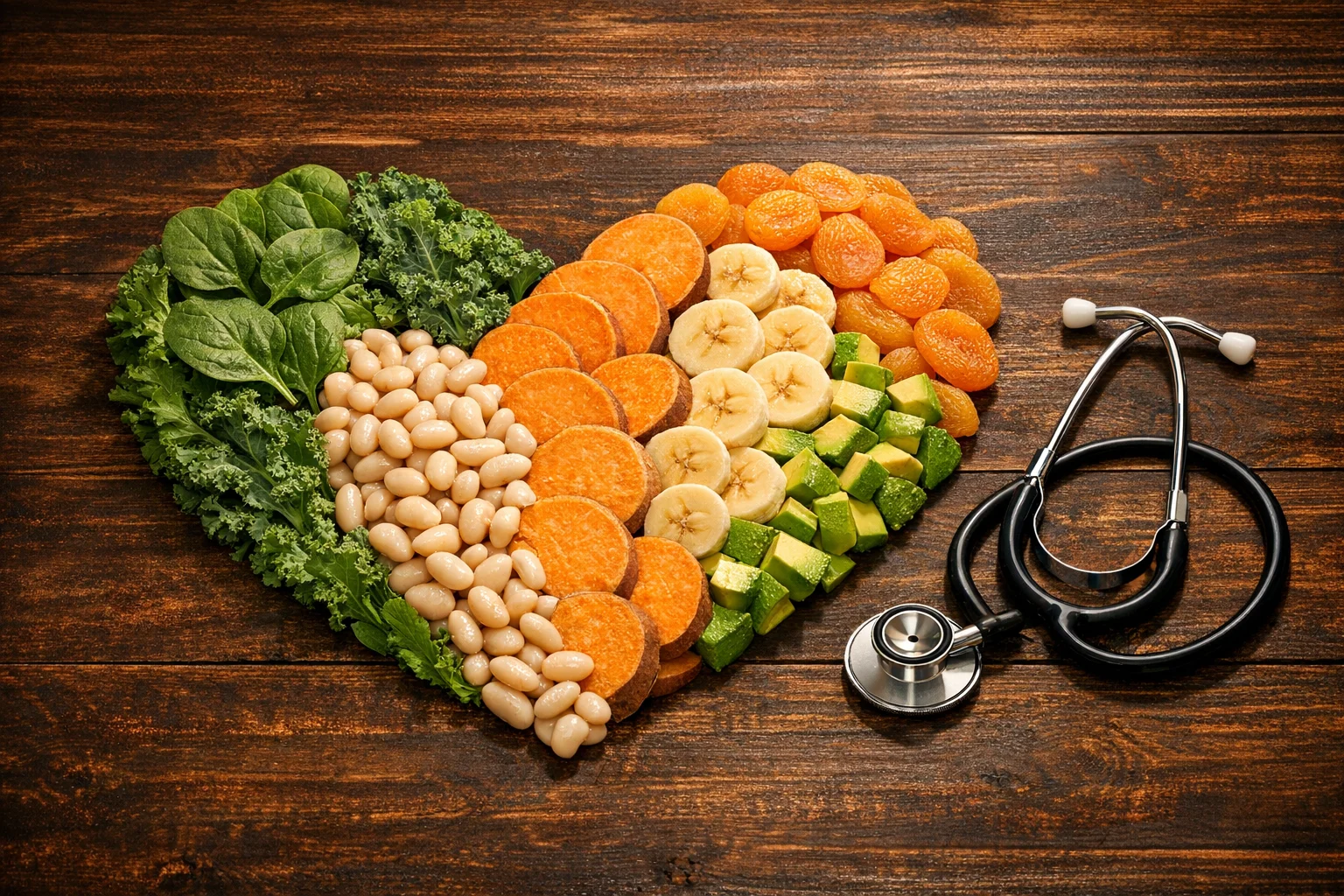
Cardiovascular disease remains the leading cause of death in America. While cholesterol gets most attention, blood pressure and electrolyte balance are equally important and better addressed by diet than medication. The evidence on potassium specifically is so strong that major cardiovascular organizations now recognize it as a critical nutrient for disease prevention.
The Mechanism: How Potassium Protects Your Arteries
Here’s the chain reaction that makes potassium so cardioprotective:
- Potassium promotes vasodilation: Potassium relaxes the smooth muscle in blood vessel walls, allowing them to widen. This involves potassium’s effects on nitric oxide signaling—increasing bioavailable nitric oxide in the endothelium, which directly causes blood vessels to relax. This reduces the pressure needed to pump blood through.
- Potassium increases sodium excretion: Higher intracellular potassium upregulates the Na-K-ATPase pump, which actively removes sodium from the bloodstream through the kidneys. Less sodium in the blood means less water retention and lower overall blood volume pressure. This mechanism works alongside the direct vasodilation effect, creating a synergistic blood pressure reduction.
- Potassium stabilizes heart rhythm: The electrical gradient created by potassium-sodium balance is essential for regular heartbeat. Low potassium increases arrhythmia risk; adequate potassium maintains cardiac rhythm stability by optimizing the action potential threshold in cardiac tissue.
- Potassium reduces endothelial dysfunction: The endothelium is the inner lining of blood vessels. Hypertension damages it through oxidative stress and inflammatory mechanisms. Adequate potassium reduces this damage through antioxidant effects and promotes healing through improved vascular function and reduced inflammation.
The result: lower blood pressure, more elastic arteries, and reduced atherosclerosis progression—creating a cascade of protective effects on the entire cardiovascular system.
DASH Diet Research: The Gold Standard Evidence
The most robust evidence for potassium’s blood pressure effect comes from the DASH (Dietary Approaches to Stop Hypertension) trials. In the original DASH study, participants who followed the DASH diet—which emphasizes potassium-rich plant foods—achieved measured blood pressure reductions of 8.0 mmHg systolic and 4.1 mmHg diastolic. These reductions are equivalent to first-line blood pressure medications like ACE inhibitors. Importantly, the DASH diet is simply whole plant foods: beans, greens, whole grains, and vegetables. No supplements, no special sodium restriction beyond avoiding processed foods.
Follow-up DASH trials (DASH-Sodium) showed that combining the DASH diet with moderate sodium reduction achieved even greater reductions: up to 11-12 mmHg systolic. This demonstrates that the potassium effect is dose-dependent and additive with sodium control. For someone with Stage 1 hypertension (130-139 mmHg systolic), adequate potassium intake alone could normalize blood pressure.
Meta-Analysis Findings: The Cumulative Evidence
Multiple meta-analyses have examined potassium supplementation and blood pressure. A 2016 meta-analysis of 40 randomized controlled trials found that increasing potassium intake by 1,000 mg (from food) reduced systolic blood pressure by 3-6 mmHg in hypertensive individuals. Plant-based eaters who consume 4,000-6,000 mg daily are essentially taking a dose roughly 4-6 times larger than the supplementation studies, suggesting their blood pressure reduction should be proportionally greater—potentially 12-18 mmHg for some individuals.
Another systematic review in the American Journal of Clinical Nutrition found that potassium-rich foods (as opposed to supplements) consistently lowered blood pressure with minimal risk of adverse effects. The mechanism for food superiority involves fiber, polyphenols, and other compounds in plant foods that work synergistically with potassium. This explains why eating a cup of white beans (potassium + fiber + resistant starch) is more effective than potassium supplements alone.
Stroke Prevention: The Public Health Impact
Strokes (ischemic or hemorrhagic) are more common in people with hypertension. An 8 mmHg reduction in systolic blood pressure reduces stroke risk by approximately 20% according to epidemiological studies. The CDC estimates that approximately 150,000 strokes could be prevented annually in the U.S. if the population achieved adequate potassium intake. That’s a substantial public health impact—more lives than many cancers claim annually. Strokes happen when blood vessels in the brain become blocked (ischemic stroke) or rupture (hemorrhagic stroke), both directly influenced by blood pressure, arterial elasticity, and electrolyte balance. Potassium addresses all three mechanisms.
Esselstyn and Ornish: From Prevention to Reversal
Beyond prevention, Esselstyn and Ornish showed that plant-based diets (inherently potassium-rich) can reverse existing coronary artery disease. In Esselstyn’s work, 91% of patients showed arrest or reversal of atherosclerosis over 3.7 years of follow-up. Patients who were scheduled for bypass surgery experienced measurable regression of arterial blockages. Ornish’s data showed similar reversals in severe coronary disease. For plant-based eaters, this means you’re not just reducing cardiovascular risk—you’re actively healing your vascular system at the tissue level.
Best Plant-Based Potassium Sources: The Complete Food List
Here are the top plant-based potassium sources, organized by category. Aim to include several of these daily.
Legumes (The Potassium Superstars)
| Food | Potassium (mg) | Serving |
|---|---|---|
| White beans (cooked) | 1,004 | 1 cup |
| Black beans (cooked) | 900 | 1 cup |
| Kidney beans (cooked) | 716 | 1 cup |
| Chickpeas (cooked) | 677 | 1 cup |
| Lentils (cooked) | 731 | 1 cup |
Leafy Greens (Dense, Nutrient-Rich, Low-Calorie)
| Food | Potassium (mg) | Serving |
|---|---|---|
| Swiss chard (cooked) | 961 | 1 cup |
| Spinach (cooked) | 888 | 1 cup |
| Kale (cooked) | 561 | 1 cup |
| Collard greens (cooked) | 1,126 | 1 cup |
| Arugula (raw) | 369 | 2 cups |
Starchy Vegetables & Whole Grains (Filling, Satisfying)
| Food | Potassium (mg) | Serving |
|---|---|---|
| Sweet potato (baked) | 950 | 1 medium |
| Potato with skin (baked) | 941 | 1 medium |
| Winter squash (cooked) | 449 | 1 cup |
| Whole wheat (cooked) | 174 | 1 cup |
| Brown rice (cooked) | 86 | 1 cup |
Fruits & Other Sources
| Food | Potassium (mg) | Serving |
|---|---|---|
| Avocado | 485 | 1 whole |
| Coconut water | 600 | 1 cup |
| Dried apricots | 1,511 | 1 cup |
| Dates | 656 | 10 pieces |
| Pumpkin seeds | 919 | 1 cup |
| Almonds | 450 | 1/4 cup |
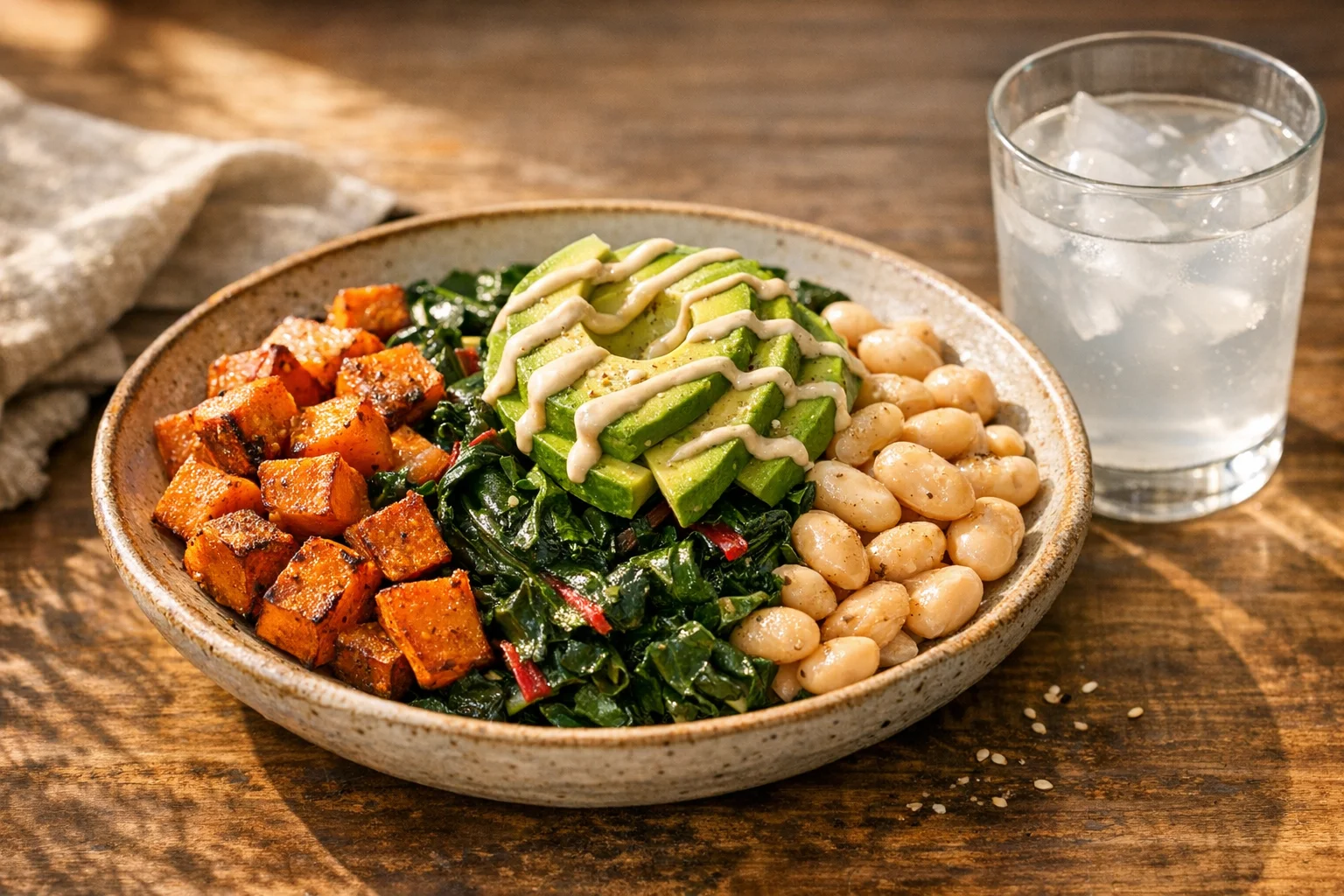
You don’t need to track exact numbers. Eating beans, leafy greens, and a starchy vegetable daily yields 4,000-6,000 mg of potassium—well above the RDA and in the cardioprotective range.
Kidney Safety on Plant-Based Diets: Addressing the Potassium Concern
The one question that often comes up is: “Isn’t too much potassium dangerous for kidney disease?” This is a legitimate concern—for people with kidney disease. However, there’s an important nuance that rarely gets discussed: potassium from plant sources is significantly less bioavailable than supplemental potassium. This matters tremendously for kidney safety.
Bioavailability: Why Plant Potassium Is Safer Than Supplements
Potassium bioavailability refers to how much potassium your body actually absorbs. Here’s the key difference:
- Supplemental potassium (salts like potassium chloride): Nearly 100% bioavailable. Your body absorbs almost all of it.
- Plant-based potassium (bound in whole foods with fiber, complex carbohydrates, etc.): 30-60% bioavailable, depending on the food and preparation.
This means when you consume 1,000 mg of potassium from white beans, your body may only absorb 300-600 mg of that potassium. The rest passes through your digestive system or is bound to fiber. This is actually protective for kidney function, because your kidneys have to process less free potassium. Additionally, the fiber and polyphenols in plant foods appear to have protective effects on kidney function that supplemental potassium lacks.
Who Needs to Restrict Potassium?
If you have Stage 3b, 4, or 5 chronic kidney disease, you should work with a renal dietitian or nephrologist on potassium intake. These conditions impair potassium excretion, and excess dietary potassium can accumulate dangerously. However, early-stage kidney disease (Stage 1-3a) does not typically require potassium restriction, as kidney function is preserved enough to handle normal potassium intake. Additionally, plant-based diets are associated with slower kidney disease progression and better renal function outcomes. For the vast majority of people with normal kidney function, potassium from plant foods is not a safety concern. It’s a health benefit.
Balancing Potassium and Sodium on a Plant-Based Diet
A practical guideline: aim for a potassium-to-sodium ratio of at least 3:1. For every milligram of sodium you consume, aim for at least 3 mg of potassium. Whole plant foods naturally achieve this. As long as you’re avoiding processed foods (which contain 10-20x more sodium than whole foods), you’ll automatically maintain an optimal ratio.
Frequently Asked Questions About Potassium on a Plant-Based Diet
Key Research References
Is coconut water a good source of potassium on a plant-based diet?
Yes—about 600 mg per cup. It’s convenient but not superior to whole food sources. Choose “100% coconut water” without added sugars. If you’re already eating beans, greens, and whole grains, you don’t need it—whole foods are more nutrient-dense.
Can you eat too much potassium from plant foods?
No. Hyperkalemia from whole plant foods is extremely rare in people with normal kidney function—your kidneys efficiently excrete excess potassium. The concern applies to supplemental potassium salts, not whole foods. Plant-based eating is safe.
Do I need to measure potassium intake if I eat a WFPB diet?
No. Eating whole plant foods (beans, greens, whole grains, starchy vegetables) puts you in the optimal range. Counting milligrams is unnecessary and counterproductive.
Why is potassium less discussed than other nutrients on plant-based diets?
Deficiency diseases get more attention than disease prevention. B12 deficiency has obvious symptoms; potassium deficiency manifests as hypertension or heart disease. There’s less financial incentive to market potassium. Yet it’s equally important as other micronutrients for WFPB eaters.
Is organic potassium-rich produce more potassium-dense than conventional?
Soil mineral content matters more than organic certification. The nutrient difference between organic and conventional for potassium is small compared to whole foods versus processed alternatives. Focus on eating potassium-rich foods regardless of certification.
Can athletes on a plant-based diet get enough potassium without electrolyte drinks?
Yes. A plant-based diet provides ample potassium. For intense exercise over 2 hours, use a banana or handful of salted nuts with water for electrolyte replacement. Whole foods are superior to drinks with artificial sweeteners and additives.
Final Thoughts: Potassium as an Overlooked Competitive Advantage
Potassium doesn’t get the attention it deserves. It’s not sexy. It won’t trend on social media. But the evidence is overwhelming: adequate potassium intake is one of the most powerful interventions for preventing heart disease, stroke, and hypertension.
Here’s what makes potassium particularly relevant for plant-based eaters: you’re already winning. While 98% of Americans are potassium-deficient, a typical WFPB eater is hitting levels that mirror ancestral human diets. You’re not fighting against biology. You’re aligned with it.
The research from Esselstyn, Ornish, Greger, and the other doctors profiled in this article isn’t theoretical. These are clinical trials showing that plant-based diets—rich in potassium—can reverse heart disease that was previously considered permanent. That’s not incremental health improvement. That’s transformation.
Practically speaking, there’s nothing complicated about getting adequate potassium on a plant-based diet. Eat beans. Eat greens. Eat potatoes and sweet potatoes. Add some nuts and seeds. That’s it. Your cardiovascular system, your kidneys, and your future self will thank you.
Take the guesswork out of plant-based nutrition.
Explore our evidence-based guides on the nutrients that matter most.
Browse All Nutrient Guides