
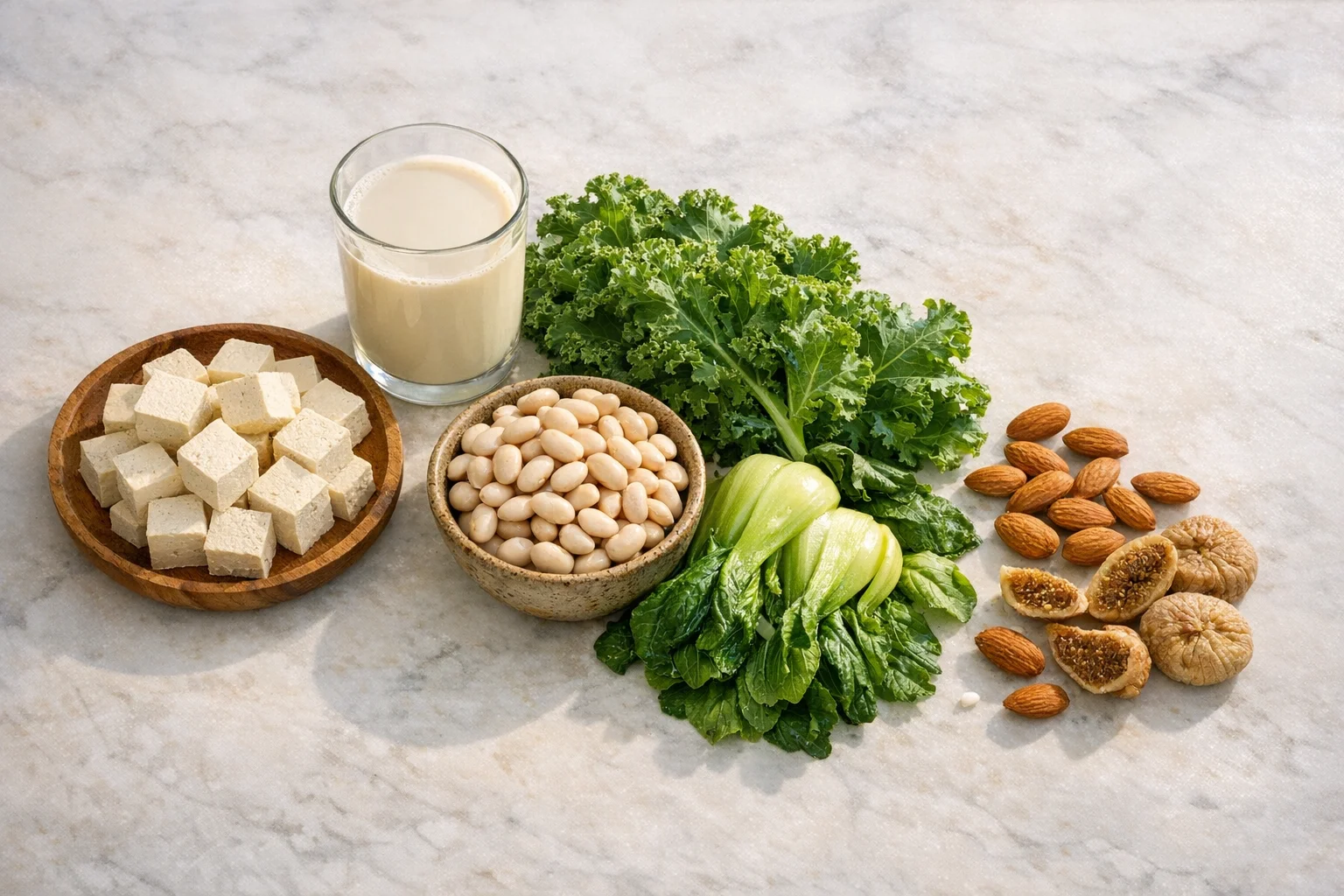
Most people believe that dairy is the only reliable source of calcium, yet this widely accepted truth masks a scientific paradox: countries with the highest dairy consumption often have the highest rates of hip fractures. The truth is that plant-based sources of calcium can actually be absorbed more efficiently by your body than milk. Kale, for example, has a calcium bioavailability of approximately 49%, compared to just 32% for cow’s milk. This means your body can access and utilize nearly half again as much calcium from greens than from the dairy product most people consume for bone health.
What Is Calcium?
Calcium is one of the most abundant minerals in the human body, comprising about 2% of total body weight. Approximately 99% of the calcium in your body is stored in your bones and teeth, where it provides structural support and rigidity. This essential mineral plays critical roles far beyond skeletal health: calcium regulates muscle contraction, enables nerve signaling throughout your nervous system, participates in blood clotting, and helps regulate hormones and enzymes.
Beyond bones and teeth, calcium plays a sophisticated role in maintaining optimal health. Your bones are not static structures—they undergo continuous remodeling through a process where old bone is broken down and new bone is formed. This dynamic process requires adequate calcium to replace what’s lost. Additionally, calcium is critical for muscle contraction, working with proteins to allow muscles to shorten and lengthen. In the nervous system, calcium enables the transmission of electrical signals between neurons, making it essential for brain function, memory, and coordinated movement. During blood clotting, calcium acts as a cofactor in multiple steps of the coagulation cascade, ensuring your body can form protective clots when needed. Calcium also regulates parathyroid hormone secretion and plays roles in hormone release and enzyme activation throughout your body.
The recommended dietary allowance for calcium is 1,000 mg per day for most adults between 19 and 50 years old. For women over 50 and men over 70, the recommendation increases to 1,200 mg per day. These guidelines apply equally to plant-based and omnivorous individuals—your bones require the same amount of calcium regardless of your dietary approach.
The Dairy Myth: Why Milk Isn’t the Only Answer
The association between dairy consumption and strong bones has become so ingrained in popular culture that questioning it seems almost heretical. Yet epidemiological data tells a surprising story. Countries with the highest dairy consumption—including the United States, UK, and Scandinavia—actually report the highest incidence of hip fractures among their elderly populations. In stark contrast, populations in Asia and Africa with minimal dairy intake experience significantly lower fracture rates, despite calcium intakes that would be considered low by Western standards. Sweden, for instance, consumes more dairy per capita than virtually any other nation, yet has one of the world’s highest rates of hip fracture in women over 50. This paradox suggests that dairy consumption alone cannot explain bone health outcomes.
The landmark Harvard Nurses’ Health Study, which followed over 77,000 women for 12 years, provides concrete evidence of this paradox. The study meticulously tracked dairy consumption and bone fracture outcomes across more than a decade. The findings were unambiguous: milk consumption provided no protective effect against hip fractures. Women who consumed three or more glasses of milk daily had similar fracture rates to women who consumed little or no milk. The study’s authors concluded that dairy intake was not associated with reduced fracture risk, directly challenging the foundational assumption of milk’s necessity for bone health. This landmark research fundamentally shifted the scientific understanding of bone health from a simple “calcium from dairy” narrative to a more complex picture involving multiple nutritional and lifestyle factors.
The acid-base balance hypothesis offers one explanation. Dairy products are acidifying to the body. To neutralize this dietary acid, the body draws on alkaline buffers, including calcium from bone. While dietary calcium replaces some losses, the high animal protein content may negate dairy’s skeletal benefits. Plant-based diets are more alkaline, reducing the need to mobilize skeletal calcium for acid neutralization, which helps explain why populations with modest calcium intake but plant-based diets maintain stronger bones than high dairy-consuming populations.
The bioavailability of calcium—the percentage your body can actually absorb and use—varies dramatically by source, and this variation explains much of the apparent paradox. Calcium from low-oxalate greens like kale, collard greens, and bok choy is absorbed at rates of 40-50%, compared to approximately 32% from cow’s milk. This superior bioavailability means that a cup of cooked kale actually provides more usable calcium to your body than a cup of milk, even when accounting for lower absolute calcium content. The body’s ability to extract and utilize calcium from plant sources frequently exceeds its capacity to do so from dairy, making the “milk is necessary” narrative not just unsupported by evidence but actually reversed by the facts of mineral absorption science.
How Common Is Calcium Deficiency on a Plant-Based Diet?
A 2023 meta-analysis by Bickelmann and colleagues examined 74 studies comparing nutrient intake across different dietary patterns. The analysis found that vegans do consume less calcium on average than omnivores—approximately 525-700 mg per day compared to 900-1,100 mg for non-vegans. However, this gap represents a planning challenge rather than an insurmountable barrier. When vegans intentionally include calcium-rich plant foods and fortified products, their intakes easily meet or exceed recommendations.
Perhaps more reassuring is the evidence on actual health outcomes. The Adventist Health Study-2, a large prospective cohort study published in 2021, followed over 65,000 adults for bone health outcomes. Among vegans who consumed adequate calcium (generally through plant sources, fortified foods, and supplements) and maintained sufficient vitamin D levels, there was no increased fracture risk compared to omnivores. This landmark finding demonstrates that calcium deficiency is not an inevitable consequence of a plant-based diet when dietary choices are informed and intentional.
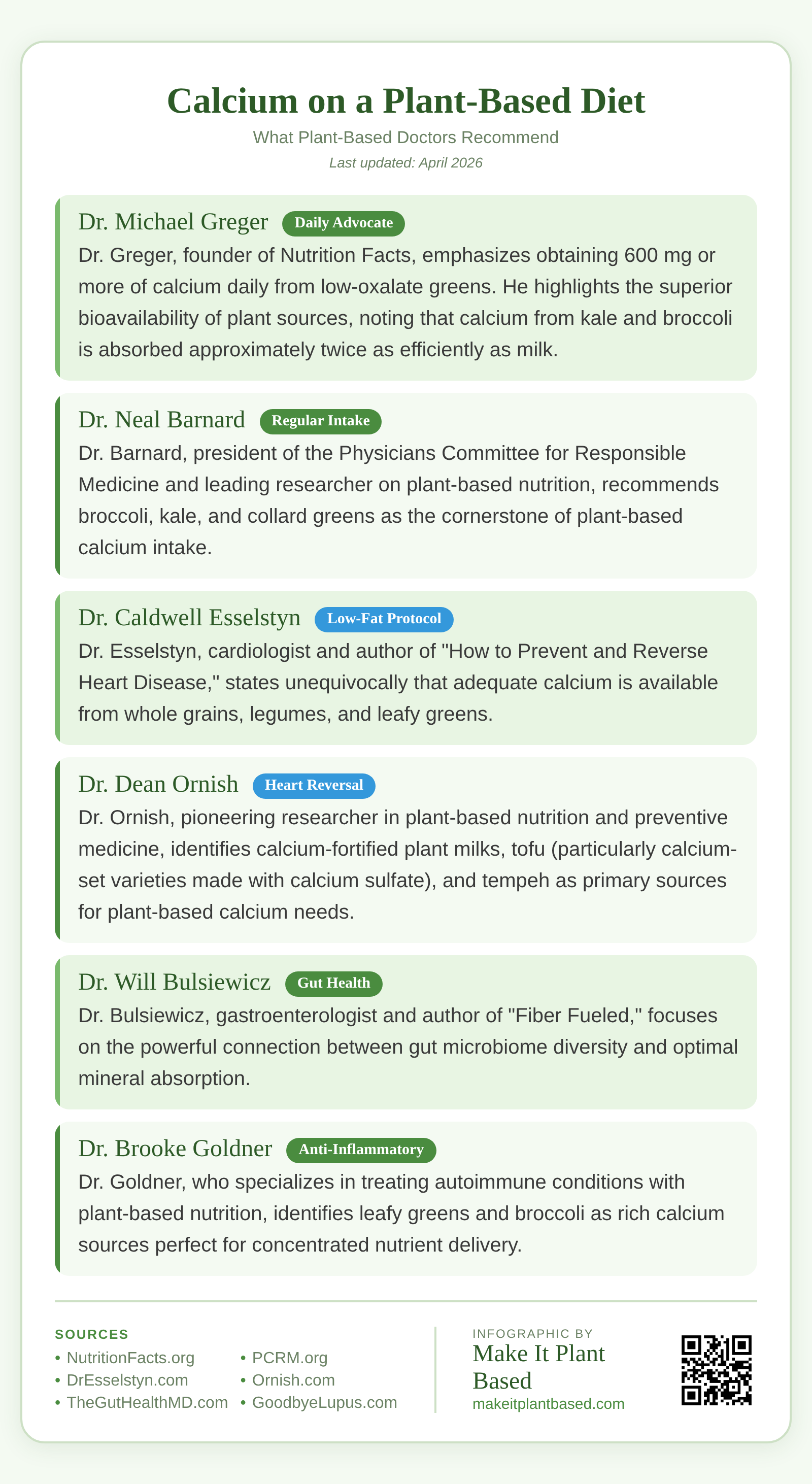
What 7 Leading Doctors Recommend for Plant-Based Calcium
Leading plant-based physicians and researchers universally agree on the same fundamental principle: calcium from whole plant foods should be your primary source, with supplementation reserved only for situations where dietary intake proves insufficient or blood tests indicate a need. Here’s what seven of the most respected voices in plant-based medicine recommend.
Dr. Michael Greger
Dr. Greger, founder of Nutrition Facts, emphasizes obtaining 600 mg or more of calcium daily from low-oxalate greens. He highlights the superior bioavailability of plant sources, noting that calcium from kale and broccoli is absorbed approximately twice as efficiently as milk. His evidence-based approach focuses on whole foods as the ideal calcium source for plant-based diets. Dr. Greger demonstrates that plant-based eaters who include calcium-rich greens and fortified foods consistently meet or exceed calcium recommendations without dairy, with no increased fracture risk compared to omnivores.
Dr. Neal Barnard
Dr. Barnard, president of the Physicians Committee for Responsible Medicine and leading researcher on plant-based nutrition, recommends broccoli, kale, and collard greens as the cornerstone of plant-based calcium intake. His bone health research demonstrates that elimination of dairy and adoption of a plant-based diet can actually be protective for skeletal health, particularly when combined with adequate calcium intake and weight-bearing exercise. Through his published studies, Dr. Barnard has documented that plant-based eaters who maintain adequate calcium and vitamin D levels experience fracture rates comparable to omnivores, providing robust evidence that dairy is neither necessary nor superior for bone health on a plant-based diet.
Dr. Joel Fuhrman
Dr. Fuhrman advocates for monitoring calcium levels through blood tests and biomarkers rather than relying solely on dietary calculations and assumptions. He emphasizes that a combination of greens, beans, and fortified foods can meet calcium needs for most plant-based individuals when dietary planning receives appropriate attention. His approach involves periodic micronutrient testing to ensure adequacy, with supplementation recommended only when objective blood work indicates need. This data-driven strategy removes guesswork from calcium supplementation decisions and allows plant-based eaters to make personalized recommendations based on individual biochemistry rather than population-level assumptions.
Dr. Caldwell Esselstyn
Dr. Esselstyn, cardiologist and author of “How to Prevent and Reverse Heart Disease,” states unequivocally that adequate calcium is available from whole grains, legumes, and leafy greens. He recommends 1,000-1,200 mg of calcium daily for adults over 50, paired with adequate vitamin D supplementation to ensure optimal absorption and utilization. Dr. Esselstyn’s clinical experience with plant-based patients demonstrates that well-planned diets easily provide sufficient calcium while simultaneously offering the cardiovascular benefits that motivated the dietary change in the first place.
Dr. Dean Ornish
Dr. Ornish, pioneering researcher in plant-based nutrition and preventive medicine, identifies calcium-fortified plant milks, tofu (particularly calcium-set varieties made with calcium sulfate), and tempeh as primary sources for plant-based calcium needs. He emphasizes the importance of monitoring vitamin D levels, as adequate vitamin D is essential for calcium absorption regardless of dietary pattern, and recommends supplementation for most plant-based individuals in temperate climates. In his decades of clinical research with thousands of plant-based patients, Dr. Ornish has consistently observed strong bones and healthy calcium metabolism when dietary planning receives appropriate attention and when vitamin D sufficiency is maintained.
Dr. Will Bulsiewicz
Dr. Bulsiewicz, gastroenterologist and author of “Fiber Fueled,” focuses on the powerful connection between gut microbiome diversity and optimal mineral absorption. He notes that well-planned plant-based diets with high fiber naturally promote the bacterial diversity that enhances calcium absorption and mineral bioavailability. The healthy bacterial communities fostered by plant foods actually improve your body’s ability to extract and utilize calcium from foods through multiple mechanisms including enhanced intestinal permeability and active calcium transport. In his clinical experience evaluating thousands of patients, he has never observed nutritional deficiencies, including calcium deficiency, in individuals following intentional and well-planned plant-based diets.
Dr. Brooke Goldner
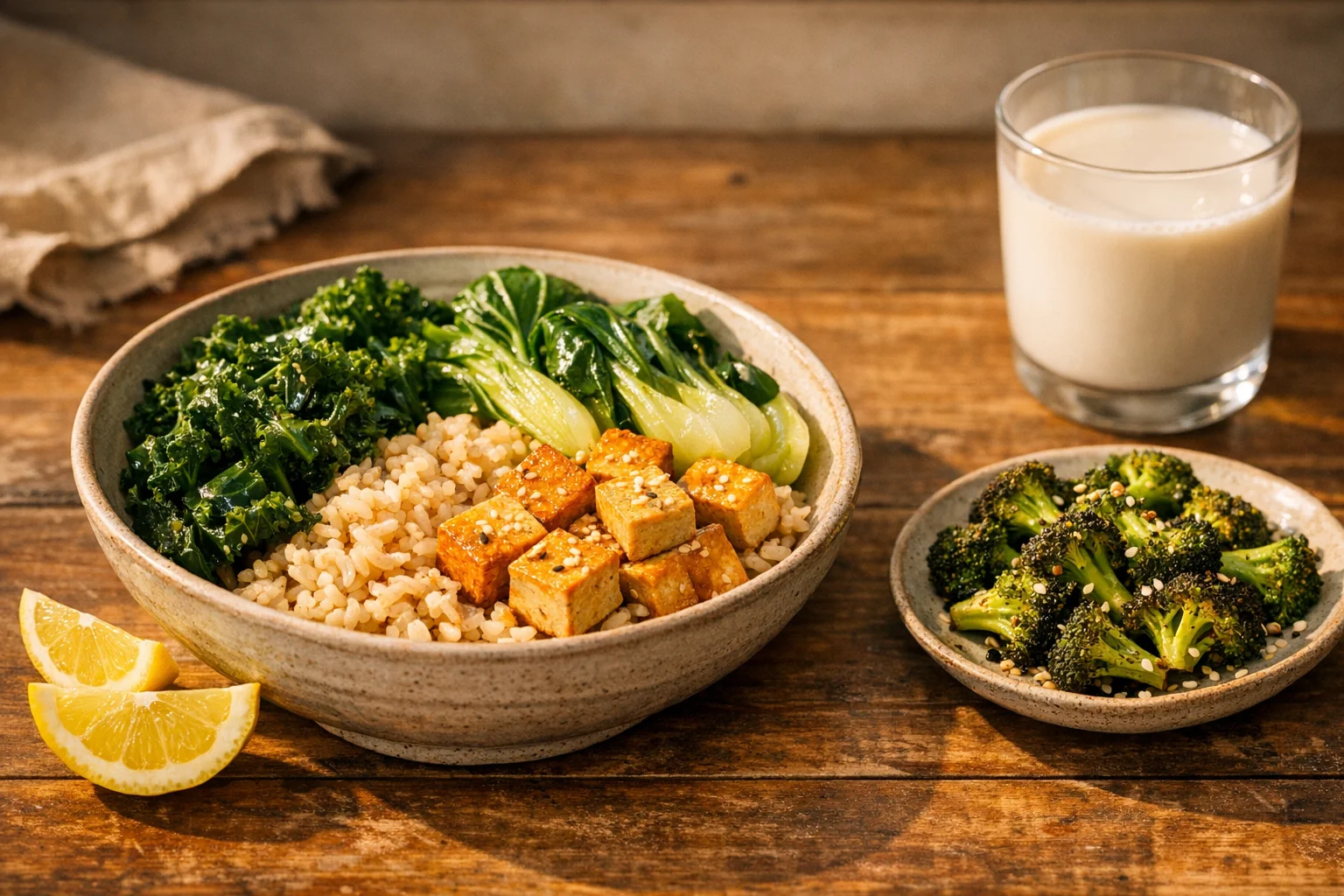
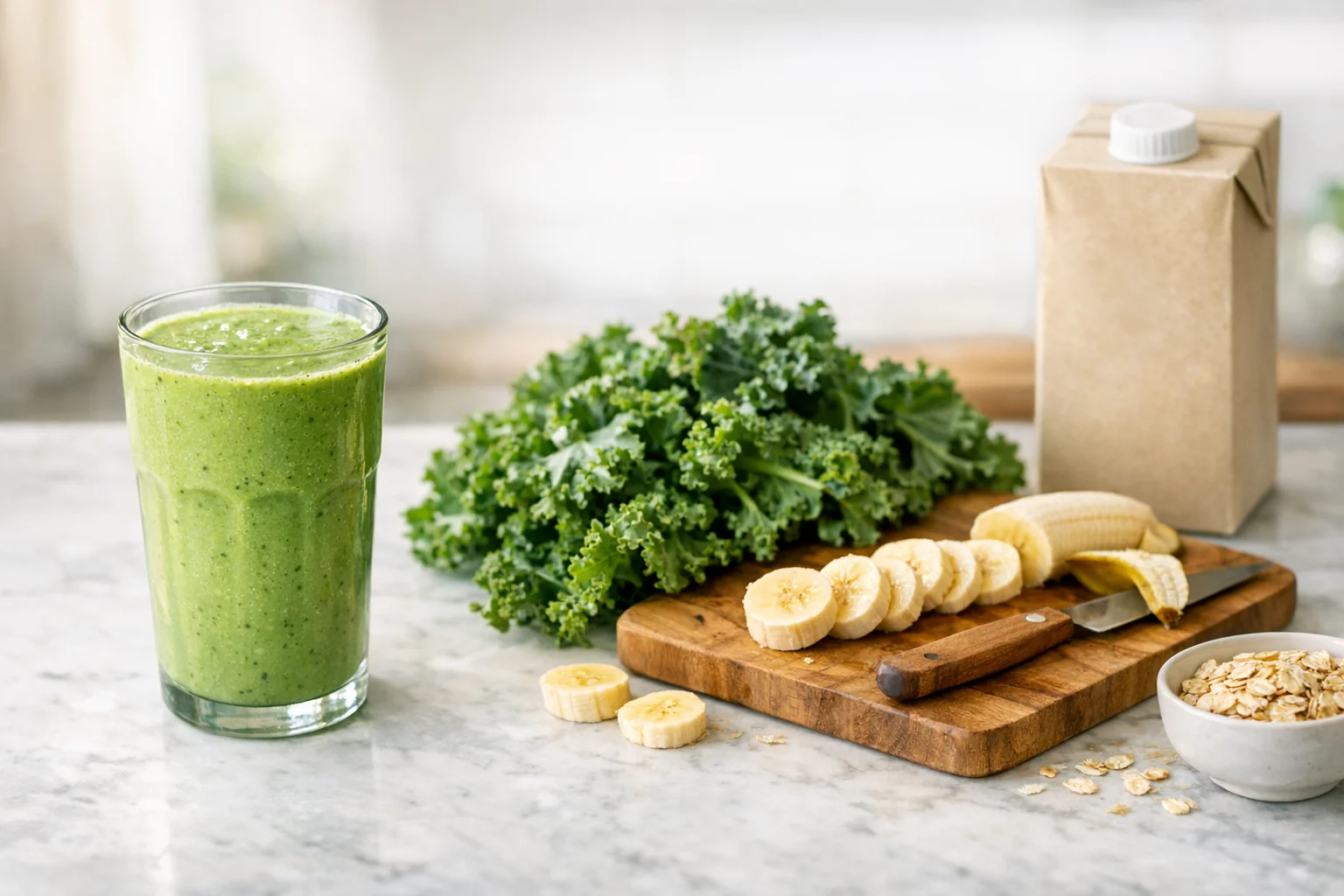
Dr. Goldner, who specializes in treating autoimmune conditions with plant-based nutrition, identifies leafy greens and broccoli as rich calcium sources perfect for concentrated nutrient delivery. Her “intentional nutrient overdose” approach emphasizes green smoothies as a practical strategy for delivering concentrated amounts of bioavailable calcium and other minerals essential for bone health and systemic wellness. By combining multiple calcium-rich low-oxalate greens like kale and bok choy in a single serving with calcium-fortified plant milk, this approach makes it straightforward for plant-based eaters to easily exceed daily calcium targets while delivering additional beneficial phytonutrients.
The Best Plant-Based Calcium Sources
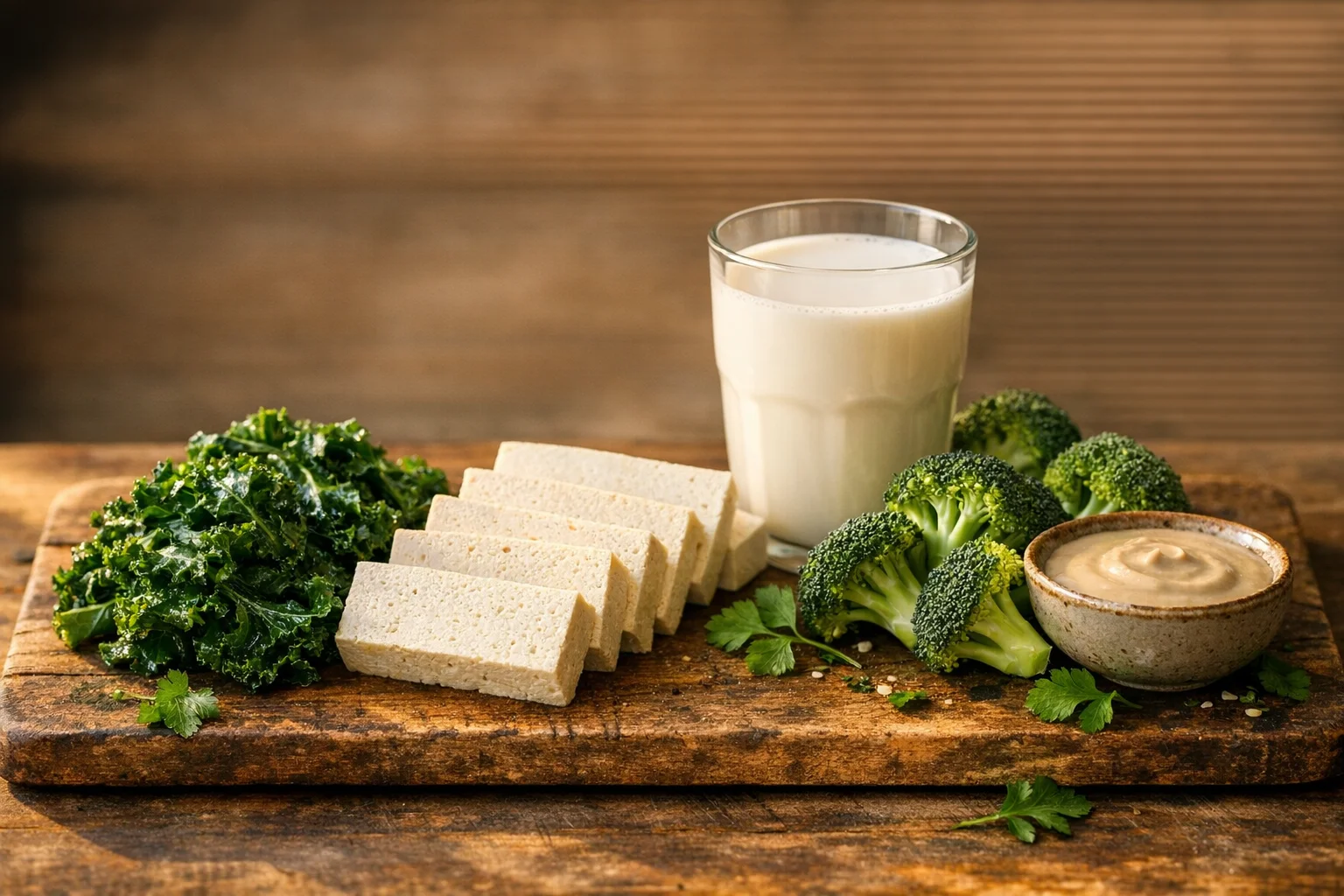
Calcium-set tofu is one of the most impressive calcium sources available, providing 300-500 mg per serving depending on the brand and coagulant. The “set” designation refers to tofu made with calcium sulfate as a coagulant. Half a cup delivers approximately 430 mg of calcium (compared to 150 mg from a cup of cow’s milk), with bioavailability comparable to dairy milk (approximately 31-32%). This makes calcium-set tofu an exceptional choice for plant-based calcium intake. Other types of tofu—silken or coagulated with nigari—contain far less calcium and should not be relied upon as primary sources.
Collard greens provide 268 mg of calcium per cooked cup with a bioavailability rate of approximately 52%, delivering roughly 139 mg of highly absorbable calcium per serving. Fortified plant milks deliver a consistent 240 mg per cup of calcium added by manufacturers, with bioavailability typically comparable to dairy milk (approximately 30-32%). This makes one cup of fortified plant milk deliver roughly 72-77 mg of absorbable calcium—amounts that provide meaningful contribution toward daily targets when combined with other sources.
Among leafy greens, kale offers 180 mg of calcium per cooked cup with a bioavailability rate of approximately 49%, meaning your body can extract and utilize roughly 88 mg per cup. Bok choy provides 160 mg per cooked cup with a bioavailability of approximately 54%, delivering roughly 86 mg of absorbable calcium per serving—remarkably efficient. Collard greens offer 268 mg per cooked cup with strong bioavailability (approximately 52%), providing around 140 mg of usable calcium. Broccoli, another excellent low-oxalate option, delivers 72 mg per cooked cup with approximately 50% bioavailability. Almonds contribute 75 mg of calcium per ounce, making them an excellent snacking option that simultaneously provides healthy fats and protein. White beans and other legumes provide approximately 132 mg of calcium per cooked cup, while tahini (sesame seed butter) delivers 128 mg per two tablespoons, making it ideal for incorporating into dressings and dips.
Chia seeds are a calcium powerhouse, providing 180 mg per two tablespoons, and dried figs offer 120 mg of calcium per five figs. These concentrated sources integrate seamlessly into smoothies, puddings, and snacks. One important caveat: while spinach contains substantial calcium (245 mg per cooked cup), it also contains high levels of oxalates—approximately 656 mg per cooked cup—compounds that inhibit calcium absorption so profoundly that the bioavailability drops to only about 5%. This means that despite its high calcium content, spinach delivers minimal usable calcium to your body. Similarly, chard and beet greens are high in oxalates and should not be relied upon as calcium sources. Stick with low-oxalate greens like kale, collards, bok choy, and broccoli for maximum benefit. The strategic choice of which greens to emphasize can literally double or triple the amount of absorbable calcium you obtain from the same volume of food.
Calcium Through the Life Stages
Calcium needs change throughout your life, reflecting your body’s changing demands. Understanding your specific requirements across different life stages helps ensure you’re getting adequate calcium at each phase of development.
Children and adolescents (ages 4-18) have particularly high calcium requirements for bone development and growth. The recommended intake is 1,000-1,300 mg daily depending on age, supporting the rapid bone accumulation that occurs during childhood and teenage years. This foundation of strong bones built during growth years reduces fracture risk throughout life. Plant-based children thrive on the same calcium sources as adults—fortified plant milks, leafy greens, legumes, and tofu—with the added advantage of often consuming higher amounts due to the greater volume of plant foods typically eaten at this age.
Young adults (ages 19-50) require 1,000 mg of calcium daily. This is the phase when most people maintain stable bone mass, though the foundation for later bone health continues to be built. Establishing consistent, adequate calcium intake during this phase creates a protective reserve for the bone loss that naturally occurs with aging.
Pregnancy and lactation present unique calcium demands. During pregnancy, calcium requirements remain at 1,000 mg daily for most women, but absorption increases naturally due to hormonal changes—your body becomes more efficient at extracting calcium from food. This adaptation helps meet the fetus’s developmental needs while maintaining your own bone health. During lactation, calcium remains critical as breast milk contains approximately 200-300 mg of calcium per liter, making reliable dietary sources essential for maintaining your own skeletal integrity while nourishing your infant.
Menopause and postmenopause represent a critical transition. Women over 50 and men over 70 require 1,200 mg of calcium daily due to declining hormone levels that reduce bone density. Estrogen’s decline in postmenopausal women accelerates bone loss, particularly in the first 5-10 years after menopause. This is not a reason to panic—it’s a reason to ensure your plant-based sources are optimized. Including more calcium-set tofu, collard greens, and fortified foods during this phase helps offset the natural bone loss that occurs.
Elderly adults (ages 70+) have the same 1,200 mg daily requirement, but practical considerations matter. Some elderly individuals struggle with eating large volumes of greens or may have difficulty chewing. Calcium-set tofu, ground seeds incorporated into smoothies, and calcium-fortified plant milks become particularly valuable strategies for meeting needs without requiring extensive chewing. Vitamin D becomes equally critical at this age, as bone loss accelerates and vitamin D deficiency becomes common.
How to Maximize Calcium Absorption
Vitamin D is the essential catalyst for calcium absorption. Without adequate vitamin D, your body cannot efficiently absorb calcium from foods or supplements. For plant-based individuals, vitamin D supplementation of 1,000-2,000 IU daily is typically recommended, with blood testing confirming optimal levels above 30 ng/mL.
The type of greens you consume matters considerably for calcium bioavailability. Low-oxalate greens—kale, collard greens, bok choy, broccoli, and brussels sprouts—provide calcium with minimal interference from oxalates, allowing your body to absorb 40-54% of the calcium present. High-oxalate greens like spinach (with 656 mg oxalate per cooked cup), chard, and beet greens bind calcium through chemical chelation, limiting absorption to 5-10%. By strategically choosing your green vegetables, you can easily double or triple the bioavailable calcium you extract from your diet.
Spreading calcium intake throughout the day enhances absorption. Your body absorbs calcium more efficiently when it receives smaller amounts (500 mg or less) distributed across multiple meals rather than receiving large amounts in a single meal. This is why a diet with calcium throughout the day (fortified plant milk at breakfast, greens at lunch, calcium-set tofu at dinner) is more effective than attempting to get all calcium from a single meal. Avoid consuming high-oxalate foods simultaneously with calcium sources—for example, don’t combine spinach with calcium-set tofu in the same meal, as the oxalates will interfere with calcium absorption from both sources.
Dietary factors that increase calcium excretion should be moderated. Excessive caffeine consumption (over 400 mg daily), high sodium intake, and very high protein intake can all increase urinary calcium losses. While these substances should not be eliminated (all are important for health), mindful moderation supports calcium retention. Research suggests that plant-based diets naturally support calcium retention better than high animal protein diets because they create a less acidic dietary environment.
Weight-bearing and resistance exercise is the most powerful stimulus for bone formation and calcium utilization. Regular exercise of 30 minutes most days of the week strengthens bones while improving overall health. The effects are dramatic: active individuals with moderate calcium intake often have stronger bones than sedentary individuals with high calcium intake.
Frequently Asked Questions
Can you get enough calcium without dairy?
Absolutely. Kale and other low-oxalate greens have calcium bioavailability of approximately 49%, meaning your body can absorb nearly twice as much calcium from these sources compared to the 32% absorption from cow’s milk. Combined with calcium-set tofu, fortified plant milks, and other plant sources, meeting your daily calcium needs without dairy is straightforward with intentional food choices.
How much calcium do vegans need daily?
Vegans require the same amount of calcium as everyone else: 1,000 mg per day for most adults, increasing to 1,200 mg daily for women over 50 and men over 70. These recommendations are established by the Institute of Medicine and apply universally regardless of dietary pattern. Meeting these targets through plant foods is entirely achievable with planning.
Is calcium-fortified plant milk as good as cow’s milk?
Research shows that calcium from fortified plant milks is absorbed as efficiently as calcium from cow’s milk. The calcium absorption rate is comparable whether the calcium comes from a dairy source or a well-fortified plant alternative. Always check labels to ensure your plant milk contains at least 240 mg of calcium per cup and verify it’s been tested for bioavailability.
Should I take a calcium supplement on a plant-based diet?
Food should be your primary source of calcium, with supplementation reserved for situations where dietary intake proves insufficient or blood tests indicate a need. Recent research suggests that excessive calcium from supplements (beyond what whole foods provide) may increase cardiovascular risks. Work with a healthcare provider to assess your individual calcium status through blood testing rather than supplementing routinely.
Take the guesswork out of plant-based nutrition.
Explore our evidence-based guides on the nutrients that matter most.
Browse All Nutrient Guides