
![Athletic Performance on a Plant-Based Diet: Building Muscle Without Meat [2026]](https://makeitplantbased.com/images/articles/athletic-performance-plant-based-diet/athletic-performance-plant-based-diet-featured.webp)
One of the most persistent myths in nutrition is that you need animal plant-based protein to build muscle and perform at your best. Walk into any gym and you’ll hear it: “You can’t get big on plants.” Yet a growing body of research — and an expanding roster of elite vegan athletes — tells a very different story. From Olympic weightlifters to ultramarathon runners, plant-based athletes are shattering records and proving that animal products are not required for peak performance.
The science is now catching up to what these athletes have demonstrated in practice. A landmark 2023 study found that vegan and omnivorous high-protein diets support comparable rates of muscle protein synthesis and hypertrophy. The question is no longer if you can build muscle on plants — it’s how to optimize your approach. This guide breaks down the research, the doctor recommendations, and the practical strategies that make it work.
What Actually Drives Muscle Growth on Any Diet
Muscle growth (hypertrophy) depends on three factors: mechanical tension from resistance training, adequate total protein intake, and sufficient caloric surplus. Notice what’s not on that list — the specific animal or plant source of the protein. Your muscles don’t know whether the amino acids arriving at the ribosome came from a chicken breast or a bowl of lentils and rice. What matters is that all essential amino acids are available in sufficient quantities over the course of the day.
The recommended protein intake for muscle building is 1.6-2.2 grams per kilogram of body weight per day, according to a position stand by the International Society of Sports Nutrition. This target is readily achievable on a well-planned plant-based diet using a variety of protein sources like legumes, tofu, tempeh, seitan, and whole grains.
The Leucine Threshold
Leucine is the amino acid that triggers muscle protein synthesis (MPS) most powerfully. Plant proteins generally contain less leucine per gram than animal proteins, which led to early concerns about their effectiveness. However, a 2022 narrative review on plant-based food patterns and muscle protein synthesis showed that by eating slightly more total protein or combining sources (legumes + grains), plant-based eaters easily reach the leucine threshold of 2-3 grams per meal needed to maximize MPS.
The Animal Protein Myth Debunked: You Don’t Need Meat for Muscle
The idea that animal protein is superior for muscle building comes from older studies measuring protein quality using the Protein Digestibility-Corrected Amino Acid Score (PDCAAS) or the newer Digestible Indispensable Amino Acid Score (DIAAS). While individual plant proteins may score lower on these scales, these scores measure isolated protein sources consumed in unrealistic single-food scenarios. Nobody eats only rice protein or only pea protein all day.
When researchers study real-world dietary patterns — where people eat a variety of foods — the differences between plant and animal protein for muscle outcomes vanish. A 2023 study published in the Journal of Nutrition directly compared vegan and omnivorous high-protein diets and found comparable daily myofibrillar protein synthesis rates and skeletal muscle hypertrophy in young adults doing resistance training. Both groups gained the same amount of muscle over the study period.
A 2021 comparison between habitual vegans and omnivores doing resistance training found no significant differences in lean mass gains, strength increases, or body composition changes when protein intake was matched at 1.6g/kg/day.
Research and Statistics: The Evidence Is In
The body of evidence supporting plant-based athletic performance has grown dramatically in recent years. Here’s what the key studies show:
A 2025 randomized controlled trial studying both male and female subjects found that vegan diets support resistance exercise-mediated myofibrillar protein synthesis at rates comparable to omnivorous diets. This was one of the first studies to include women, strengthening the generalizability of the findings.
A 2021 review on vegan and vegetarian diets and physical performance examined the molecular signaling pathways in skeletal muscle and found no inherent disadvantage to plant-based diets for muscle adaptation. The review noted that adequate protein distribution across meals and sufficient leucine intake were the key factors, not protein source.
Beyond muscle building, plant-based diets appear to offer endurance advantages. The higher carbohydrate and nitrate content of plant foods supports glycogen storage and blood flow — both critical for sustained athletic performance. Beet juice, rich in dietary nitrates, has been shown to improve time-trial performance by 1-3% in multiple studies, which is significant at the elite level.

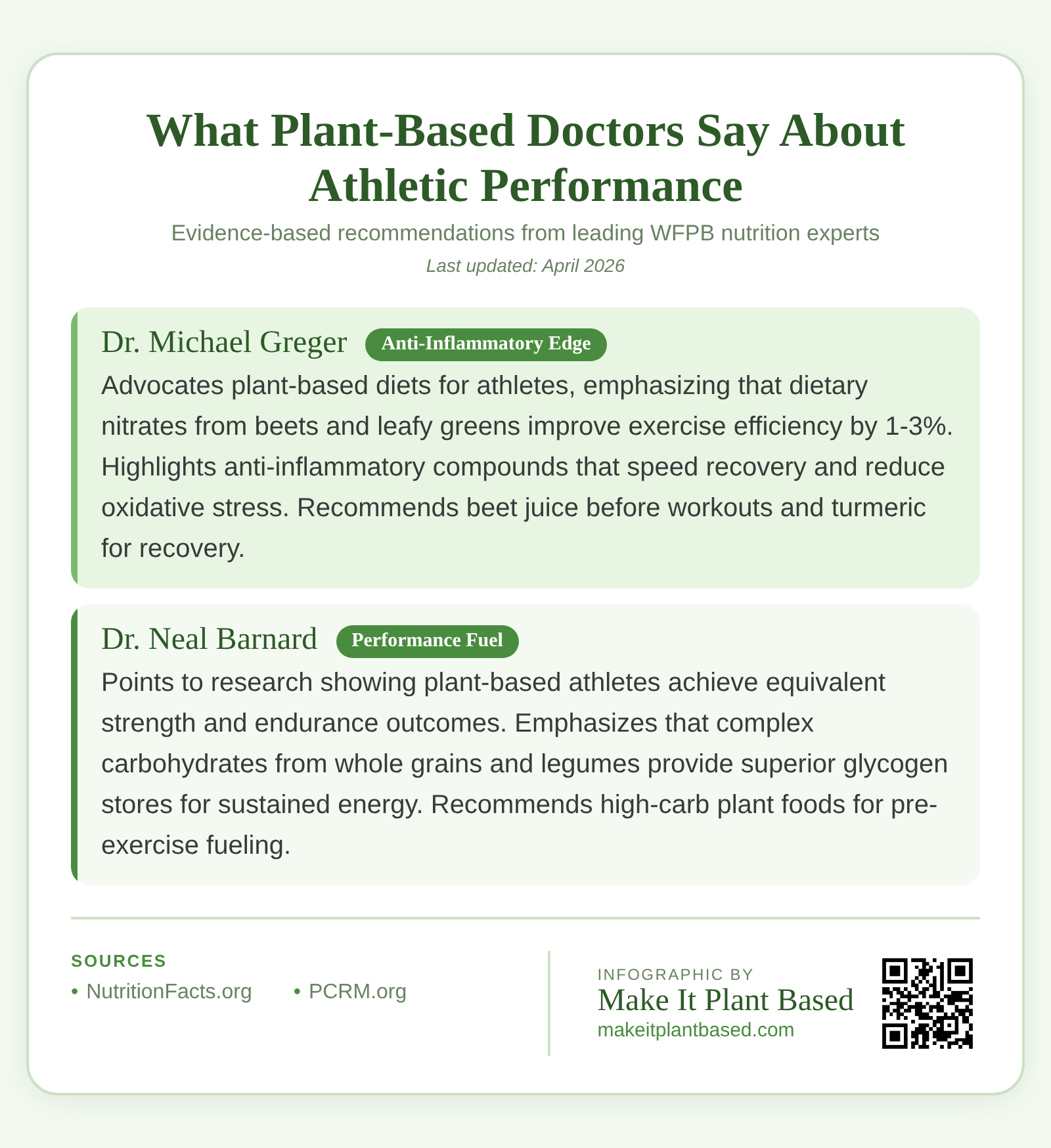
What Plant-Based Doctors Say About Athletic Performance
Dr. Michael Greger
Dr. Greger has extensively covered plant-based athletic performance on NutritionFacts.org, producing multiple videos comparing vegetarian and vegan athletes to their omnivorous counterparts. He emphasizes that plant-based athletes show comparable strength and superior endurance metrics. He highlights the anti-inflammatory properties of plant foods as a key advantage for recovery — reduced inflammation means faster healing between training sessions. Dr. Greger also points to the nitrate advantage: plant foods (especially beets, leafy greens, and arugula) are the primary dietary source of nitrates, which convert to nitric oxide and improve blood flow, oxygen delivery, and exercise efficiency. (NutritionFacts.org — Vegan Athletic Performance)
Dr. Neal Barnard
Dr. Barnard and PCRM have developed comprehensive athlete nutrition guidance. Their position emphasizes that plant-based diets provide all the nutrients athletes need, including complete proteins when a variety of foods are consumed throughout the day. PCRM’s athlete resources highlight the cardiovascular advantages of plant-based eating — better arterial function, lower blood viscosity, and improved cardiac output — all of which translate directly to athletic performance. Dr. Barnard also stresses that the reduced inflammation from plant-based eating accelerates post-workout recovery. (PCRM — Nutrition for Athletes)
Dr. John McDougall
Dr. McDougall has long argued that starch-based diets fuel athletic performance better than high-protein diets. He points to the glycogen advantage: plant-based athletes consuming more complex carbohydrates have larger muscle glycogen stores, which provides sustained energy during training. He’s noted that populations with the highest endurance capacity — like the Tarahumara runners of Mexico — eat predominantly starch-based diets with minimal animal protein. (DrMcDougall.com — Athletes Are People Too)

Best Plant Protein Sources for Athletes
Complete Protein Powerhouses
Soy foods (tofu, tempeh, edamame) — 18-31g protein per cup, complete amino acid profile with strong leucine content. Tempeh provides additional fermentation benefits. The most well-studied plant protein for muscle building.
Use the Plant-Based Protein Ranking tool to find the most protein-dense ingredients, or the Essential Amino Acids in Plant Foods tool to verify complete amino acid profiles.
Seitan (wheat gluten) — 25g protein per 3.5oz serving. Extremely high in protein and mimics the texture of meat. Low in lysine, so pair with legumes.
Quinoa — 8g protein per cooked cup. A complete protein with all essential amino acids. Also provides complex carbohydrates and iron on a plant-based diet.
Protein-Rich Combinations
Legumes + grains — Rice and beans, lentil dal with flatbread, hummus with pita. These classic combinations provide all essential amino acids in balanced proportions. You don’t need to eat them in the same meal — spreading them across the day works equally well.
Lentils — 18g protein per cooked cup, rich in iron and folate. Red lentils cook in 15 minutes and blend seamlessly into sauces and soups.
Hemp seeds — 10g protein per 3 tablespoons. Complete protein with an excellent omega-3 fatty acids to omega-6 ratio. Easy to add to smoothies and bowls.
Meal Planning for Muscle Building: A Practical Guide
Here’s a framework for hitting 1.8g/kg protein on a plant-based diet (for a 75kg / 165lb person, that’s about 135g protein daily):
Breakfast (30-35g protein): Tofu scramble with black beans (25g) + hemp seed smoothie (10g) + whole grain toast
Post-workout snack (20-25g): Soy protein shake (20g) + banana + peanut butter (5g)
Lunch (35-40g protein): Tempeh stir-fry (31g) over quinoa (8g) with roasted vegetables
Dinner (35-40g protein): Seitan and lentil curry (25g + 18g) over rice with a side salad
Evening snack (10-15g): Edamame (18g) or trail mix with pumpkin seeds
This pattern distributes protein evenly across 4-5 eating occasions, ensuring leucine thresholds are met at each meal. Total: approximately 140g protein from whole food sources alone, without any supplements required.
Recovery and Endurance: The Plant-Based Edge
One area where plant-based diets may actually outperform omnivorous diets is in recovery and endurance. The anti-inflammatory phytochemicals in plant foods — polyphenols, carotenoids, flavonoids — reduce exercise-induced inflammation and oxidative damage. Studies have shown that tart cherry juice, turmeric, and blueberries accelerate recovery and reduce muscle soreness (DOMS) after intense training.
The nitrate content of plant foods — particularly beets, arugula, and spinach — improves blood flow and oxygen efficiency during exercise. This translates to better endurance performance, with studies showing 1-3% improvements in time-trial performance with dietary nitrate supplementation. For endurance athletes, this is a meaningful competitive advantage.
Plant-based diets also tend to be higher in complex carbohydrates, supporting larger muscle glycogen stores. Since glycogen is the primary fuel for high-intensity exercise, this gives plant-based athletes an energy reservoir advantage during prolonged training sessions and competitions.
Key Research References
- 2023 study: vegan and omnivorous diets support comparable muscle protein synthesis and hypertrophy
- 2025 RCT: vegan diets support resistance exercise-mediated myofibrillar protein synthesis
- 2021 review: vegan/vegetarian diets and physical performance molecular signaling
- 2021 comparison: habitual vegans vs omnivores for resistance training adaptations
- 2022 narrative review: plant-based food patterns to stimulate muscle protein synthesis
Frequently Asked Questions About Plant-Based Athletic Performance
Can you build muscle on a plant-based diet?
Yes. Multiple clinical studies have shown that vegan and omnivorous high-protein diets produce comparable muscle growth when total protein intake is matched. A 2023 study found identical rates of muscle protein synthesis and hypertrophy in both groups during resistance training.
How much protein do plant-based athletes need per day?
The International Society of Sports Nutrition recommends 1.6-2.2g of protein per kilogram of body weight for muscle building. This is readily achievable on a plant-based diet through legumes, soy foods, seitan, whole grains, nuts, and seeds without requiring supplements.
Is plant protein as effective as whey protein for muscle growth?
When total protein and leucine intake are matched, yes. While individual plant proteins may have slightly lower leucine content per gram, eating more volume or combining sources easily overcomes this. Soy protein in particular has been shown to be as effective as whey for muscle protein synthesis in multiple studies.
Do I need protein powder on a plant-based diet for training?
Not necessarily. Whole food sources can provide all the protein athletes need. However, protein powders (soy, pea, rice blends) are a convenient option for post-workout timing when whole food meals aren’t practical. They’re a tool, not a requirement.
What are the best plant foods for muscle building?
Tempeh (31g/cup), seitan (25g/3.5oz), lentils (18g/cup), tofu (20g/cup), edamame (18g/cup), and chickpeas (15g/cup) are among the highest protein plant foods. Combining legumes with grains ensures complete amino acid profiles throughout the day.
Do plant-based athletes have an advantage in endurance sports?
Potentially yes. The higher carbohydrate, nitrate, and antioxidant content of plant-based diets supports larger glycogen stores, improved blood flow, and faster recovery — all advantages for endurance performance. Multiple studies show dietary nitrates from beets and leafy greens improve exercise efficiency by 1-3%.
Anti-Inflammatory Compounds and Recovery
Plant foods are rich in powerful anti-inflammatory compounds that directly support athletic recovery. Anthocyanins found in berries, curcumin in turmeric, and quercetin in onions have been shown to reduce exercise-induced oxidative stress and inflammation. When athletes engage in intense training, they create microscopic muscle damage and generate free radicals. Plant-based compounds help neutralize these free radicals and support the body’s natural repair mechanisms. Research shows that athletes consuming high levels of antioxidant-rich foods experience reduced muscle soreness, faster recovery times, and improved performance in subsequent training sessions.
Hydration Advantages on a Plant-Based Diet
One often overlooked advantage of plant-based eating for athletes is the naturally high water content of plant foods. Fruits, vegetables, legumes, and whole grains contain 70-95% water by weight, compared to animal products which typically contain 50-75% water. This means that plant-based athletes receive substantial hydration from their food intake alone. Cucumbers, lettuce, tomatoes, watermelon, and leafy greens contribute significantly to daily fluid intake without requiring additional water consumption. This passive hydration effect helps maintain optimal cellular function, temperature regulation, and nutrient transport during exercise.
Iron Considerations for Plant-Based Athletes
Iron is essential for oxygen transport and energy production in athletic performance. While plant-based athletes sometimes worry about iron intake, the reality is more nuanced. Plant-based diets provide non-heme iron, which has different absorption characteristics than heme iron from animal products. The key is pairing iron-rich plant foods with vitamin C sources to enhance absorption. Legumes, fortified cereals, and leafy greens combined with citrus, berries, and tomatoes create optimal conditions for iron utilization. Studies show that well-planned plant-based diets maintain adequate iron status in athletes, and the higher antioxidant content may actually reduce inflammation-related iron loss.
Take the guesswork out of plant-based nutrition.
Explore our evidence-based guides on the nutrients that matter most.
Browse All Nutrient Guides