
![Women’s Hormonal Health on a Plant-Based Diet: Periods, PCOS, and Menopause [2026]](https://makeitplantbased.com/images/articles/womens-hormonal-health-plant-based/womens-hormonal-health-plant-based-featured.webp)
Women considering a plant-based diet often encounter a specific fear: “Won’t it mess up my hormones?” Online forums are full of anecdotes about lost periods, hormonal imbalances, and fertility concerns on vegan diets. While these experiences are real, the research points to a different culprit — not the absence of animal products, but rather inadequate calorie and nutrient intake. A well-planned plant-based diet doesn’t just preserve hormonal health; it may actually improve it.
From reduced menstrual pain to improved PCOS symptoms, the scientific evidence on plant-based diets and women’s hormones is more nuanced — and more positive — than the internet panic suggests. In this guide, we’ll examine the research, address the legitimate concerns, and hear what plant-based doctors recommend for women at every life stage.
How Diet Affects Female Hormones: The Fiber-Estrogen Connection
The relationship between diet and female hormones centers on estrogen metabolism. Your body processes and eliminates estrogen through the liver and gut. Dietary fiber on a plant-based diet plays a crucial role: it binds to estrogen in the intestines and helps excrete it, preventing reabsorption. Women eating plant-based diets typically consume 2-3 times more fiber than the average omnivore, which results in lower circulating estrogen levels — a factor associated with reduced breast cancer risk and less severe PMS.
This is actually a benefit, not a problem. Excess circulating estrogen is linked to heavier periods, worse PMS symptoms, higher breast cancer risk, and conditions like endometriosis and fibroids. The moderate reduction in estrogen levels seen in plant-based women brings levels into a healthier range rather than causing deficiency.
The Calorie Factor
When women do experience menstrual disruptions after going vegan, the most common cause is relative energy deficiency — not eating enough calories. Plant foods are generally less calorie-dense than animal foods, and women who switch to a plant-based diet without increasing their food volume may inadvertently under-eat. The body responds to energy restriction by downregulating reproductive hormones, which can lead to irregular or absent periods (amenorrhea). This is not a vegan-specific problem — it happens on any diet that doesn’t provide enough calories.
The “Vegan Diet Ruins Periods” Myth Debunked
A 2024 controlled trial of young recreationally trained women found that a well-planned vegan diet over 12 weeks had no significant effect on menstrual cycle length, regularity, or hormone concentrations compared to an omnivorous diet. The key was adequate caloric intake and nutrient coverage.
Earlier studies from the 1980s and 1990s did find some menstrual disturbances in vegetarian women, but these studies often didn’t control for caloric adequacy. A 1999 review asking whether vegetarianism and menstrual disturbances are associated concluded that the evidence was inconsistent and confounded by factors like body weight, exercise habits, and overall dietary quality rather than the mere absence of meat.
The pattern that emerges: plant-based diets don’t disrupt hormones — inadequate plant-based diets do. And the same is true of any poorly planned diet. The solution isn’t adding animal products; it’s ensuring sufficient calories, iron on a plant-based diet, zinc, iodine, B12, and omega-3 fatty acidss.
Research and Statistics: What the Evidence Shows
The research on plant-based diets and women’s hormonal health reveals several consistent findings:
Menstrual pain reduction: Dr. Neal Barnard’s research has demonstrated that a low-fat vegan diet significantly reduces the duration and intensity of menstrual pain. The mechanism is likely the reduction of pro-inflammatory prostaglandins (made from arachidonic acid, found primarily in animal products) that cause uterine cramping.
PMS improvement: Higher fiber and lower fat intake on plant-based diets is associated with less bloating, mood swings, and breast tenderness during the premenstrual phase. The improved estrogen metabolism via fiber binding appears to moderate the hormonal fluctuations that drive PMS symptoms.
Fertility: A case-control study on dietary patterns and PCOS found that women with higher plant food intake had significantly lower rates of polycystic ovary syndrome, a leading cause of infertility. The anti-inflammatory and insulin-sensitizing properties of plant-based diets address two of the root causes of PCOS.

What Plant-Based Doctors Recommend for Women’s Hormonal Health
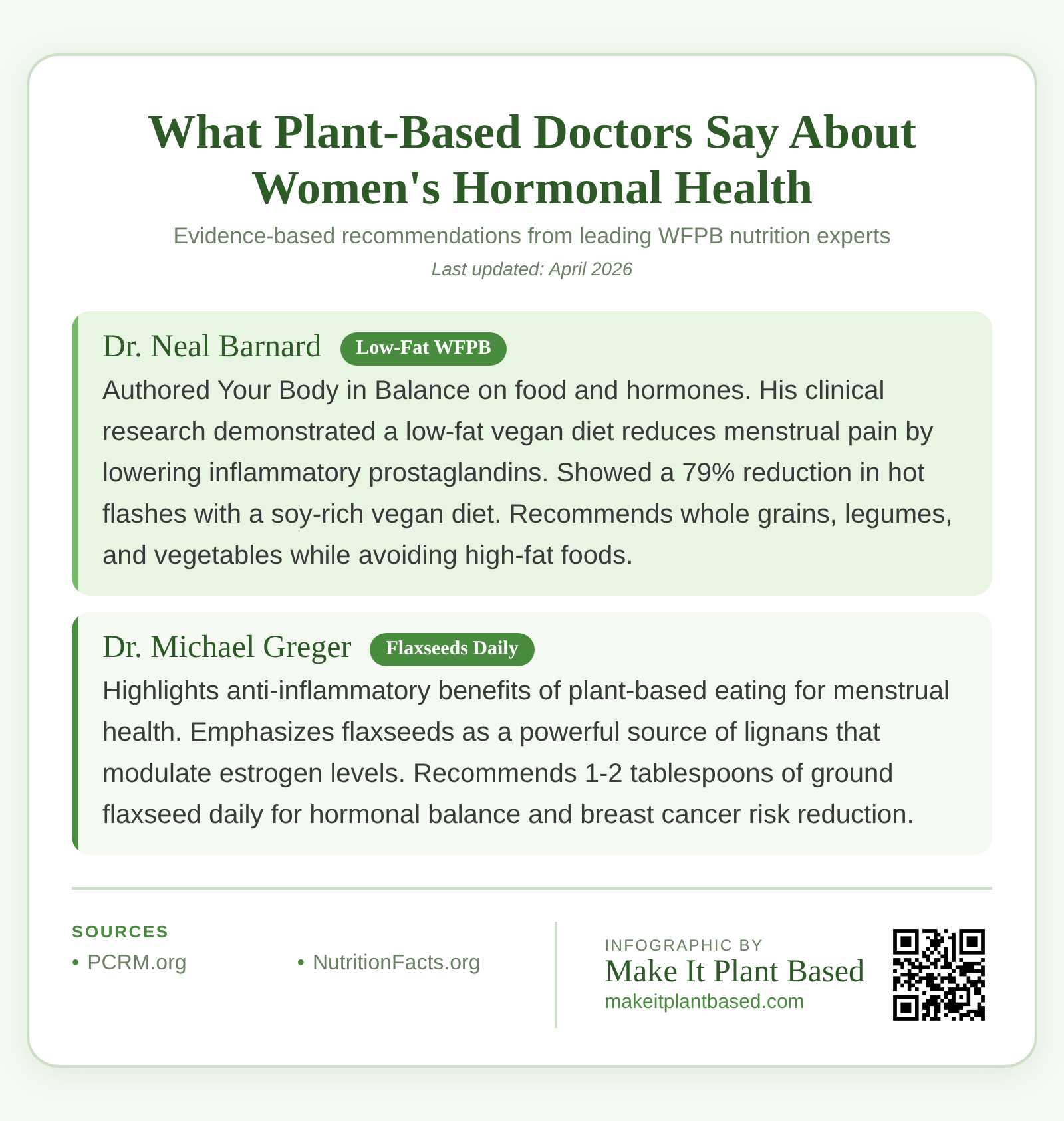
Dr. Neal Barnard
Dr. Barnard has conducted some of the most important research on diet and women’s hormonal health. His clinical work demonstrated that a low-fat vegan diet reduces menstrual pain by lowering inflammatory prostaglandin production. He authored Your Body in Balance, a book dedicated to how food affects hormones, covering periods, fertility, PCOS, endometriosis, and menopause. He recommends a low-fat plant-based diet rich in whole grains, legumes, vegetables, and fruits, with specific emphasis on avoiding high-fat foods that increase estrogen production. He also recommends ensuring adequate B12, iron, and omega-3 supplementation. (PCRM — Vegan Diets Benefit Womens Reproductive Health)
Dr. Michael Greger
Dr. Greger highlights the anti-inflammatory benefits of plant-based eating for menstrual health. On NutritionFacts.org, he has covered research showing that plant-based diets reduce dysmenorrhea (painful periods) by lowering arachidonic acid-derived prostaglandins. He also emphasizes the role of flaxseeds as a source of lignans — phytoestrogens that help modulate estrogen levels and may protect against hormone-related cancers. Dr. Greger recommends 1-2 tablespoons of ground flaxseed daily for women’s hormonal health. (NutritionFacts.org — Treating Menstrual Pain with Diet)
PCOS, Endometriosis, and Plant-Based Diets
Polycystic Ovary Syndrome (PCOS)
PCOS affects approximately 10% of women of reproductive age and is characterized by insulin resistance, elevated androgens, and irregular ovulation. A randomized controlled feasibility study comparing low-glycemic vegan and conventional weight-loss diets for PCOS found that both approaches improved symptoms, with the vegan group showing additional metabolic benefits. The high fiber and low glycemic load of a whole-food plant-based diet directly addresses the insulin resistance that drives PCOS.
Endometriosis
Endometriosis is an estrogen-dependent inflammatory condition. Plant-based diets may benefit women with endometriosis through two mechanisms: reducing excess circulating estrogen (via fiber binding) and lowering systemic inflammation (via anti-inflammatory phytochemicals and reduced arachidonic acid intake). While large clinical trials are still needed, the theoretical framework and preliminary evidence are promising.
Key Nutrients for Women’s Hormonal Health on a Plant-Based Diet
Iron: Menstruating women need 18mg/day — nearly double the male requirement. Plant sources include lentils, spinach, fortified cereals, and pumpkin seeds. Pair with vitamin C to boost absorption.
Use the Daily Nutrient Needs Calculator to find your personal targets for iron, calcium, and other key hormonal health nutrients, or the Ingredient Nutrient Lookup to check any food’s nutrient profile.
Zinc: Essential for ovulation and progesterone production. Pumpkin seeds, chickpeas, cashews, and hemp seeds are excellent sources. Aim for 8-12mg daily.
Iodine: Critical for thyroid function, which regulates the entire hormonal cascade. Most plant-based women need an iodine supplement (150mcg/day) unless they regularly consume seaweed.
Omega-3s (DHA/EPA): Support anti-inflammatory pathways that reduce menstrual pain and may improve fertility. An algae-based DHA/EPA supplement (250-500mg/day) is recommended.
B12: Deficiency can cause elevated homocysteine, which has been linked to pregnancy complications and neurological symptoms that mimic hormonal issues. Supplement 250mcg daily or 2,500mcg weekly.

Menopause and Plant-Based Eating: The Soy Connection
Plant-based diets may offer particular advantages during menopause. Dr. Barnard’s research showed that a low-fat vegan diet rich in soy and phytoestrogensbeans reduced moderate-to-severe hot flashes by 79% in a randomized trial — a result comparable to hormone replacement therapy without the associated risks. The isoflavones in soy act as mild phytoestrogens, providing gentle estrogenic support during the transition when the body’s own estrogen production declines.
Beyond hot flashes, plant-based diets during menopause support bone health (via adequate calcium on a plant-based diet, vitamin D, and vitamin K), cardiovascular health (a growing concern post-menopause as the protective effect of estrogen declines), and weight management (the average woman gains 5-8 pounds during the menopausal transition, which a high-fiber diet can help mitigate).
Key Research References
Frequently Asked Questions About Women’s Hormonal Health on a Plant-Based Diet
Can a vegan diet cause irregular periods?
A well-planned vegan diet with adequate calories does not cause menstrual irregularity. A 2024 controlled trial found no effect on cycle length or hormone levels. When disruptions occur, they’re typically caused by insufficient caloric intake, not the absence of animal products.
Does a plant-based diet affect female hormones?
Yes — often in beneficial ways. Higher fiber intake improves estrogen metabolism, leading to moderately lower circulating estrogen levels that reduce PMS, menstrual pain, and breast cancer risk. This is a positive hormonal effect, not a disruption.
Can a plant-based diet help with PCOS symptoms?
Research suggests yes. The high fiber, low glycemic load, and anti-inflammatory properties of whole-food plant-based diets directly address insulin resistance — one of the root causes of PCOS. Clinical studies show improvements in metabolic markers and symptoms.
What nutrients do women need for hormonal health on a plant-based diet?
The key nutrients are: iron (18mg/day for menstruating women), zinc (8-12mg), iodine (150mcg supplement), omega-3 DHA/EPA (250-500mg algae supplement), and vitamin B12 (250mcg daily). Adequate calories are also essential.
Does fiber help regulate menstrual cycles?
Yes. Fiber binds to excess estrogen in the gut and helps excrete it, moderating the hormonal fluctuations that contribute to PMS and irregular cycles. Plant-based diets provide 2-3 times more fiber than typical omnivorous diets.
Is soy safe for women’s hormonal health?
Yes. Soy isoflavones are selective estrogen receptor modulators — 100-1,000 times weaker than human estrogen. Research shows soy consumption reduces breast cancer risk, alleviates menopausal symptoms, and does not disrupt menstrual cycles at normal dietary intake (1-3 servings daily).
Understanding PCOS and Insulin Resistance
Polycystic Ovary Syndrome (PCOS) affects up to 20% of women of reproductive age and is fundamentally rooted in insulin resistance. When cells don’t respond properly to insulin, the pancreas produces more insulin to compensate, creating a cascade of hormonal imbalances that lead to elevated androgens, irregular periods, and fertility challenges. Plant-based diets excel at addressing this root cause because they naturally support insulin sensitivity through high fiber content and lower glycemic impact. The soluble fiber in legumes, oats, and vegetables slows glucose absorption, preventing the blood sugar spikes that trigger excessive insulin production.
Low-Glycemic Plant Foods for PCOS Management
Research consistently shows that specific plant foods are particularly beneficial for PCOS management. Legumes like lentils, chickpeas, and beans provide protein and fiber while maintaining a very low glycemic index, keeping blood sugar stable and reducing insulin demands. Oats provide beta-glucans that slow carbohydrate absorption and improve glucose metabolism. Berries are low in sugar but high in antioxidants and fiber, making them ideal for blood sugar control. Whole grains like quinoa and brown rice provide sustained energy without triggering insulin spikes. By incorporating these foods regularly, women with PCOS report improved cycle regularity, reduced androgen levels, and enhanced fertility outcomes.
Plant-Based Diet and Improved Fertility
Emerging research demonstrates that plant-based diets support reproductive function and improve ovulatory function in women. A landmark Harvard study found that women with the highest quality plant-based diet scores had 41% lower risk of ovulatory infertility. The mechanisms include improved insulin sensitivity, better inflammatory markers, enhanced nutrient absorption, and optimized sex hormone metabolism. Plant-based diets rich in folate, vitamin E, selenium, and zinc support egg quality and hormonal balance. Additionally, the lower saturated fat and pesticide residue content of plant-based eating compared to conventional animal products may reduce endocrine disruption and support natural fertility.
Endometriosis and Anti-Inflammatory Benefits
Endometriosis, affecting 10% of reproductive-age women, is an inflammatory condition that causes severe pain and fertility challenges. Plant-based diets offer significant anti-inflammatory advantages for endometriosis management. The abundant antioxidants, phytoestrogens, and omega-3 fatty acids in plant foods help suppress inflammatory pathways implicated in endometriosis progression. Studies show that women with endometriosis who adopt plant-based diets report reduced pain severity, fewer lesions, and improved quality of life. Additionally, plant-based eating helps maintain healthy body weight, and obesity exacerbates endometriosis symptoms through increased estrogen production.
Calcium and Bone Health During Menopause
Menopause brings significant changes to bone metabolism as estrogen levels decline, increasing osteoporosis risk. Plant-based diets can fully support bone health during this critical life stage. Calcium-fortified plant milks provide equivalent or superior bioavailable calcium compared to dairy products. Leafy greens like collards, turnip greens, and bok choy are excellent calcium sources with excellent absorption rates. Legumes, tahini, and fortified foods contribute additional calcium. Crucially, plant-based diets high in fruits and vegetables provide minerals and alkaline compounds that reduce bone loss. Studies show that bone density in plant-based women is comparable to omnivorous women when calcium and other nutrients are adequately consumed. Prioritizing vitamin D, magnesium, and weight-bearing exercise alongside a WFPB diet provides a comprehensive, drug-free strategy for maintaining skeletal strength through perimenopause and beyond. The anti-inflammatory nature of whole plant foods further reduces oxidative stress on bone tissue, adding another layer of protection during this hormonal transition.
Take the guesswork out of plant-based nutrition.
Explore our evidence-based guides on the nutrients that matter most.
Browse All Nutrient Guides