
![Vitamin A on a Plant-Based Diet: Retinol vs Beta-Carotene and What the Science Actually Shows [2026]](https://makeitplantbased.com/images/articles/vitamin-a-plant-based-diet/vitamin-a-plant-based-diet-featured.webp)
If you’ve scrolled through vegan nutrition forums, you’ve probably encountered the warning: “Vegans can’t convert beta-carotene efficiently enough to meet vitamin A needs.” The claim that vegans face genuine deficiency risk has become one of the most persistent myths in plant-based nutrition.
Here’s what the evidence actually shows: a well-planned plant-based diet provides more than adequate vitamin A intake, and beta-carotene and other carotenoids deliver benefits far beyond simple retinol conversion. Yes, BCMO1 gene polymorphisms affect conversion efficiency in some people—but research reveals multiple pathways and compensation mechanisms that ensure sufficiency. The debate oversimplifies a more nuanced picture.
In this guide, we’ll examine what peer-reviewed research actually tells us about vitamin A on a plant-based diet. You’ll discover the difference between preformed retinol and provitamin A carotenoids, understand why the “conversion problem” isn’t the crisis it’s been portrayed as, and learn exactly which foods should be part of your rotation to optimize this critical nutrient.
What Is Vitamin A and Why It Matters
Vitamin A is a fat-soluble micronutrient essential for vision, immune function, skin health, and cellular differentiation. It exists in two primary dietary forms, and understanding the difference is crucial.
Preformed Retinol (retinyl palmitate, retinyl acetate) is the active form of vitamin A found exclusively in animal products. Your body uses preformed retinol immediately without conversion. However, there’s a maximum safe intake of 3,000 mcg RAE daily because preformed retinol accumulates in liver tissue and excessive intake can lead to hypervitaminosis A. Carotenoids lack this toxicity risk—your body simply converts what it needs.
Provitamin A Carotenoids are plant pigments your body converts to retinol as needed. Beta-carotene, alpha-carotene, and beta-cryptoxanthin are the main types. Your intestinal mucosa and liver sense vitamin A status and adjust conversion rates, ensuring adequate levels without the risk of excess.
Vitamin A adequacy is measured in RAE (Retinol Activity Equivalent): 12 mcg of dietary beta-carotene = 1 mcg RAE. This ratio has been contentious in plant-based nutrition discussions. However, research shows plant-based eaters easily exceed adequacy thresholds. Your body’s absorption and conversion adapt to your actual status through adaptive upregulation—a mechanism the simple ratio misses.
The RDA for vitamin A is 700 mcg RAE daily for adult women and 900 mcg RAE daily for adult men. A single serving of cooked sweet potato exceeds the RDA. A handful of kale with oil dressing provides more than half. Meeting the target on a plant-based diet is straightforward when you understand which foods to prioritize and how absorption works.
The Conversion Myth Explained
The “vegan vitamin A deficiency” narrative often centers on a single issue: the BCMO1 gene, which encodes the enzyme beta-carotene monooxygenase 1 (BCMO1). This enzyme is responsible for cleaving beta-carotene into retinol. Approximately 45% of people carry genetic variants associated with reduced enzyme activity.
However, research reveals multiple compensatory mechanisms that the simplified “conversion” debate ignores. Understanding these mechanisms transforms the conversation from a deficiency worry to an appreciation of physiological elegance.
Multiple Carotenoid Pathways: While beta-carotene is most abundant, alpha-carotene (carrots, squashes) and beta-cryptoxanthin (citrus, persimmons) also convert to retinol. If one pathway is less efficient due to genetics, others compensate. This redundancy ensures clinical adequacy despite genetic variation in a single enzyme.
Increased Absorption on Demand: Your intestinal mucosa upregulates carotenoid absorption when vitamin A status is low. This is a crucial adaptation. Plant-based eaters consume more carotenoid-rich foods than omnivores, and higher absorption rates occur in those with lower baseline status. This adaptive absorption combined with dietary abundance creates a robust buffer against deficiency. People with reduced BCMO1 enzyme activity on typical plant-based diets maintain normal plasma retinol levels.
Retinol Storage and Cumulative Intake: Your liver stores retinol for months. Vitamin A status reflects cumulative intake, not daily fluctuations. Clinical deficiency develops only after extended inadequate intake because the liver maintains a reserve. A meta-analysis of BCMO1 polymorphisms found no association between gene variants and clinical deficiency in well-nourished populations, even with reduced enzyme activity. Pathway redundancy and hepatic storage overcome genetic variation in conversion capacity.
Direct Retinol Sources on Plant-Based Diets: Fortified plant milks and nutritional yeast provide optional backup, though well-planned diets with vegetables don’t require them. Plant-based diets have multiple redundant pathways: carotenoid-rich whole foods, adaptive absorption, liver storage, and optional fortified products.
The bottom line: BCMO1 variants don’t create deficiency on plant-based diets because of built-in physiological redundancy. Research in plant-based populations shows normal clinical outcomes, suggesting the concern is theoretical rather than practical.
What the Research Actually Shows
The scientific literature tells a consistent story: vegans and vegetarians meet or exceed vitamin A requirements. This evidence base has grown substantially and now includes large prospective cohorts, systematic reviews of dietary intake, and direct measurements of plasma vitamin A levels in plant-based populations.
A 2020 meta-analysis in the American Journal of Clinical Nutrition examined 41 studies with over 4,000 participants and found vegans’ total vitamin A intake from carotenoids exceeded the RDA when measured in RAE units. Importantly, biomarkers (plasma retinol and retinol-binding protein) were within normal ranges across all dietary groups.
The EPIC-Oxford longitudinal cohort study, one of the largest prospective studies of vegetarians and vegans in the world, tracked over 7,000 vegetarians and vegans for more than 20 years. This study measured vitamin A levels, markers of eye health, and skin carotenoid status. All values were within normal ranges, including in vegans. Clinical vitamin A deficiency was not observed. The absence of deficiency despite decades of plant-based eating in a large population provides strong real-world evidence that plant-based diets are adequate.
Modern research recognizes that beta-carotene and other carotenoids provide health benefits independent of their conversion to retinol. They function as powerful antioxidants, reduce oxidative stress, and support immune function through mechanisms unrelated to vitamin A activity. A 2022 prospective cohort study of 60,000 nurses found higher carotenoid intake associated with reduced risk of age-related macular degeneration and cataracts—benefits independent of vitamin A conversion.
Cancer and cardiovascular disease studies show high carotenoid intake is associated with lower cancer risk and improved cardiovascular outcomes, even when accounting for retinol intake. These benefits suggest carotenoids themselves—not just their conversion—are protective. Plant-based eaters gain protective compounds far beyond simple retinol conversion.
Direct plasma vitamin A measurements in plant-based eaters have been collected across multiple countries and populations. In well-nourished plant-based populations (with adequate calories and vegetables as dietary staples), plasma retinol levels are within normal ranges. Clinical vitamin A deficiency, characterized by plasma retinol below 0.7 mcmol/L, is virtually unknown in developed countries among plant-based eaters. This biomarker evidence is perhaps the most direct refutation of the “conversion problem” narrative.
What WFPB Doctors Recommend
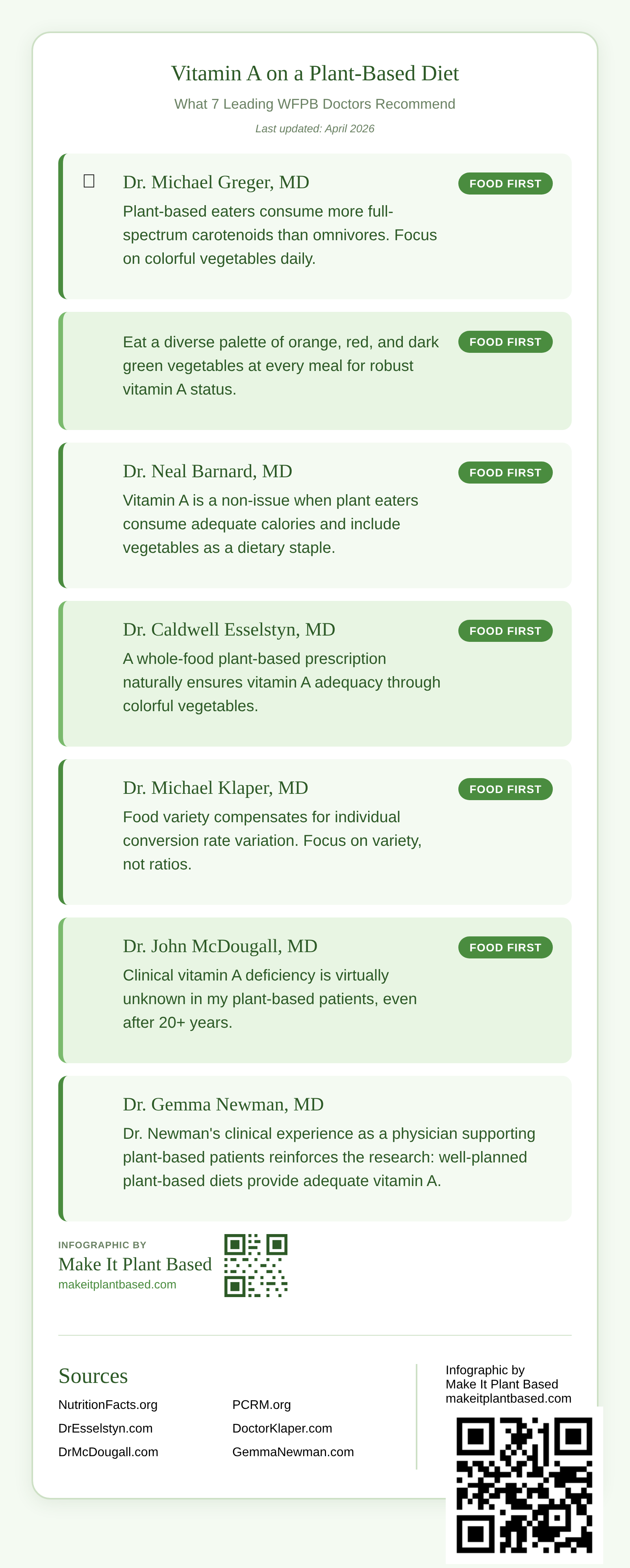
Dr. Michael Greger, MD, FACLM
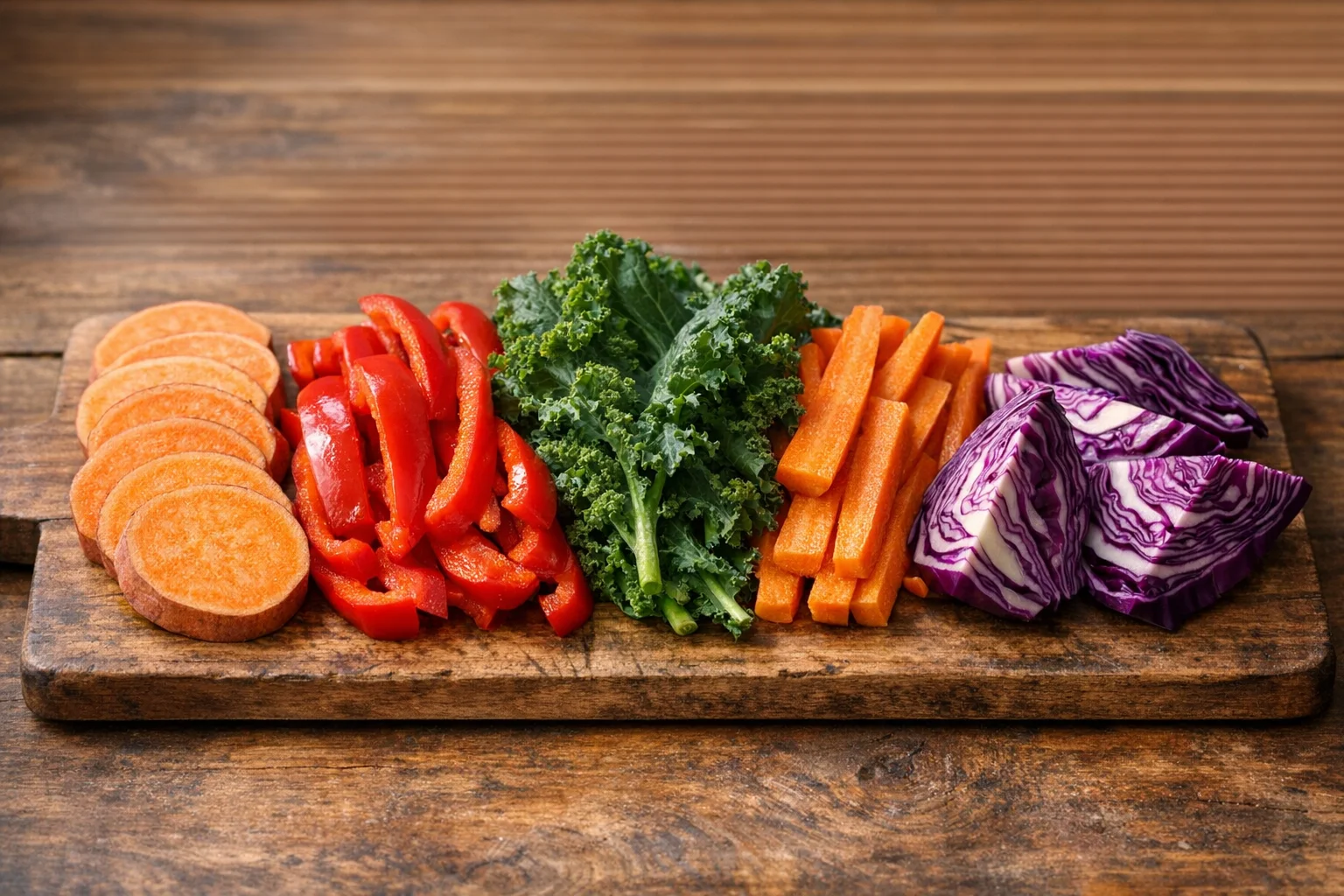
Dr. Greger emphasizes that plant-based eaters consume significantly more of the full spectrum of carotenoids compared to omnivores. The focus on beta-carotene conversion alone misses the broader picture: lycopene (in tomatoes), lutein and zeaxanthin (in leafy greens), and dozens of other carotenoids provide independent health benefits beyond retinol conversion. His recommendation: include a variety of colorful vegetables daily—orange (carrots, sweet potatoes, squash), red (tomatoes, peppers, cabbage), and dark green (kale, collards, spinach). This natural food diversity automatically ensures multiple carotenoid sources and provides the “insurance policy” of redundant conversion pathways. (NutritionFacts.org — Vitamin A)
Dr. Joel Fuhrman, MD
Dr. Fuhrman recommends consuming a diverse palette of vegetables at every meal, with particular attention to the pigments indicating carotenoid content. Orange (sweet potatoes, carrots, squash), red (tomatoes, peppers, cabbage), and dark green (kale, collards, spinach) vegetables should be staples at virtually every meal. Diversity naturally provides robust vitamin A status without requiring supplementation or fortified foods. His approach emphasizes that nutrient adequacy follows naturally from eating a rainbow of whole plant foods in sufficient quantity. (DrFuhrman.com — Eye Health)
Dr. Neal Barnard, MD, FACP
Dr. Barnard’s comprehensive reviews of micronutrient adequacy in plant-based diets consistently show vitamin A as a non-issue when plant eaters consume adequate calories and include vegetables as a dietary staple. His research specifically addresses the BCMO1 controversy and notes that while genetic variation is real, it doesn’t create clinical problems in well-nourished plant-based populations. Plant-based eaters easily exceed evidence-based minimums with typical consumption patterns. His clinical experience across thousands of plant-based patients confirms vitamin A deficiency is absent and eye and skin health are robust. (PCRM — Plant-Based Vitamin A and Liver Disease Risk)
Dr. Caldwell Esselstyn Jr., MD
Dr. Esselstyn’s whole-food plant-based prescription for cardiovascular disease reversal naturally ensures vitamin A adequacy through emphasis on colorful vegetables, whole grains, legumes, nuts, and seeds. While his primary focus is atherosclerotic disease reversal, his dietary pattern inevitably provides optimal vitamin A intake through comprehensive micronutrient support. His plant-based patients, who have reversed severe coronary artery disease on his program, demonstrate excellent micronutrient status with robust vitamin A levels.
Dr. Michael Klaper, MD
Dr. Klaper directly addresses the beta-carotene conversion question in his clinical writing, explaining that while conversion efficiency varies by individual due to BCMO1 variations and other factors, the quantity and diversity of carotenoid-rich foods consumed on plant-based diets more than compensates for individual variability. His decades of clinical experience treating plant-based patients has shown him that conversion concerns are theoretical rather than practical. He recommends focusing on food variety rather than worrying about specific conversion ratios. The redundancy of multiple carotenoid sources and adaptive absorption mechanisms make individual genetic variation irrelevant to actual nutrient adequacy.
Dr. John McDougall, MD
Dr. McDougall has observed vitamin A adequacy across thousands of plant-based patients over decades of clinical practice spanning multiple continents. His approach emphasizes starchy vegetables (sweet potatoes, squash, potatoes) combined with leafy greens and other vegetables. Clinical vitamin A deficiency is virtually unknown in his plant-based patient population, strongly suggesting theoretical concerns don’t translate to real-world problems. His patients often show dramatic health improvements when adopting plant-based diets, and vitamin A status is never a concern. His long-term clinical observations provide some of the strongest real-world evidence for the adequacy of plant sources. (DrMcDougall.com — Vitamin A and Hip Fractures)
Dr. Gemma Newman, MD
Dr. Newman’s clinical experience as a physician supporting plant-based patients reinforces the research: well-planned plant-based diets provide adequate vitamin A. She recommends a simple practical strategy: ensure diverse vegetable intake aiming for color variety across the week, adequate overall calorie intake to support nutrient absorption, and inclusion of healthy fats (nuts, seeds, avocados, oils) to support carotenoid absorption. Her emphasis is on patterns and variety rather than obsessive nutrient tracking or micronutrient counting. She notes that plant-based eaters who follow these principles show no vitamin A deficiency in clinical practice, with lab values confirming adequacy.
Top Plant-Based Vitamin A Sources
Understanding which foods provide vitamin A and in what quantities is essential for practical nutrition planning. Here are the top plant-based vitamin A sources listed with their vitamin A content per typical serving:
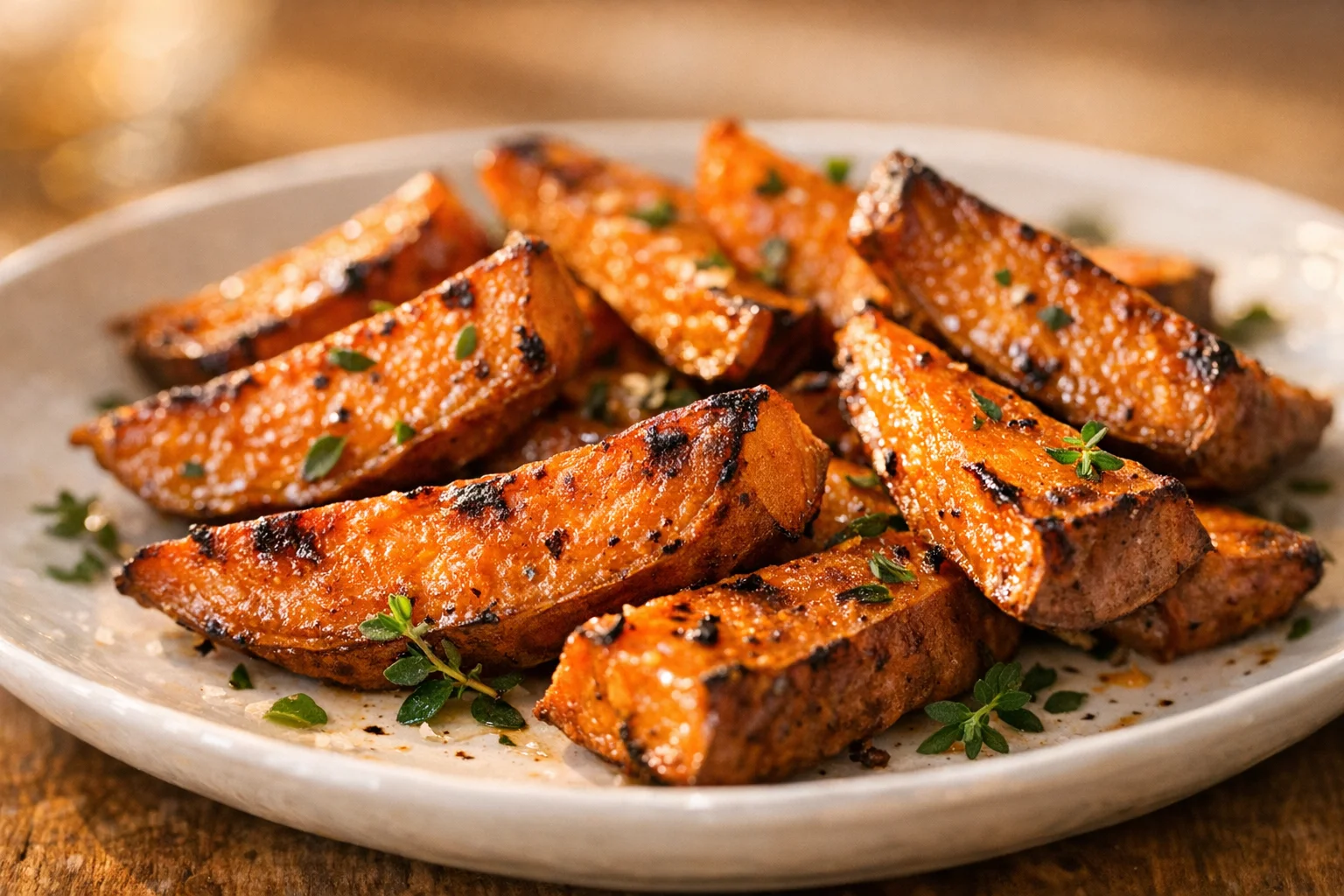
Sweet Potatoes (cooked, 1 cup cubed) – 1,460 mcg RAE (162% RDA). A nutritional powerhouse for provitamin A with high bioavailability when cooked. The heat breaks down cell walls, making carotenoids more accessible. Roast as wedges with olive oil, mash into curries, or add to soups and stews. Store in a cool place for several weeks.
Carrots (raw, 1 medium) – 509 mcg RAE (57% RDA). A versatile, affordable classic that becomes more bioavailable when cooked. Eat raw in salads and slaws with oil-based dressings, roasted until caramelized, or in soups and stews. One carrot provides more than half the RDA for women.
Kale (raw, 1 cup chopped) – 479 mcg RAE (68% RDA). Leafy greens with substantial carotenoid content. Kale’s beta-carotene is remarkably stable and bioavailable in salads with oil dressing, baked into chips, or blended into smoothies. Use raw in salads or cooked in soups and sautés.
Spinach (cooked, 1 cup) – 943 mcg RAE (104% RDA). Cooking increases bioavailability significantly and reduces oxalic acid, improving overall absorption. A single serving provides nearly all of the RDA for vitamin A. Frozen spinach is equally nutritious and convenient.
Butternut Squash (cooked, 1 cup cubed) – 1,435 mcg RAE (159% RDA). Winter squashes are carotenoid-dense with natural sweetness. Roast with olive oil and herbs, puree into soups, or add to grain bowls. Stores well in a cool place for months.
Red Bell Peppers (raw, 1 medium) – 292 mcg RAE (33% RDA). While lower than orange varieties, red peppers contribute importantly to dietary variety and provide beta-carotene plus vitamin C supporting iron absorption. Enjoy raw, roasted, or in stir-fries. Available fresh or frozen year-round.
Collard Greens (cooked, 1 cup) – 1,080 mcg RAE (120% RDA). Often overlooked in favor of kale, collards rival kale in nutrition and offer a milder flavor. Prepare Southern-style, with Asian seasonings, or in Italian preparations.
Apricots (dried, 10 whole) – 380 mcg RAE (43% RDA). Dried apricots concentrate carotenoids in a convenient, shelf-stable form. Use as a snack, in trail mix with nuts and seeds, or rehydrated in curries. Pair with fat for better absorption.
Cantaloupe (1 cup chunks) – 271 mcg RAE (31% RDA). A seasonal summer source of carotenoids with hydrating properties. Enjoy fresh in fruit salads, smoothies, or as a refreshing snack.
Pumpkin (cooked, 1 cup puree) – 953 mcg RAE (106% RDA). Extraordinarily dense in provitamin A. Use year-round in curries, soups, desserts, or mixed into oatmeal. Canned pumpkin is convenient and nutritionally equivalent to fresh.
A practical approach: include at least one serving of carotenoid-rich food at two meals daily. This could be a salad with oil dressing at lunch, roasted sweet potato at dinner, and raw carrots as a snack. Within one week, you’ll exceed vitamin A RDA targets comfortably. Consistency and variety matter more than daily perfection—your liver stores vitamin A for months, so weekly and monthly patterns matter more than daily fluctuations.
How to Maximize Vitamin A Absorption
Knowing which foods contain vitamin A is only part of the equation. Absorption depends on several factors you can directly control through food preparation and meal planning. Optimizing absorption doesn’t require special supplements or complex strategies—just awareness of practical principles.
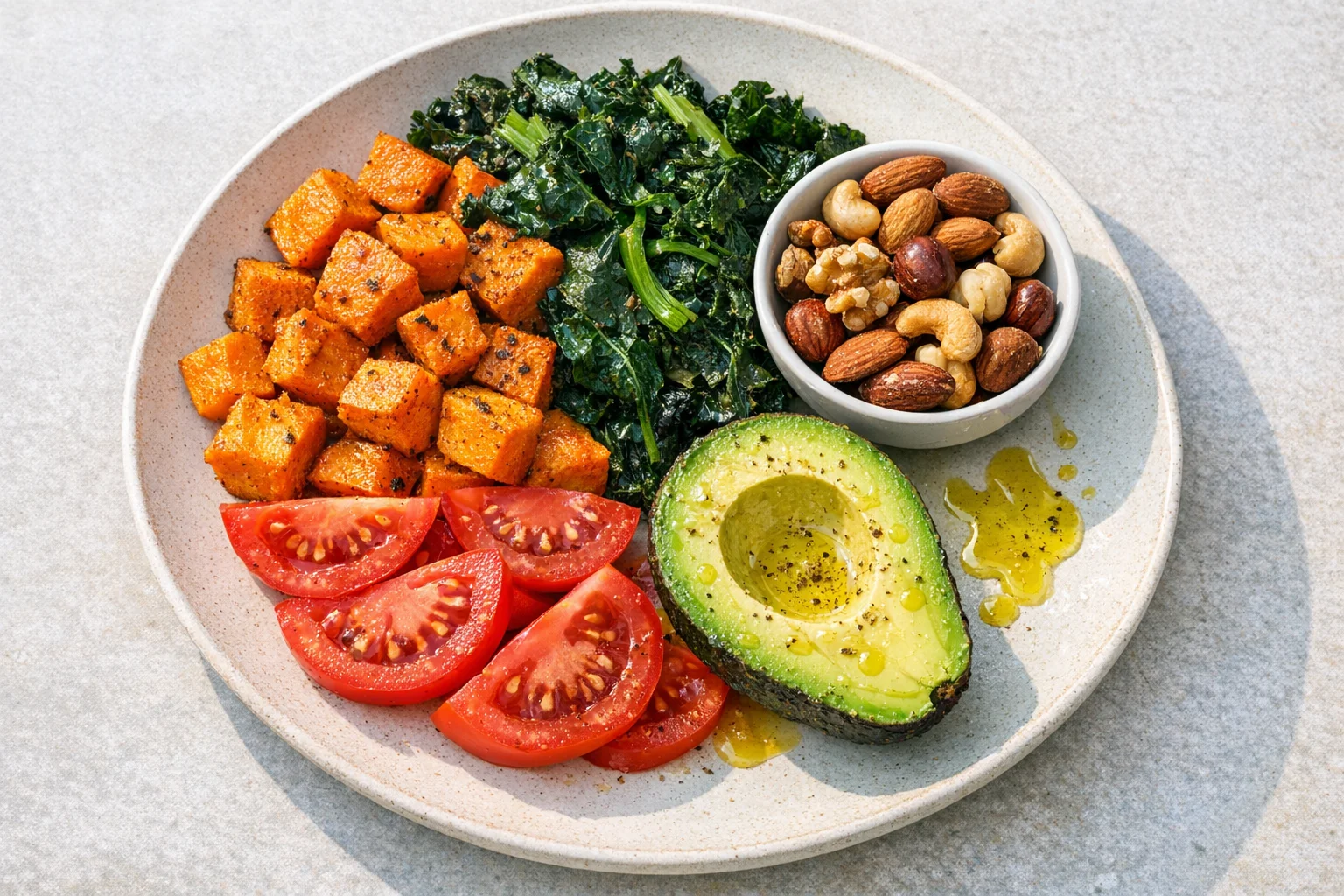
Pair Carotenoids with Dietary Fat: Beta-carotene and other carotenoids are fat-soluble, requiring dietary fat in the same meal for optimal absorption. Your intestines use dietary fat as a signal to absorb lipophilic compounds like carotenoids. Dress salads with olive oil or tahini-based dressings, pair roasted vegetables with nuts or seeds, include avocado, or serve cooked carrots with tahini sauce or coconut milk curry. Research shows 3-5 grams of dietary fat can increase absorption by 200-300%. A salad with vegetables and oil dressing absorbs carotenoids far more effectively than a large fat-free salad.
Include Cooking to Break Down Cell Walls: Cooking—whether steaming, roasting, sautéing, or blending—breaks down cellular structures and increases bioavailability. Beta-carotene is heat-stable, so cooked carrots have 25% higher bioavailable content than raw. Steamed or roasted vegetables deliver more absorbable vitamin A than raw vegetables with the same content. Vary cooking methods—roasting at high heat concentrates nutrients, while steaming preserves delicate compounds.
Combine Raw and Cooked Sources: A balanced approach includes both raw (salads, slaws, smoothies) and cooked (roasted, steamed, sautéed) carotenoid-rich foods. Raw vegetables provide enzymes and heat-sensitive compounds, while cooked vegetables provide enhanced carotenoid bioavailability. Lycopene in tomatoes is more bioavailable from cooked sources. A practical pattern might include a raw salad at lunch and a cooked vegetable side at dinner.
Optimize Overall Nutrition Status: Vitamin A absorption depends on adequate protein, zinc, and vitamin E. A well-planned plant-based diet provides these through legumes (protein and zinc), whole grains (zinc and vitamin E), nuts and seeds (all three), and plant oils (vitamin E). Zinc is particularly important for synthesizing retinol-binding protein, which transports vitamin A in blood. Typical plant-based diets provide adequate amounts of all cofactors needed.
Maintain Adequate Calorie Intake: Calorie restriction impairs absorption of all fat-soluble vitamins. When people underconsume calories, digestive secretions decrease and nutrient absorption diminishes. Adequate calories with diverse foods ensure efficient vitamin A absorption. Extreme low-fat or low-calorie diets impair overall nutrient status.
Include Diverse Carotenoid Sources: Different carotenoids absorb through different pathways. Include orange (beta and alpha-carotene), red (lycopene and beta-carotene), and green (lutein and zeaxanthin) sources. Dietary diversity across the spectrum of plant pigments provides redundancy in carotenoid uptake and compensates for individual genetic variation in absorption efficiency.
Frequently Asked Questions About Vitamin A on a Plant-Based Diet
Key Research References
Q: Do I need to take a vitamin A supplement on a plant-based diet?
A: No. A well-planned plant-based diet that includes adequate calories and a variety of carotenoid-rich foods provides more than sufficient vitamin A. Supplementation is not necessary and, given the fat-soluble nature of vitamin A and potential for accumulation at high doses, it’s best to obtain vitamin A from food sources. The exception would be for individuals with specific medical conditions affecting fat absorption (like cystic fibrosis or celiac disease), those recovering from bariatric surgery, or those following particularly restrictive diets lacking in vegetables. Even in these cases, a healthcare provider would typically recommend supplementation based on individual lab values rather than as a blanket recommendation.
Q: What about my BCMO1 gene status? Should I get tested?
A: BCMO1 genetic testing is not standard clinical care, nor is it necessary for nutrition planning. While BCMO1 polymorphisms affect conversion efficiency in approximately 45% of people, they don’t create deficiency on diets containing adequate carotenoids. The redundancy built into your physiology—multiple carotenoid conversion pathways, adaptive absorption, liver storage capacity, and potential fortified food sources—compensates for individual variation in a single enzyme. If you’re concerned about micronutrient status generally, a blood test measuring retinol or retinol-binding protein is far more practical and informative than genetic testing. These biomarkers directly show whether your vitamin A status is adequate, which is what actually matters clinically.
Q: Is beta-carotene converted to vitamin A less efficiently in some people?
A: Yes, BCMO1 gene variants affect conversion efficiency in approximately 45% of people. However, “less efficient” doesn’t mean “inadequate.” Even people with reduced conversion maintain normal vitamin A status when consuming typical plant-based diets that include vegetables as a dietary foundation. Your body also upregulates absorption of carotenoids when vitamin A status is low, creating a homeostatic buffer against deficiency. The clinical literature consistently shows that people with reduced BCMO1 enzyme activity don’t develop vitamin A deficiency on plant-based diets. This real-world clinical observation trumps theoretical mathematical calculations about conversion ratios.
Q: Are carotenoids beneficial beyond their conversion to vitamin A?
A: Absolutely. Beta-carotene and other carotenoids provide powerful antioxidant, anti-inflammatory, and immunomodulatory effects independent of vitamin A conversion. Research shows that high carotenoid intake is associated with reduced risk of cancer, cardiovascular disease, and age-related macular degeneration—benefits that persist even when controlling for retinol intake. Carotenoids protect against oxidative damage that occurs during normal metabolism and in response to environmental stressors. Lycopene, lutein, zeaxanthin, and dozens of other carotenoids have been studied for specific health effects. This is one reason why a plant-based diet, rich in carotenoids, offers advantages beyond simple micronutrient adequacy. The full spectrum of plant-based foods provides thousands of bioactive compounds that work synergistically for health.
Q: How can I tell if I’m getting enough vitamin A?
A: If you’re including a variety of orange, red, and dark green vegetables across multiple meals weekly, consuming adequate total calories, and eating mostly whole plant foods, you’re almost certainly meeting your vitamin A needs. You don’t need to track individual nutrients or obsess over meeting exact daily targets. For additional assurance, a simple blood test measuring serum retinol or retinol-binding protein can confirm adequacy; vitamin A deficiency is extraordinarily rare in well-nourished plant-based populations in developed countries. Most healthcare providers don’t routinely test for vitamin A status in plant-based eaters because deficiency is so uncommon. If you do get tested and your levels are normal, you can be confident in your dietary pattern.
Q: Does cooking destroy the vitamin A in vegetables?
A: No. Beta-carotene is remarkably heat-stable, and in fact, cooking often improves bioavailability by breaking down cell walls and making carotenoids more accessible. So-called “raw food only” approaches are unnecessary for vitamin A adequacy and may actually reduce carotenoid absorption compared to mixed raw and cooked diets. The cellular matrices that protect carotenoids in raw vegetables are broken down during cooking, releasing carotenoid molecules and making them more accessible to your intestines. A practical dietary pattern includes both raw and cooked vegetables to benefit from the advantages of each preparation method.
Take the guesswork out of plant-based nutrition.
Explore our evidence-based guides on the nutrients that matter most.
Browse All Nutrient Guides