![Selenium on a Plant-Based Diet: Why One Brazil Nut Changes Everything [2026]](https://makeitplantbased.com/images/articles/selenium-plant-based-diet/selenium-plant-based-diet-featured.webp)
A single Brazil nut contains enough selenium to meet more than half your daily needs. This overlooked trace mineral wields surprising power over thyroid health and iodine function, immune response, and antioxidant defenses, making it a genuine game-changer for plant-based eaters. Yet selenium deficiency narratives permeate plant-based nutrition discussions, leaving many vegans unnecessarily worried they’re falling short. Meanwhile, research tells a more nuanced story. Geography, food sources, and individual status all matter far more than a simple vegan-versus-omnivore label.
This article separates fact from myth, explores what recent research actually shows, and equips you with evidence-based guidance from leading plant-based doctors. Whether you’re wondering about Brazil nut safety, whether supplements are necessary, or simply want to understand this mineral’s role in your health, you’ll find actionable answers here.
What Is Selenium?
Selenium is an essential trace mineral your body cannot manufacture. Your thyroid contains the highest selenium concentration relative to its size, where it functions as a core component of selenoproteins that regulate thyroid hormone activation, protect against oxidative stress, and control immune responses. Beyond thyroid function, selenium participates in antioxidant defense through glutathione peroxidase and supports immune cell development.
Selenoproteins and Their Functions: Selenium’s biological power stems from its incorporation into 25 distinct selenoproteins in human tissue. Among these, glutathione peroxidase (GPx) is perhaps the most critical—this enzyme neutralizes harmful hydrogen peroxide and lipid peroxides throughout your cells, protecting cell membranes from oxidative damage. GPx operates across different cellular compartments (cytoplasmic GPx-1, mitochondrial GPx-3, and others) to provide comprehensive antioxidant defense, essentially acting as your body’s primary line of defense against free radical accumulation. Thioredoxin reductase (TR) works synergistically with glutathione peroxidase to maintain cellular antioxidant balance and regenerate other protective molecules like vitamin C and vitamin E, creating a powerful recycling system that extends the lifespan of these antioxidants. Selenoprotein P circulates in blood and concentrates particularly in the brain and testicular tissue, serving as a selenium transporter to distribute this mineral to selenium-depleted tissues and providing direct antioxidant protection in neural tissue where oxidative stress particularly threatens cognitive function. Additional selenoproteins like selenoprotein W protect muscle tissue from oxidative damage, while selenoprotein K regulates calcium signaling in the endoplasmic reticulum. Deficiency of these selenoproteins leads to accumulated cellular damage, impaired immune function, and accelerated aging at the molecular level.
Thyroid Hormone Conversion and Activation: Your body converts dietary iodine on a plant-based diet into thyroid hormones (T4 and T3), but this process requires selenoprotein enzymes called deiodinases. Without adequate selenium, your body cannot efficiently convert T4 (thyroxine, the inactive storage form) into T3 (triiodothyronine, the metabolically active form). This means you can consume adequate iodine yet still experience thyroid dysfunction if selenium is insufficient—a particularly important point for plant-based eaters who may also be monitoring iodine status. The three deiodinases (D1, D2, and D3) work in concert to regulate thyroid hormone availability in different tissues. D1 (type 1 deiodinase) primarily converts T4 to T3 in the liver and kidneys, providing systemic thyroid hormone activation. D2 (type 2 deiodinase) operates in the brain, pituitary gland, and skeletal muscle to produce T3 locally where it’s needed most, ensuring adequate thyroid hormone availability in the central nervous system and peripheral tissues. D3 (type 3 deiodinase) inactivates thyroid hormones by converting T4 to reverse T3, regulating hormone levels and preventing excessive thyroid signaling. Brain tissue in particular depends critically on adequate selenium for D2 function—inadequate selenium can contribute to brain fog, reduced cognitive function, and mood disturbances independently of systemic thyroid status. This tissue-specific regulation means that blood-level thyroid hormones (T4 and T3) might appear normal even with marginal selenium status, yet local thyroid hormone availability in critical tissues like brain becomes compromised.
DNA Synthesis and Genetic Stability: Selenoprotein participation extends into DNA synthesis and repair. Thyroid peroxidase requires selenium, and deficiency impairs your body’s ability to accurately duplicate DNA before cell division. Additionally, selenoproteins protect genetic material from oxidative damage that could lead to mutations. This makes selenium particularly important during periods of rapid cell growth and division, including childhood development, pregnancy, and immune response to infection.
The Recommended Dietary Allowance (RDA) is 55 micrograms (mcg) daily for adults. Individual needs vary based on genetics, health status, and environ on a plant-based dietmental factors. To achieve full selenoprotein expression and optimal thyroid enzyme function, many nutrition scientists believe slightly higher intakes (70-100 mcg daily) may offer additional protection, though 55 mcg remains the official recommendation.
The Deficiency Myth
Here’s the dominant narrative you’ve likely encountered: vegans are selenium-deficient. It’s repeated in online forums, whispered in plant-based community groups, and cited as gospel in some nutritional articles. The reality is far more complicated and, frankly, less dire than the myth suggests.
The geographical reality: Selenium content in plant foods depends entirely on soil selenium levels—and soil selenium varies dramatically by region. North American and Canadian soils contain adequate selenium, meaning that residents eating a diverse plant-based diet typically consume sufficient amounts without any special effort. Parts of Europe, parts of Asia, and regions of New Zealand and Finland have low-selenium soils, creating genuine concerns for residents of those areas regardless of diet type.
This point cannot be overstated: your geographic location matters infinitely more than whether you eat animals. A vegan in Canada and an omnivore in selenium-depleted parts of Eastern Europe face entirely different mineral realities.
The research nuance: When studies show vegans with lower serum selenium compared to omnivores, they typically occur in regions where vegans intentionally avoid animal products without replacing them with plant-based alternatives. But these lower levels often remain within healthy, functional ranges—not actually deficient. The conflation of “lower” with “deficient” has created unnecessary panic. Having lower serum selenium than average doesn’t automatically mean compromised thyroid or immune function.
Research & Statistics
Recent peer-reviewed research provides reassuring evidence about selenium status in plant-based populations. Here’s what the science actually shows:
Serum Selenium Differences: The NuEva Study (PMC 37630729) documented vegans with lower mean serum selenium (68 µg/L) versus omnivores (77 µg/L). However, both groups fell within normal reference ranges (70-150 µg/L) with adequate selenoprotein expression. Lower serum selenium is not synonymous with inadequate function.
Brazil Nut Efficacy: A 2025 randomized controlled trial (PMC 39891729) comparing Brazil nut butter to selenium supplements found both sources raised plasma selenium equally effectively. Notably, vegans showed more pronounced increases in selenoprotein P levels compared to omnivores, suggesting their bodies upregulate selenoprotein synthesis when given adequate selenium.
Bioavailability Parity: A bioavailability study (PMC 18258628) directly compared Brazil nuts to supplements. Two Brazil nuts daily produced a 64% plasma selenium increase versus 61% for supplemental selenium—statistically equivalent, disproving assumptions that plant sources are inherently inferior.
Thyroid Function Preservation: A thyroid-focused study tracked TSH and free T4 levels in vegans with lower serum selenium. Despite reduced levels, thyroid function markers remained normal, suggesting adequate adaptation rather than pathology.
Sex-Specific Considerations: Research on women’s selenium status indicates that women regardless of diet face higher baseline risk for marginal selenium intake, particularly after midlife. Plant-based women warrant particular attention to selenium sources, though increased risk isn’t unique to veganism.
The Brazil Nut Question
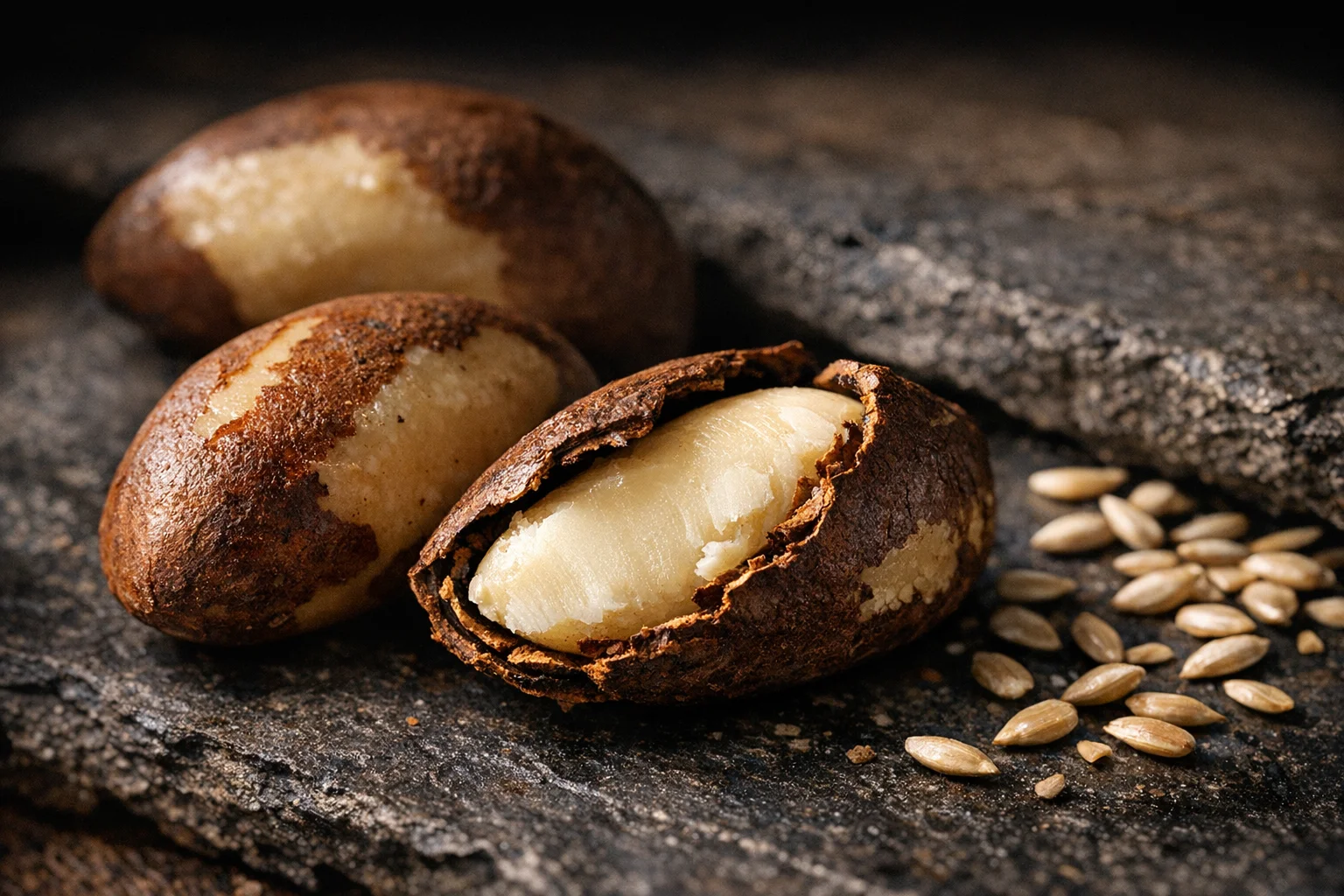
Brazil nuts deserve their own careful examination because they’re simultaneously a nutritional superpower and a source of legitimate confusion. Understanding both their benefits and limits prevents both deficiency and toxicity.
Selenium Content and Geographic Variation: A single Brazil nut typically contains 68-91 micrograms of selenium, though this varies dramatically by growing region, nut size, harvest timing, and soil selenium content. The source matters considerably: Brazil nuts cultivated in the selenium-rich soils of the Amazon region in Brazil contain significantly higher selenium concentrations than those grown in Bolivia or Peru where soils have lower natural selenium levels. Some large nuts from Brazil’s most selenium-abundant regions exceed 100 mcg, while smaller nuts from lower-selenium areas may contain only 50-60 mcg. When purchasing Brazil nuts, you’re typically getting the Brazilian variety with the higher selenium content, but awareness of this geographic variation explains why different nutritional references cite different selenium amounts per nut. This means a single Brazil nut can easily cover 55-91% of your entire daily requirement (55 mcg RDA), which is remarkable but also demands thoughtful consumption patterns to avoid inadvertent excess.
One or Two Nuts Daily Covers the RDA: The practical implication is straightforward: one to two Brazil nuts daily provides 55-182 mcg of selenium, which covers the RDA and approaches the threshold at which toxicity risk becomes measurable. One nut comfortably meets your daily needs with a safety margin. Two nuts provide substantial coverage with minimal risk. This makes daily consumption of 1-2 nuts the most straightforward approach for vegans seeking adequate selenium without calculation or anxiety. This level represents the safe sweet spot—sufficient for optimal selenoprotein synthesis and thyroid function, yet with a comfortable safety buffer below the 400 mcg tolerable upper limit.
Why More Isn’t Better—Selenosis and Upper Limits: Selenium toxicity, known as selenosis, is real but requires sustained excessive intake. The tolerable upper intake level (UL) is 400 mcg daily for adults—this represents the highest average daily intake unlikely to cause adverse effects in the general population. Consuming 1-2 nuts daily (55-182 mcg) leaves a 218-345 mcg safety margin before approaching toxicity thresholds. However, chronically exceeding 400 mcg daily (which would require eating 5+ Brazil nuts daily for months) triggers measurable health consequences: garlic taste in your mouth, brittle hair or nails, skin rashes, gastrointestinal upset, and neurological symptoms including peripheral neuropathy. These selenosis symptoms are entirely reversible upon reducing intake, but they underscore the narrow window between adequate and excessive selenium. Research on selenium and disease risk adds another caution: very high intakes (200+ mcg daily sustained) correlate with slightly elevated diabetes and prostate cancer risk in some epidemiological studies, suggesting that more than double the RDA may carry subtle long-term health costs. The evidence-based sweet spot remains 55-100 mcg daily for adults—adequate for full selenoprotein expression, thyroid optimization, and immune function, with significant safety margin below toxicity and disease-risk thresholds.
Practitioner Approaches Vary: Plant-based physicians interpret Brazil nut safety differently based on their reading of the evidence, with some favoring a monthly handful (approximately 9-12 mcg selenium daily average), others recommending a weekly portion (approximately 8-13 mcg daily average), and many endorsing one to two nuts daily (55-182 mcg daily). All approaches achieve adequate selenium within safe ranges. Evidence-based guidance suggests 1-2 daily represents a safe ceiling for most people. Choose the strategy that aligns with your comfort level and personal preference—daily, weekly, or monthly consumption patterns all work physiologically and biochemically.
Doctor Recommendations
Leading plant-based physicians guide their patients based on scientific evidence, clinical observation, and individual patient factors. Here’s how major voices in plant-based medicine approach selenium:
Geographic Selenium Map
Understanding global soil selenium distribution is perhaps the single most important piece of context for understanding selenium on a plant-based diet. Your zip code matters more than your dietary choices when it comes to this mineral.
North America (Adequate to High): The United States and Canada have generally adequate soil selenium, particularly in the Great Plains and Midwest, which serve as the agricultural breadbasket for North America. The Western United States (Wyoming, Montana) and the Canadian prairies (Saskatchewan, Alberta) have notably higher soil selenium concentrations. This geographic advantage means that North American vegans eating a diverse plant-based diet typically obtain sufficient selenium without special planning. Seattle, San Francisco, and the Northeast have lower soil selenium than the Midwest, but remain adequate for people consuming varied foods. Studies of North American plant-based populations consistently show serum selenium levels within normal ranges when dietary variety is present.
Europe (Highly Variable): European soil selenium is notoriously inconsistent, creating dramatically different nutritional landscapes across short distances. The UK has notably low-selenium soil—one reason the UK promotes selenium-fortified foods to the general population. Scandinavia (Denmark excepted) shows low levels, as do much of Eastern Europe including Poland, Ukraine, and the Balkans. The Mediterranean basin (Greece, Spain, southern Italy) also has depleted soils. Conversely, Ireland has exceptionally high soil selenium, parts of Germany have adequate levels, and Denmark—an agricultural hub—benefits from supplemented animal feeds that indirectly boost plant-based foods. This explains why some European vegan studies documented lower serum selenium—not because of veganism per se, but because residents of those regions must be more intentional about selenium sources regardless of diet type. European omnivores relying on locally-sourced meat face the same geographical challenge as vegans.
Asia and Oceania (Extremes Both Ways): China’s selenium distribution is famously bipolar. Some regions have selenium-rich soil producing toxicity risk, particularly in parts of central and southwestern China where naturally high soil selenium combines with traditional foods emphasizing local grains. Conversely, other regions of China have severely depleted soil contributing to endemic selenium deficiency historically documented in the scientific literature. Japan, parts of India, and Southeast Asian countries show variable but generally lower-to-adequate soil selenium, with Japan partially compensating through seafood consumption. New Zealand and Australia have low soil selenium overall, affecting all eaters equally, though Australian agriculture increasingly supplements animal feeds and some fortified plant-based foods address this gap. In these regions, both plant-based and omnivorous eaters benefit from awareness of selenium availability.
Practical takeaway: If you live in North America and eat a reasonably varied plant-based diet including some of the foods listed below, you’re likely meeting your selenium needs without conscious effort. If you live in a low-selenium region (much of Europe, New Zealand, parts of Australia), all residents—not just vegans—benefit from strategic selenium sources or supplementation. Knowing your regional soil status helps you make informed choices rather than defaulting to unnecessary supplementation or nutritional anxiety.
Best Plant-Based Selenium Sources
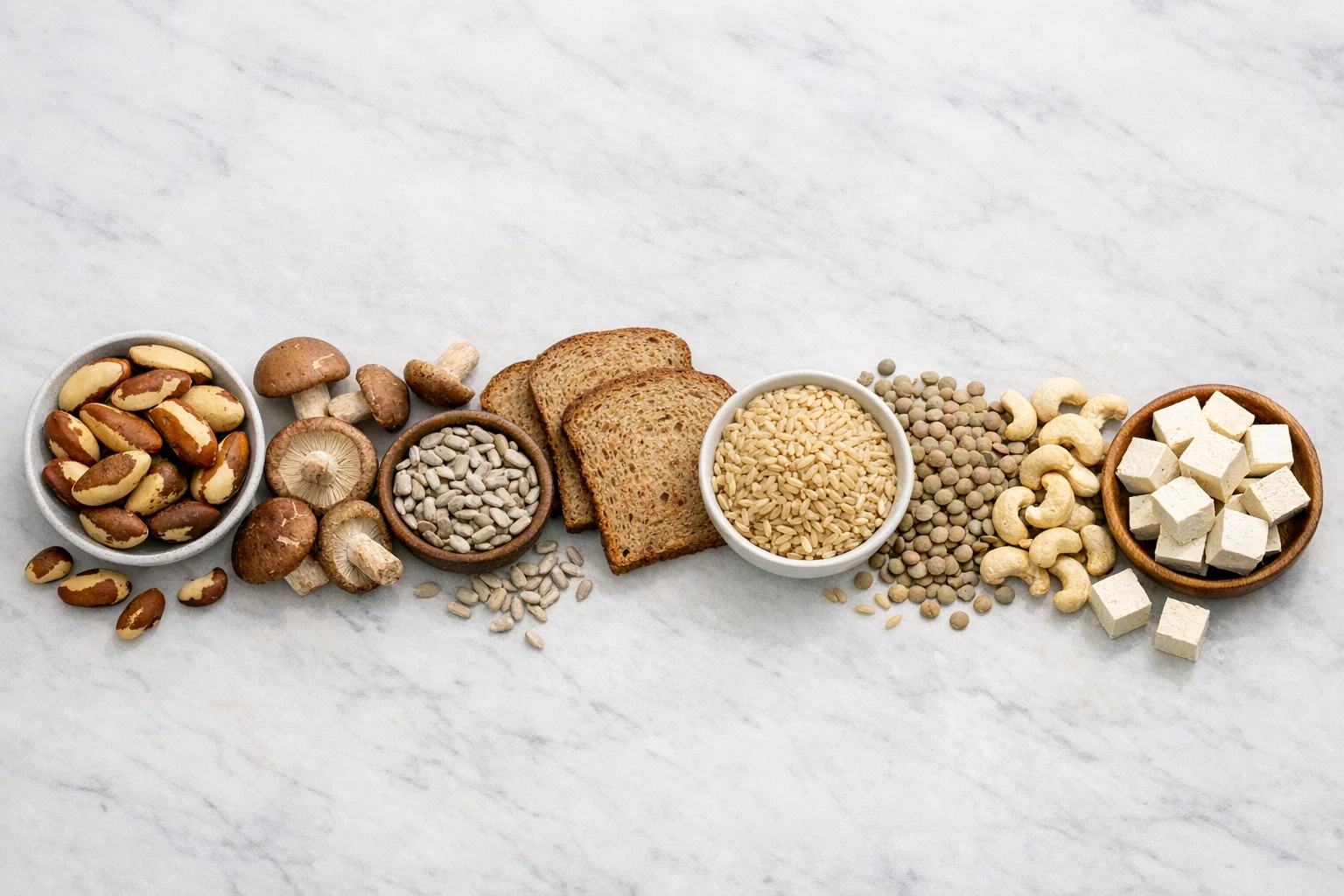
Rather than relying on a single source, building selenium into your diet through variety ensures both adequacy and food pleasure. Here’s what actually works, ranked by selenium concentration:
Use the Selenium in Plant Foods ranking tool to compare sources, or the Compare Selenium Content tool to see how foods stack up.
1. Brazil Nuts: 68-91 mcg per nut covers most of your daily need. One nut is typically sufficient. Easy to incorporate into breakfasts, snacks, or nut butters. Store in airtight containers to preserve nutrition and freshness.
2. Sunflower Seeds: 28-35 mcg per ounce (about ¼ cup). More practical for daily consumption than Brazil nuts, and infinitely flexible. Sprinkle on salads, add to smoothie bowls, mix into granola, or eat straight as a snack.
3. Mushrooms (Dried): 12-26 mcg per ounce depending on type. Shiitake mushrooms are particularly selenium-rich. Rehydrate dried mushrooms in soups and stews, or use mushroom powder in seasonings. One bonus: you’ll boost your vitamin D intake simultaneously.
4. Whole Grains (Cooked): 8-15 mcg per cooked cup depending on type. Brown rice, quinoa, oats, and barley all contribute. Make these staples of your grain consumption and you’ll accumulate meaningful selenium.
5. Tofu and Soy Products: 8-10 mcg per serving. Tofu is an excellent complete protein containing selenium as a bonus. Use it regularly and you’ll gain both amino acids and trace minerals.
6. Lentils and Legumes: 6-8 mcg per cooked cup. Red lentils, chickpeas, black beans—all contribute. Build these into regular meals and your selenium intake accumulates beautifully.
Practical Strategy: Rather than obsessing over hitting exactly 55 mcg daily, aim for a pattern: incorporate two sunflower seed-based meals weekly, enjoy Brazil nuts on your preferred schedule (whether daily, weekly, or monthly), make mushrooms and whole grains regular staples, and eat legumes as your protein sources. This creates cumulative selenium intake without requiring calculation or anxiety.
Frequently Asked Questions
Key Research References
Can I get too much selenium from Brazil nuts?
Yes, but reaching toxicity is genuinely difficult with whole foods. The tolerable upper intake level (UL) is 400 mcg daily for adults—this represents the threshold above which adverse effects become probable in the general population. The narrow window between adequacy and excess is worth understanding: the RDA is 55 mcg, yet the UL is 400 mcg, creating a 7.3-fold margin. Chronically exceeding 400 mcg daily—eating 5+ Brazil nuts daily for months—triggers selenosis: brittle nails and hair, garlic taste in your mouth, gastrointestinal upset, skin rashes, and in severe cases neurological symptoms including peripheral neuropathy. All selenosis symptoms are entirely reversible upon reducing intake. Additionally, some epidemiological research suggests that sustained intakes of 200+ mcg daily (roughly 4+ Brazil nuts daily) may carry subtle long-term risks including modestly increased diabetes and prostate cancer incidence, though these associations are modest and causal mechanisms remain unclear. Following any of the doctor recommendations (1-2 daily, or 2-4 weekly, or 4 monthly) provides 55-182 mcg daily or the equivalent averaged across consumption frequency, leaving abundant safety margin below toxicity thresholds. Blood testing can measure your serum selenium levels (reference range 70-150 µg/L) if you’re concerned about your individual intake. Most people who track their intake carefully find that accidental overdose from whole foods is virtually impossible within normal eating patterns, because it requires sustained daily over-consumption of Brazil nuts—a monotonous eating strategy that few people maintain.
Do I need a selenium supplement if I’m vegan?
It depends on your location and diet diversity. North American vegans eating varied whole foods, including Brazil nuts or sunflower seeds, typically don’t need supplementation. Those in low-selenium regions, or those eating a very limited diet, might benefit from supplementation or more intentional whole-food sources. Blood testing can clarify your status, and a plant-based dietitian can advise based on your specific circumstances. Even if supplementation seems warranted, many plant-based eaters find that adding a handful of sunflower seeds to their routine solves the issue without requiring pills.
Does selenium interact with iodine or other nutrients?
Yes, selenium and iodine work synergistically in thyroid function. Adequate selenium enhances iodine utilization and reduces thyroid autoimmunity risk. They’re nutritional partners rather than competitors. Eating selenium-rich foods alongside iodine sources (seaweed, iodized salt, fortified plant milks) creates optimal thyroid-supporting synergy. Additionally, selenium works alongside vitamin E and glutathione to amplify antioxidant defense, so ensuring adequate intake of these nutrients together creates more powerful protection than any single nutrient alone.
Should vegans prioritize Brazil nuts over sunflower seeds?
Both are excellent choices. Brazil nuts provide massive selenium per nut but require portion awareness. Sunflower seeds are easier to consume in quantity without overthinking and pair beautifully into meals. Ideally, include both along with mushrooms and whole grains. Variety provides insurance against dietary boredom and nutritional gaps. If you dislike Brazil nuts or have a sensitivity to them, sunflower seeds and other sources easily cover your needs—the diversity of plant-based options means there’s no single “required” food.
Can I test my selenium status?
Yes. Your doctor can order a serum selenium test (reference range approximately 70-150 µg/L in most labs). RBC selenium and selenoprotein P are more sensitive markers but less commonly tested. If you’re concerned about adequacy, testing provides reassurance and guides whether dietary adjustment or supplementation is warranted. Insurance often covers basic serum selenium testing, and independent lab testing companies offer it affordably if your doctor isn’t familiar with ordering it. Selenium testing pairs well with iodine and iron testing for comprehensive thyroid and metabolic assessment.
Do plant-based doctors all agree on selenium guidance?
No, they interpret the evidence somewhat differently. Dr. Greger favors periodic consumption (4/month), while Dr. Newman is comfortable with daily Brazil nuts. These aren’t contradictions—they’re different approaches that all prove adequate for meeting selenium needs. Choose the approach that fits your preferences and comfort level. The consistency among major plant-based physicians in confirming that adequate selenium is achievable on a well-planned plant-based diet is more important than their varying specific recommendations.
Take the guesswork out of plant-based nutrition.
Explore our evidence-based guides on the nutrients that matter most.
Browse All Nutrient Guides