
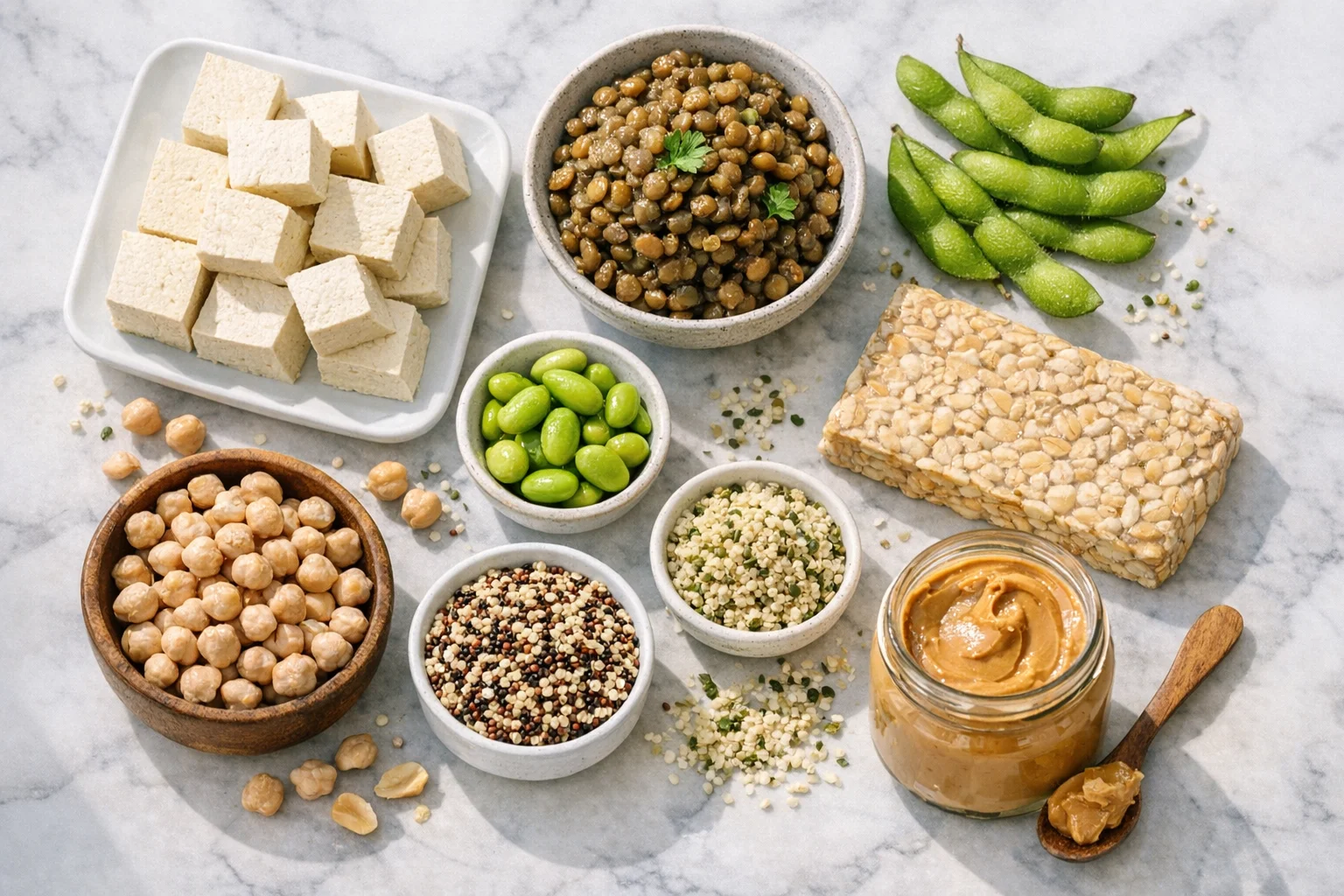
“But where do you get your protein?” It’s the question every plant-based eater has heard, and it reveals a deep misunderstanding about how nutrition works. The truth is that protein deficiency is virtually nonexistent in anyone eating enough calories from whole foods — plant-based or otherwise. The science is clear: a varied whole-food plant-based diet provides all the protein and amino acids you need, and the leading WFPB doctors are unanimous on this point. Let’s look at what the evidence and eight plant-based physicians have to say.
Protein Basics: What It Does and Where It Comes From
Protein is made up of 20 amino acids, 9 of which are “essential” — meaning your body can’t make them and must get them from food. The nine essential amino acids are: histidine, isoleucine, leucine, lysine, methionine, phenylalanine, threonine, tryptophan, and valine. Every single plant food contains all 9 essential amino acids. The proportions vary — legumes are lower in methionine while grains are lower in lysine — but when you eat a variety of whole plant foods throughout the day, you get all the amino acids your body needs in the ratios required for muscle building and all other protein-dependent functions. This isn’t a theory — it’s supported by decades of nutritional science and confirmed by every major dietetic association worldwide, including the Academy of Nutrition and Dietetics.
The “Complete Protein” Myth: What Science Actually Says
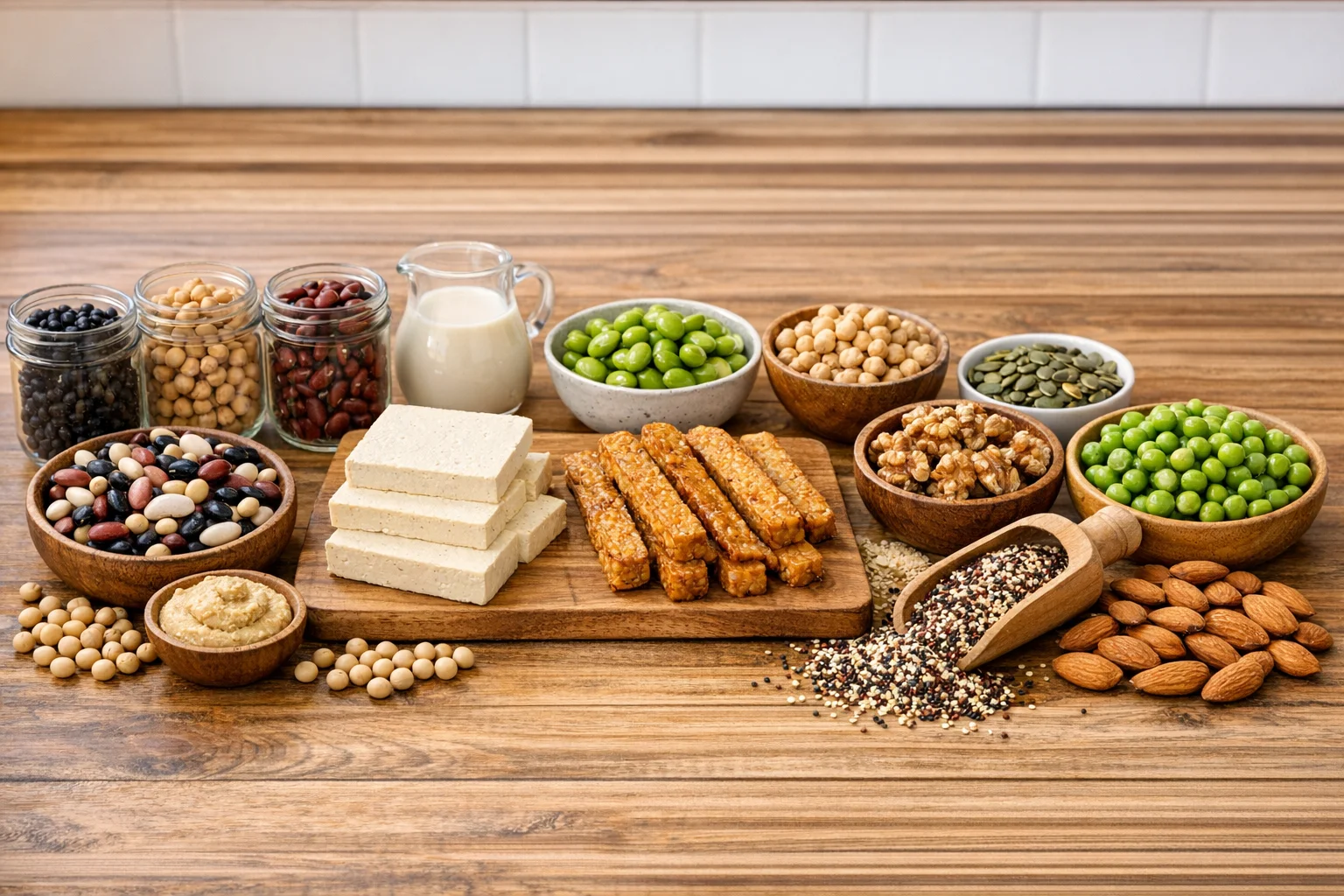
The idea that plant proteins are “incomplete” and must be carefully combined at each meal originated from Frances Moore Lappé’s 1971 book Diet for a Small Planet. Lappé herself retracted the claim in later editions, calling it a mistake. All plant foods contain all essential amino acids — some just have lower proportions of certain ones (like lysine in grains or methionine in legumes). Your body pools amino acids from everything you eat throughout the day and assembles the proteins it needs. There is no need to combine rice and beans at the same meal. In fact, research shows that complementary combining at the same meal provides no advantage over eating varied foods across multiple meals and days.
Understanding Amino Acid Pools
Here’s how amino acid pooling works: when you eat protein, your digestive system breaks it down into individual amino acids. These amino acids don’t immediately get used — instead, they enter an “amino acid pool” in your bloodstream. Your body draws from this pool continuously to build muscle, enzymes, antibodies, hormones, and countless other proteins. This pool is dynamic. Amino acids consumed at breakfast are still available at dinner. Over the course of a day — and even over several days — your body accumulates all the amino acids it needs from a varied diet. A grain eaten at lunch and a legume eaten at dinner contribute to the same amino acid pool. The timing doesn’t matter, and neither does “combining” them at the same meal.
The Academy of Nutrition and Dietetics, in their position statement on vegetarian diets, explicitly states: “Protein quality is important, but vegetarian diets containing a variety of plant protein sources and including sufficient energy intake are adequate to meet protein needs.” They further clarify that complementary combining of proteins is “not necessary” when eating varied plant foods throughout the day. The science here has been settled for decades — the myth persists only due to cultural inertia and marketing interests.
Plant Foods Contain All 9 Essential Amino Acids
Consider common plant foods: soybeans are a “complete” protein with all essential amino acids in optimal ratios. Quinoa is also complete. Hemp seeds, nutritional yeast, and pumpkin seeds all contain all 9 essential amino acids in reasonable proportions. Spirulina (a blue-green algae) is 60-70% protein by weight and contains all essential amino acids. Even foods like lentils and chickpeas — often cited as “incomplete” — contain all 9 essential amino acids. While lysine is lower than in meat, a person eating lentils alongside any whole grain or other plant foods throughout the day easily meets their amino acid needs.
The confusion arises from a metric called the PDCAAS (Protein Digestibility-Corrected Amino Acid Score), which rates foods as “complete” only if they contain all essential amino acids in ratios matching a reference protein. By this measure, tofu is rated as complete, lentils are not. However, this metric is now considered outdated and misleading for plant-based nutrition. A newer metric, the DIAAS (Digestible Indispensable Amino Acid Score), provides a more accurate picture — and even under DIAAS scoring, eating varied plant foods throughout the day ensures adequacy. The Academy of Nutrition and Dietetics doesn’t use PDCAAS or DIAAS for vegetarian diets; instead, they simply note that variety ensures adequacy.
A 2019 review in Nutrients concluded that protein-rich plant foods — legumes, nuts, seeds — are sufficient for full protein adequacy, and that amino acid deficiency concerns are “substantially overstated.” The researchers analyzed amino acid composition of hundreds of plant foods and found that even foods considered “incomplete” by PDCAAS standards provide sufficient amino acids when consumed as part of a varied diet. They concluded that “the need for protein complementation has been exaggerated by decades of nutritional literature.”
How Much Protein Do You Really Need?
The RDA: A Sufficient and Conservative Standard
The RDA for protein is 0.8 grams per kilogram of body weight — about 56 grams for a 155-lb (70 kg) adult. This is the amount needed to meet the needs of 97.5% of the population, and it already includes a generous safety margin of 20-30%. It’s derived from nitrogen balance studies, which measure the minimum amount of protein required to maintain lean muscle mass. The RDA was not designed to optimize athletic performance or maximize muscle building — it’s simply the floor below which deficiency becomes likely. Most people drastically overestimate their protein needs because of decades of marketing from the meat and supplement industries pushing protein-centric nutrition.
Let’s do the math: a typical plant-based diet of 1,800-2,200 calories provides 60-80 grams of protein without any special effort. Dr. Greger notes that plant-based diets typically provide 70% more protein than needed. Even potatoes — not exactly a “protein food” — provide all essential amino acids and about 8 grams of protein per large potato. A cup of cooked rice provides 4 grams. A slice of whole-grain bread provides 3-4 grams. A large apple provides 0.5 grams. Protein is everywhere in whole foods. You would have to deliberately restrict your calories or eat a very narrow range of foods to become protein deficient on a whole-food plant-based diet. In fact, insufficient total calorie intake — not plant-based eating itself — is the only realistic pathway to protein deficiency.
Why Excess Protein Matters (And Is More Common)
It’s worth noting the flip side: excess protein consumption carries real risks. High protein intake has been linked to increased kidney workload in people with existing kidney disease, and some studies suggest excessive protein may accelerate aging through increased mTOR signaling. A meta-analysis of 49 studies found that diets high in animal protein (but not plant protein) were associated with increased all-cause mortality and cardiovascular mortality. The plant-based advantage is that whole plant proteins come with fiber, antioxidants, minerals, and phytochemicals that animal proteins lack. A serving of lentils provides not just 18g of protein, but also 7g of fiber (beneficial for gut health), polyphenols like kaempferol and quercetin (antioxidants), and minerals like iron and magnesium — versus a steak that provides protein with saturated fat, cholesterol, and carcinogenic compounds produced during high-heat cooking.
Athletic Ranges: 1.2-1.6 g/kg for Muscle Building
Athletes and older adults may benefit from slightly higher intake — around 1.2-1.6 g/kg. A 2023 study showed that high-protein plant-based diets support comparable muscle synthesis and hypertrophy to omnivorous diets when total protein intake is matched at approximately 1.6 g/kg/day. This means plant-based athletes can build muscle just as effectively as their omnivorous counterparts when eating adequate protein. The 1.6 g/kg mark is the upper end of what sports nutritionists recommend — beyond this, additional protein provides no additional benefit and may burden the kidneys unnecessarily.
What Do Plant-Based Doctors Say About Protein?
The consensus among WFPB physicians is unambiguous: protein deficiency on a whole-food plant-based diet is virtually impossible when you eat enough calories from varied sources.
Dr. Michael Greger — 0.8 g/kg, Easily Met
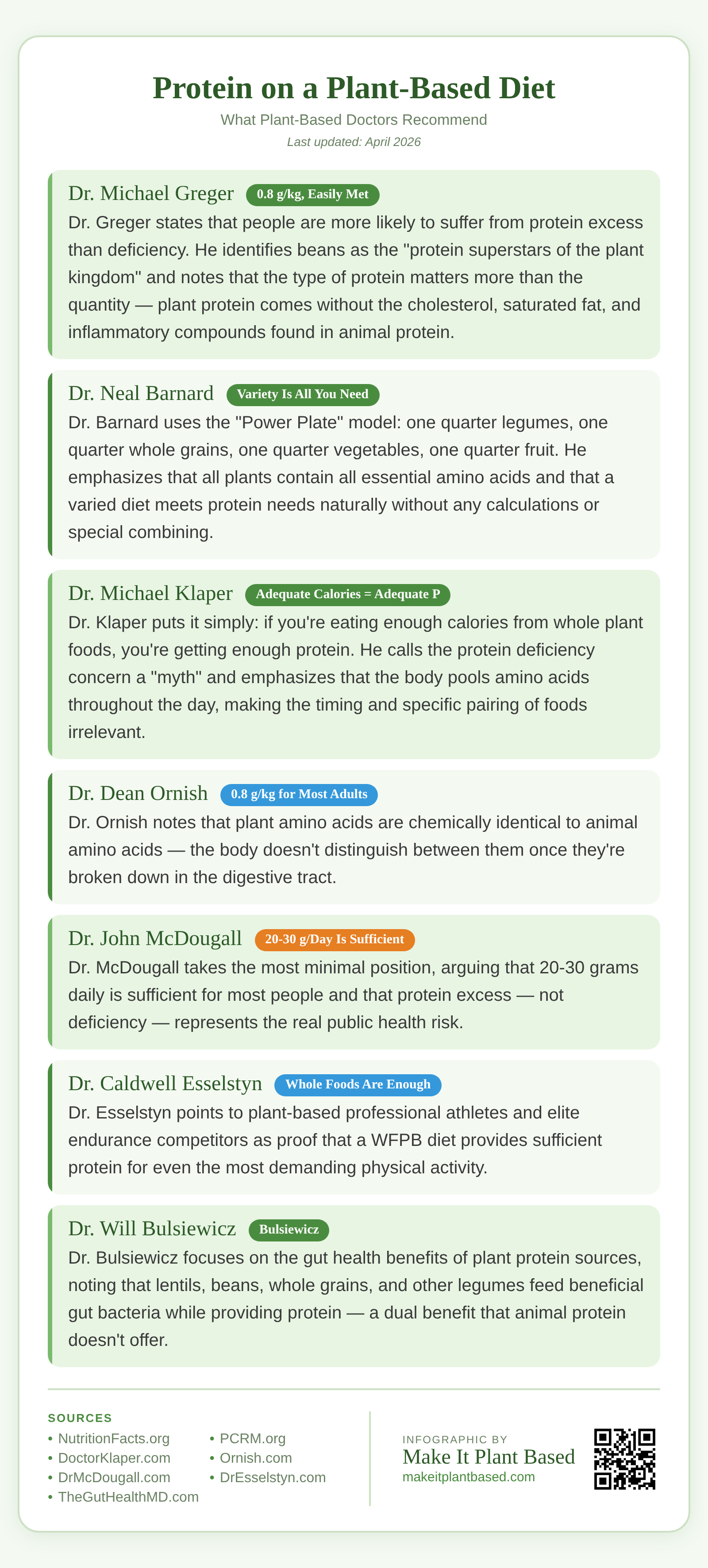
Dr. Greger states that people are more likely to suffer from protein excess than deficiency. He identifies beans as the “protein superstars of the plant kingdom” and notes that the type of protein matters more than the quantity — plant protein comes without the cholesterol, saturated fat, and inflammatory compounds found in animal protein. He emphasizes that plant-based diets naturally exceed protein requirements by a wide margin. In his research, he found that the average plant-based diet provides approximately 70% more protein than the RDA, making protein deficiency virtually impossible when eating adequate calories from whole foods. He references epidemiological studies showing no cases of protein deficiency in developed plant-based populations, and argues that the real public health concern is excess protein consumption, particularly from animal sources, which is linked to increased mortality risk.
NutritionFacts.org — Plant Protein
Dr. Neal Barnard — Variety Is All You Need
Dr. Barnard uses the “Power Plate” model: one quarter legumes, one quarter whole grains, one quarter vegetables, one quarter fruit. He emphasizes that all plants contain all essential amino acids and that a varied diet meets protein needs naturally without any calculations or special combining. He notes that no case of protein deficiency has been documented on a well-planned plant-based diet in the medical literature. Through the Physician’s Committee for Responsible Medicine (PCRM), Dr. Barnard has studied thousands of plant-based eaters and found that protein intake consistently exceeds recommended amounts. He advocates for moving away from protein-focused nutrition myths and instead emphasizing whole plant foods, which provide protein alongside disease-fighting compounds and fiber that support long-term health.
Dr. Joel Fuhrman — 0.8-0.9 g/kg Body Weight
Dr. Fuhrman notes that a typical 1,700-1,800 calorie Nutritarian menu provides 60-70 grams of protein, well above the RDA. He considers adequate protein “not a concern” for most people on a well-planned vegan diet and emphasizes that the focus should be on nutrient density rather than macronutrient counting. He points out that whole plant foods are superior to animal foods because they provide protein alongside micronutrients, phytochemicals, and antioxidants that are absent in animal products. Excessive protein — particularly from animal sources — represents a greater health risk than insufficiency, he argues, citing research linking high animal protein intake to accelerated aging and increased disease risk. His research-based dietary model focuses on micronutrient optimization rather than macronutrient manipulation.
DrFuhrman.com — Plant Protein Wins
Dr. Michael Klaper — Adequate Calories = Adequate Protein
Dr. Klaper puts it simply: if you’re eating enough calories from whole plant foods, you’re getting enough protein. He calls the protein deficiency concern a “myth” and emphasizes that the body pools amino acids throughout the day, making the timing and specific pairing of foods irrelevant. He notes that the amino acid ratios in plant foods vary considerably, but over days and weeks, intake balances out automatically through dietary variety. Based on decades of clinical experience with plant-based patients, Dr. Klaper has never encountered a case of protein deficiency in someone eating adequate whole plant foods. He advocates for a simple approach: eat enough calories, choose a variety of plant foods, and protein takes care of itself without monitoring or special effort.
Dr. Dean Ornish — 0.8 g/kg for Most Adults
Dr. Ornish notes that plant amino acids are chemically identical to animal amino acids — the body doesn’t distinguish between them once they’re broken down in the digestive tract. He recommends beans, lentils, whole grains, and green vegetables as primary sources and provides simple meal planning guidelines based on his program for heart disease reversal. He points out that plant proteins come with cardiovascular benefits that animal proteins lack: no cholesterol, low saturated fat, and abundant fiber. His research in reversing advanced heart disease demonstrates that plant-based diets with 10-15% of calories from protein are not only adequate but superior for cardiovascular health outcomes. He emphasizes that the quality of the protein source matters far more than the quantity.
Ornish.com — Protein on the Reversal Program
Dr. John McDougall — 20-30 g/Day Is Sufficient
Dr. McDougall takes the most minimal position, arguing that 20-30 grams daily is sufficient for most people and that protein excess — not deficiency — represents the real public health risk. He points out that rice alone provides 4 grams of protein per cup, and if eaten as a staple grain consumed three times daily, alone provides approximately 36 grams of protein without any other foods. Over 50 years of clinical practice on a starch-based plant diet, Dr. McDougall has treated thousands of patients and documented zero cases of protein deficiency. He emphasizes that the protein myth persists due to industry marketing rather than scientific evidence. His perspective is that the focus on protein consumption has diverted attention from what actually drives chronic disease: excess oil, processed foods, and animal products.
DrMcDougall.com — Plant Protein
Dr. Caldwell Esselstyn — Whole Foods Are Enough
Dr. Esselstyn points to plant-based professional athletes and elite endurance competitors as proof that a WFPB diet provides sufficient protein for even the most demanding physical activity. He cautions against protein powders and isolated soy protein products, which lack the synergistic micronutrient profile of whole foods. He notes that whole food sources provide complete nutrition packages with fiber, polyphenols, minerals, and vitamins that work together to support performance and recovery. His research on plant-based athletes shows comparable or superior performance outcomes to omnivorous athletes, demonstrating that whole plant foods are entirely adequate for athletic protein needs without supplementation.
DrEsselstyn.com — Plant-Based Nutrition
Dr. Will Bulsiewicz — Fiber-Rich Protein Foods
Dr. Bulsiewicz focuses on the gut health benefits of plant protein sources, noting that lentils, beans, whole grains, and other legumes feed beneficial gut bacteria while providing protein — a dual benefit that animal protein doesn’t offer. Legumes contain both protein and the resistant starches that beneficial bacteria require for health. He emphasizes that plant-based proteins support both immediate nutritional needs and long-term microbiome health, which is foundational for immune function, mental health, and disease prevention. His research shows that plant-based eaters have significantly more diverse and healthier gut microbiomes than omnivorous eaters, directly attributable to consuming more plant protein sources and plant foods overall.
Best Plant Protein Sources: A Quick Guide
Protein Content of Common Plant Foods
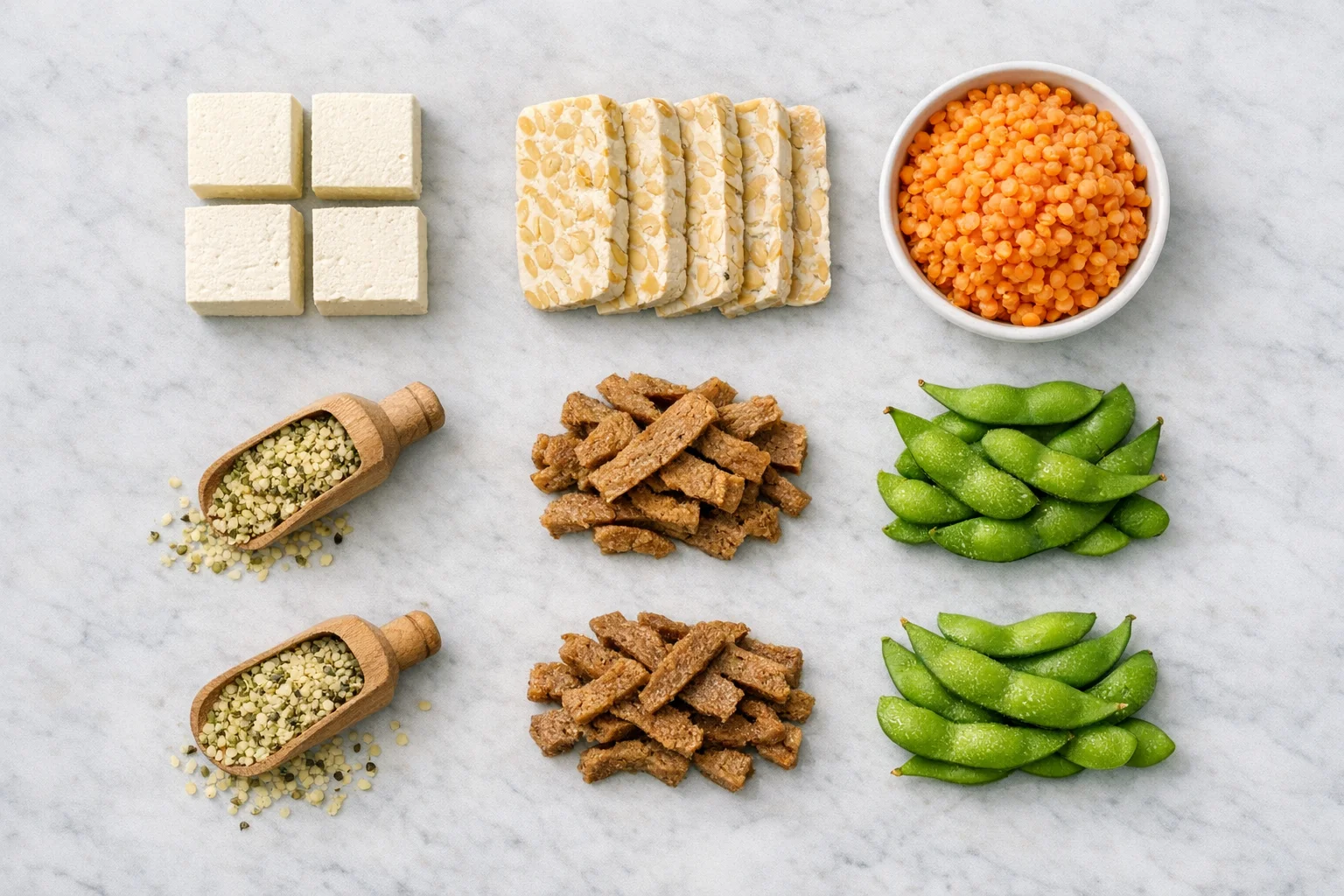
Here are the highest-protein whole plant foods per serving with specific amounts: tempeh (31g per cup cooked), firm tofu (20g per half block), lentils (18g per cup cooked), edamame (17g per cup), chickpeas (15g per cup cooked), black beans (15g per cup cooked), hemp seeds (10g per 3 tbsp), seitan (25g per 3 oz), pumpkin seeds (9g per 1/4 cup), quinoa (8g per cup cooked), peanut butter (7g per 2 tbsp), almonds (6g per 1 oz), and oats (6g per cup cooked). For context, 1 cup of cooked lentils provides nearly as much protein as 3 oz of chicken breast, but with the added benefits of 16g of fiber, polyphenols, and minerals like iron and folate.
Seitan deserves special attention as the highest-protein plant food available: at 25g per 3 oz serving, it matches or exceeds the protein of most animal sources while remaining a whole-food product derived from wheat gluten. Seitan is made by hydrating wheat gluten and cooking it in a savory broth, creating a meat-like texture suitable for countless culinary applications. It’s particularly valuable for athletes and those seeking maximum protein density, though some people avoid it due to gluten sensitivity.
Practical Daily Eating Patterns
What does a day of eating look like when building toward 60-70g protein? Here are two realistic examples:
Example 1 — Moderate Approach: Oatmeal with hemp seeds (3 tbsp), banana, and peanut butter (2 tbsp) for breakfast (15g protein). Mid-morning snack of almonds and an apple (6g). Lentil and vegetable soup with whole grain bread for lunch (22g). Afternoon snack of hummus (2 tbsp chickpea-based) with carrot and celery sticks (4g). Tofu stir-fry (150g firm tofu) with quinoa, broccoli, and edamame for dinner (38g). Total: approximately 85g protein — well above the RDA — with minimal effort or special planning.
Example 2 — Legume-Focused Approach: Whole grain toast with almond butter and sliced tomato for breakfast (8g). Chickpea salad with quinoa, cucumber, tomato, and tahini dressing for lunch (20g). Snack of roasted chickpeas (1/4 cup, 6g). Black bean and sweet potato tacos with nutritional yeast (2 tbsp, 8g) for dinner (22g). Evening snack of trail mix with pumpkin seeds (1/4 cup, 9g). Total: approximately 73g protein across whole foods emphasizing legumes.
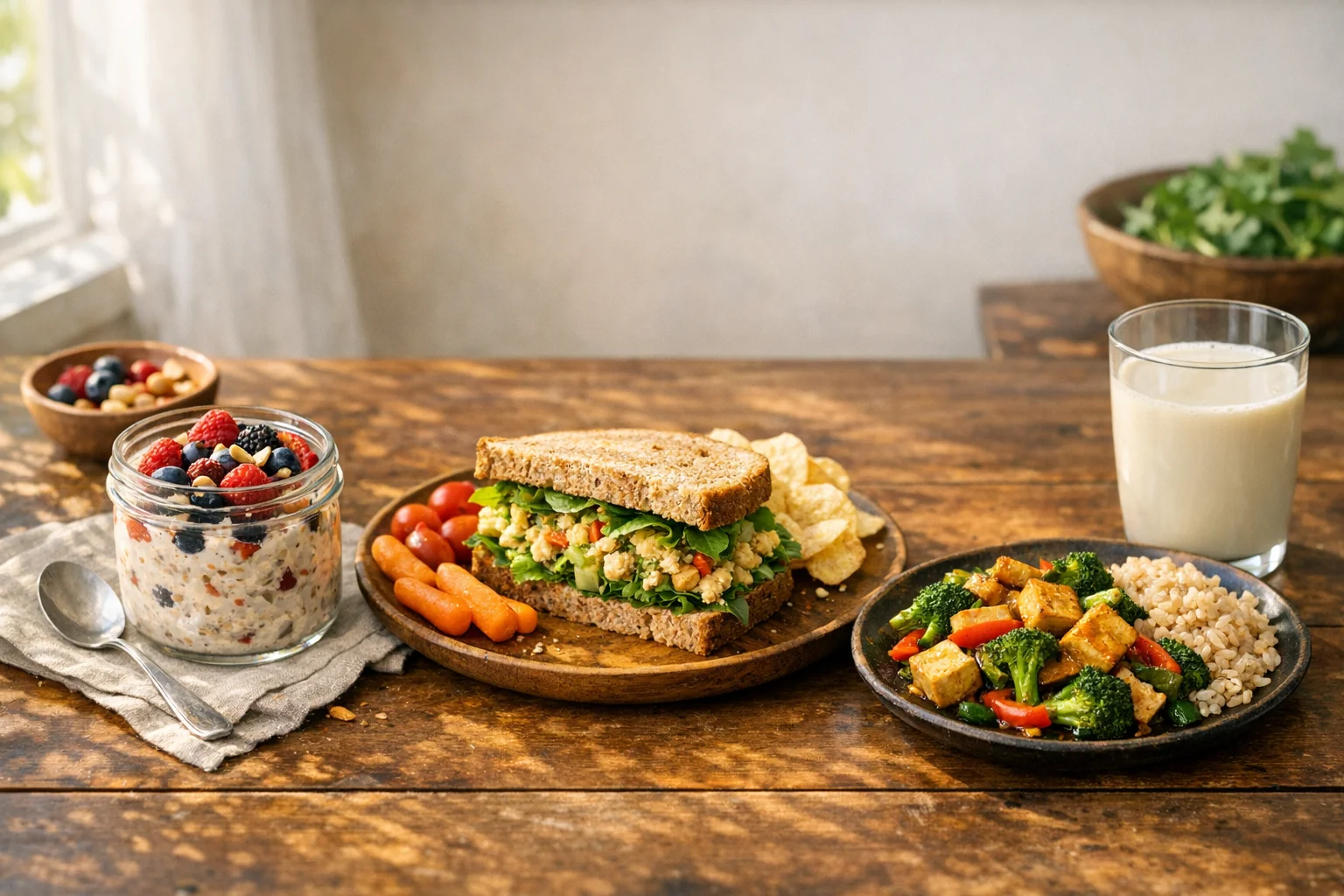
Most people eating enough calories from whole plant foods naturally exceed their protein needs by 20-50%. The diversity of plant proteins also means you’re automatically getting a broad spectrum of micronutrients — the zinc and iron from legumes, the minerals from seeds, the magnesium from dark leafy greens, the B vitamins from whole grains, and the complete complement of antioxidants and phytochemicals absent in animal foods.
Soy Products: Complete Protein Advantage
For those looking to maximize protein density, soy products deserve special mention. Soybeans are unique among legumes because they contain all essential amino acids in nearly complete ratios — comparable to meat. Tofu, tempeh, and edamame (immature soybeans) are therefore exceptionally efficient protein sources. A single serving of tempeh provides as much protein as a comparable serving of chicken, with the added benefits of probiotics (in fermented tempeh), fiber, and isoflavones (phytochemicals associated with reduced cancer and bone loss risk). Tempeh’s firm texture also makes it excellent for grilling, stir-fries, crumbling into salads, and breakfast scrambles, offering versatility beyond tofu.
Firm tofu, when pressed to remove excess water, becomes surprisingly versatile: it can be pan-fried until crispy, pressed and crumbled into “scrambles,” added to smoothies for creaminess, or blended into desserts. Silken tofu works better for smoothies, dressings, and desserts due to its softer texture. A block of tofu costs roughly $1-2 and provides multiple meals’ worth of protein. Edamame — whole soybeans — can be boiled and enjoyed as a snack or added to salads and stir-fries, providing both protein and satisfying texture.
Protein for Athletes and Active People
Research on Plant-Based Athletic Performance
The evidence for plant-based athletes is growing rapidly and is now conclusive: plant protein supports athletic performance and muscle building equal to animal protein when protein intake is adequate. A 2021 study comparing vegan and omnivorous resistance trainees found comparable lean mass gains and strength improvements when protein intake was matched at 1.6 g/kg body weight. Both groups increased muscle mass by approximately 25% and strength by 40% over the 12-week training period. The study measured muscle thickness via ultrasound and found no differences between groups, definitively demonstrating that plant protein is equally effective for muscle building. A large-scale study spanning multiple decades found that replacing just 3% of energy from animal protein with plant protein was associated with 10% lower all-cause mortality and 11-12% lower cardiovascular mortality — the strongest benefits were seen when replacing red meat and egg protein. This suggests that plant-based athletes not only match omnivorous athletes in performance but enjoy superior long-term health outcomes.
A 2019 review in the Journal of the International Society of Sports Nutrition concluded that “plant-based diets can support athletic performance for endurance and strength-based activities when the diet is well planned.” The key finding: when plant-based athletes match omnivorous athletes’ total protein intake, performance is indistinguishable. Additionally, plant-based athletes often show superior cardiovascular markers (lower blood pressure, better cholesterol profiles, improved arterial flexibility) compared to omnivorous athletes eating the same calories.
Protein Targets for Athletes
For athletes, targeting 1.4-1.6 g/kg body weight from whole foods — with emphasis on legumes, tofu, tempeh, and seitan — supports optimal performance. For a 70 kg (154 lb) athlete, this translates to 98-112 grams daily. This can be achieved entirely through whole foods: breakfast of oatmeal with hemp seeds and peanut butter (20g), snack of almonds and fruit (6g), lunch of tempeh stir-fry with quinoa (28g), afternoon snack of hummus and veggies (5g), dinner of lentil curry with rice (25g), evening snack of nooch and popcorn (5g) totals 89g, with room for additional foods if higher targets are needed.
Many world-class athletes compete at elite levels on plant-based diets: ultramarathon runners like Scott Jurek (multiple Western States 100 wins), Olympic weightlifters like Kendrick Farris (American record holder), tennis legend Venus Williams, and soccer star Alex Morgan. Ultra-endurance cyclist Rich Roll completes 24-hour races on a plant-based diet. The key is eating enough total calories and focusing on protein-dense plant foods at each meal, not obsessing over individual amino acids.
Meal Timing and Protein Distribution
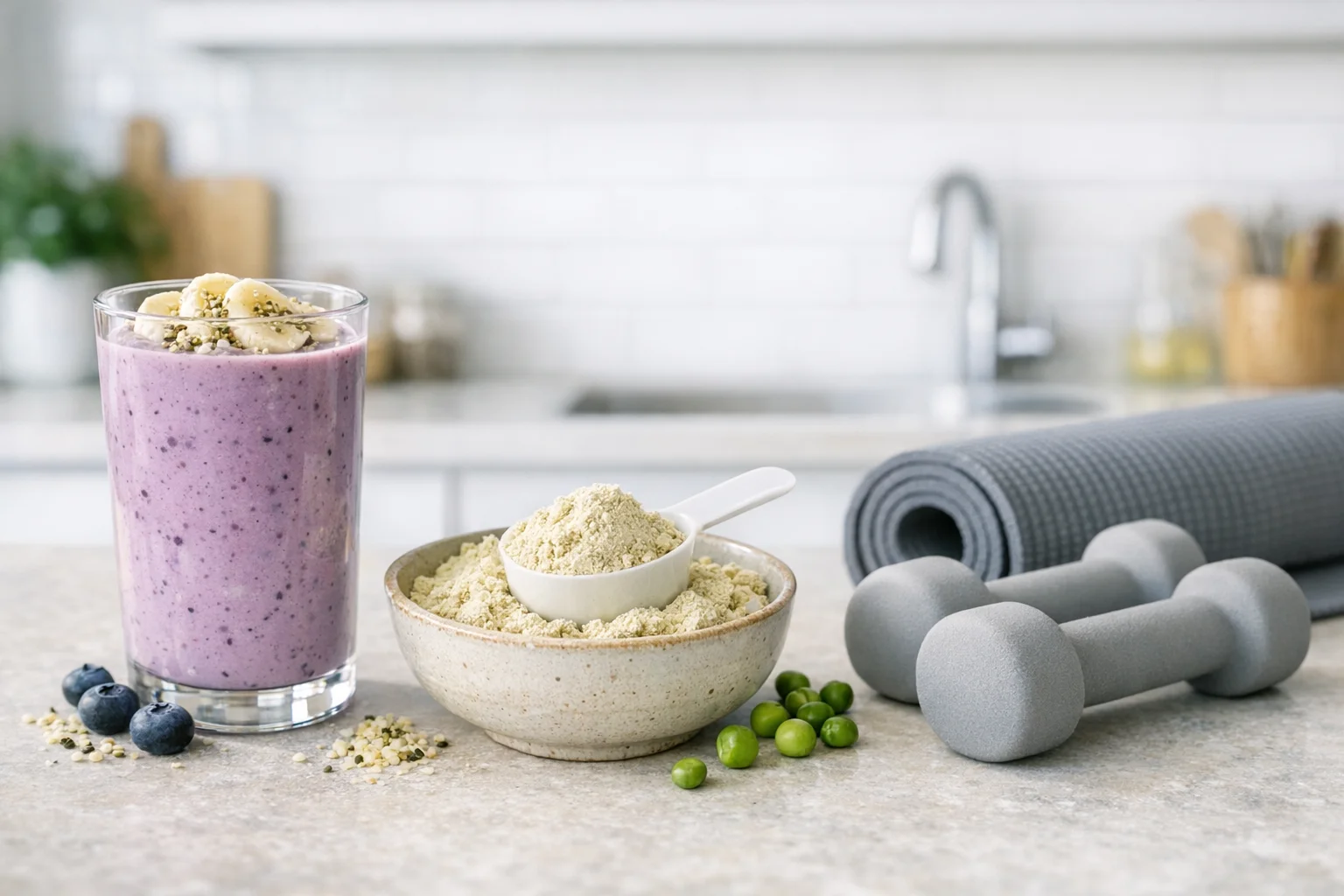
Workout timing is often discussed: eating protein within 30-60 minutes post-workout supports muscle protein synthesis, particularly leucine (one of the branched-chain amino acids that triggers mTOR signaling). A simple post-workout smoothie with plant milk, pea protein powder, banana, and berries can provide 25-30g protein to trigger muscle-building responses. However, total daily protein intake matters far more than precise timing — athletes consuming 1.6 g/kg spread across the day build muscle effectively regardless of post-workout timing. A 2020 meta-analysis of 49 studies found that the effect of post-workout protein timing on muscle growth is minimal compared to total daily protein intake.
The scientific consensus is that distributing protein across 4-5 meals (with roughly 20-40g per meal) is more effective than consuming all protein in one or two meals. This approach keeps amino acid levels elevated throughout the day, supporting continuous muscle protein synthesis rather than creating spikes and valleys. For plant-based athletes, this might look like: breakfast with legumes or tofu (25-30g), a mid-morning snack with nuts or seeds (8-10g), lunch with a legume-based dish (20-25g), an afternoon snack (5-10g), and dinner with another legume or soy source (25-30g).
Total Energy Intake: The Often-Overlooked Factor
Plant-based athletes should also note that total energy intake is critical — arguably more important than protein distribution. Undereating calories while training hard leads to muscle loss even with adequate protein because the body uses amino acids for energy when calorie intake is insufficient. This is particularly common in plant-based athletes who consume high-volume, low-calorie foods like salads and raw vegetables without adequate whole grains, nuts, and legumes to match calorie expenditure.
Athletes in sports with weight categories (wrestling, boxing, combat sports, rowing, track and field weight classes) must be particularly careful to maintain adequate calorie intake while managing weight. Aggressive calorie restriction sabotages muscle maintenance and performance. Sports nutritionists recommend that weight management happen in the off-season through gradual adjustments, not during active training. A plant-based athlete in a weight-class sport should consult with a sports dietitian to ensure adequate calorie and protein intake while meeting weight targets.
Frequently Asked Questions
Is plant protein complete?
Yes. All plant foods contain all 9 essential amino acids. The idea that plant proteins are “incomplete” is an outdated myth from the 1970s that has been thoroughly debunked by nutritional science. A varied diet of legumes, grains, nuts, and vegetables provides all the amino acids your body needs without any special combining or calculations.
How much protein do I need on a plant-based diet?
The RDA is 0.8 g/kg body weight — about 56 grams for a 155-lb adult. Athletes may aim for 1.2-1.6 g/kg. A typical whole-food plant-based diet of 1,800-2,200 calories naturally provides 60-80 grams without special planning. Most people eating adequate calories exceed their protein needs by 20-50%.
Can you build muscle on a vegan diet?
Yes. Research confirms that plant-based diets support comparable muscle growth and strength gains to omnivorous diets when total protein intake is adequate (around 1.6 g/kg for muscle building). Many elite athletes — weightlifters, endurance runners, soccer players — compete at the highest levels on plant-based diets.
Do I need protein powder on a plant-based diet?
Most people don’t. Whole foods provide sufficient protein for general health and even for most athletes. However, athletes with very high caloric needs (3,000-4,000+ calories daily) may find plant-based protein powders (pea, hemp, rice blends) convenient for hitting targets. They’re supplementary for convenience, not essential for health.
Take the guesswork out of plant-based nutrition.
Explore our evidence-based guides on the nutrients that matter most.
Browse All Nutrient Guides