
![Mental Health and Depression on a Plant-Based Diet: What the Research Shows [2026]](https://makeitplantbased.com/images/articles/mental-health-depression-plant-based/mental-health-depression-plant-based-featured.webp)
If you’ve searched “vegan diet and depression,” you’ve probably found some alarming headlines. Some studies do report higher rates of depression among vegetarians and vegans. But dig deeper and the picture becomes much more nuanced — and actually quite encouraging for plant-based eaters. The relationship between what you eat and how you feel is real, but the direction might be the opposite of what the fear-based headlines suggest.
When researchers control for diet quality, caloric adequacy, and key nutrient levels, whole-food plant-based diets consistently outperform omnivorous diets on mental health measures. The problem isn’t plants — it’s poorly planned diets (of any type) and the specific nutrients that get overlooked. This guide breaks down the science, identifies the nutrients that matter, and gives you practical guidance for supporting mental health through plant-based nutrition.
The Gut-Brain Connection: How Your Microbiome Affects Your Mood
Your gut contains approximately 100 million neurons — sometimes called the “second brain” — and produces about 95% of your body’s gut health and digestion, the neurotransmitter most associated with mood regulation. The gut microbiome plays a direct role in mental health through the gut-brain axis, a bidirectional communication system between the intestinal nervous system and the central nervous system.
Plant-based diets dramatically reshape the gut microbiome. The high fiber on a plant-based diet content feeds beneficial bacteria that produce short-chain fatty acids (SCFAs), which reduce inflammation, strengthen the gut barrier, and influence neurotransmitter production. Studies show that plant-based eaters have greater microbial diversity and higher populations of bacteria associated with positive mental health outcomes.
Conversely, diets high in animal protein and saturated fat promote bacteria that produce trimethylamine N-oxide (TMAO) and other metabolites linked to systemic inflammation — a known driver of depression.
The “Vegans Are More Depressed” Myth: Correlation vs. Causation
Some observational studies have found that vegetarians and vegans report higher rates of depression and anxiety. A 2022 systematic review analyzed this evidence and found that the association is inconsistent and likely confounded by several factors:
Reverse causation: People who are already health-conscious or emotionally sensitive may be more likely to adopt vegetarian diets — and also more likely to seek mental health diagnoses. The diet didn’t cause the depression; the predisposition preceded the dietary choice.
Diet quality: “Vegan” doesn’t automatically mean healthy. French fries, Oreos, and soda are technically vegan. When researchers distinguish between whole-food plant-based diets and junk-food vegan diets, the results diverge dramatically. A 2023 cross-sectional multicentric community trial found that the relationship between plant-based diet and mental health was positive when diet quality was high.
Nutrient deficiencies: Poorly planned vegan diets that lack B12, omega-3 fatty acids DHA, zinc, or iron on a plant-based diet can directly cause neurological and mood symptoms. These are not inherent to plant-based eating — they’re consequences of not supplementing appropriately.
Research and Statistics: What the Science Actually Shows
A 2025 systematic review with meta-analysis on plant-based diets and mental and neurocognitive health outcomes provides the most up-to-date evidence synthesis. The review found that well-planned plant-based diets were associated with improved mood, reduced anxiety, and better cognitive function compared to omnivorous diets.
A 2020 systematic review and meta-analysis comparing vegetarianism and veganism with mental health outcomes found mixed results but noted that studies with higher methodological quality tended to find neutral or positive associations between plant-based diets and mental health.
One mechanism appears to be arachidonic acid — an omega-6 fatty acid found primarily in animal products (especially eggs, chicken, and fish) that the body converts into pro-inflammatory eicosanoids. Higher arachidonic acid intake has been associated with increased depression risk. Plant-based eaters have approximately 9 times less arachidonic acid in their blood, which may contribute to lower neuroinflammation.

What Plant-Based Doctors Say About Mental Health
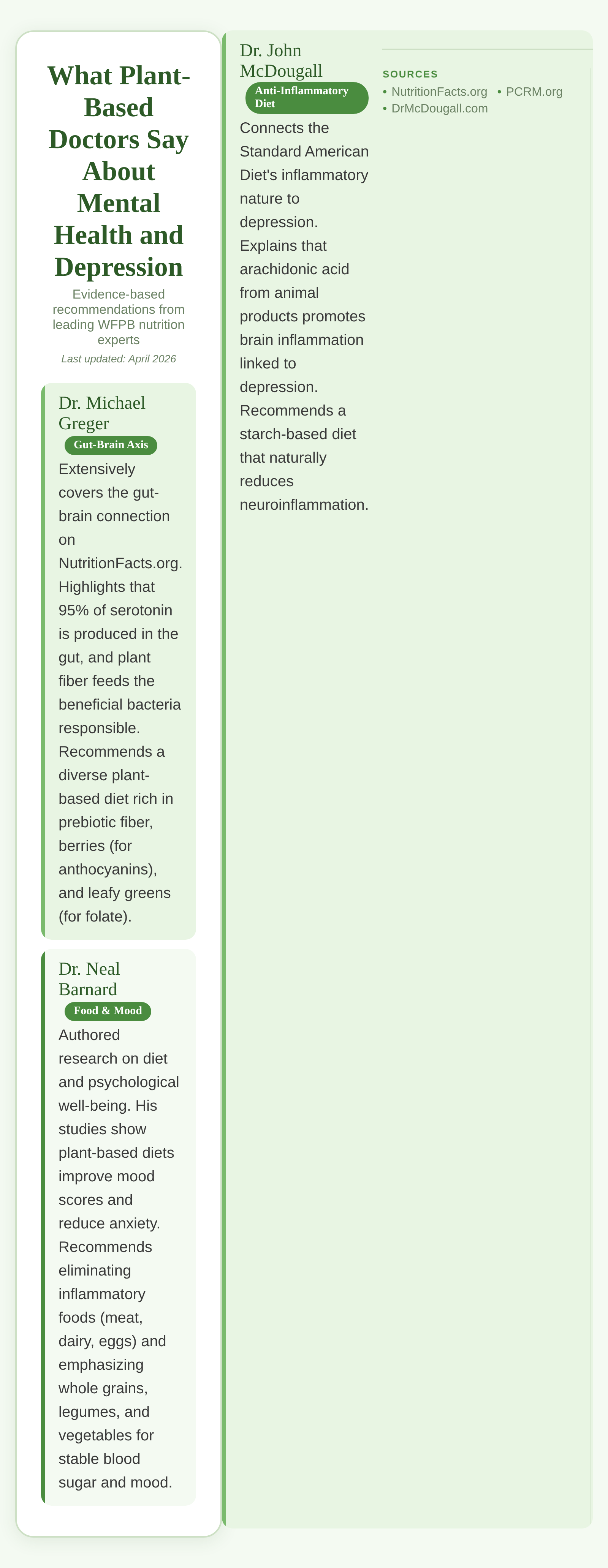
Dr. Michael Greger
Dr. Greger has covered the diet-mood connection extensively on NutritionFacts.org, emphasizing that plant-based diets improve mood and productivity through multiple mechanisms. He highlights the arachidonic acid reduction as a key factor — by eating fewer inflammatory omega-6 fatty acids from animal products, plant-based eaters experience less neuroinflammation. He also points to the gut microbiome improvements and the antioxidant-rich nature of plant foods that protect brain cells from oxidative stress. (NutritionFacts.org — Plant-Based Diets for Mood and Productivity)
Dr. Neal Barnard
Dr. Barnard and PCRM have developed specific guidance on food and mood, emphasizing that nutrient-dense plant foods support brain health through folate, antioxidants, and complex carbohydrates that stabilize serotonin production. He warns that B12 deficiency — which is preventable with supplementation — can mimic depression symptoms, and that any new plant-based eater should supplement B12 from day one. PCRM’s research has shown that plant-based diets outperform omnivorous diets on multiple mental health measures when B12 and omega-3s are adequately addressed. (PCRM — Food and Mood)
Dr. John McDougall
Dr. McDougall connects plant-based eating to mental health through the gut-brain axis, noting that his starch-based diet supports a healthy microbiome that produces mood-regulating neurotransmitters. He also emphasizes that the sense of well-being many people report on his diet comes from the natural weight loss, improved energy, and reduced inflammation that accompany the dietary change. (DrMcDougall.com — Plant-Based Diet for Mental Health)
Nutrients That Affect Mood and Mental Health
vitamin B12 on a plant-based diet: Critical for nerve function and neurotransmitter production. Deficiency causes fatigue, brain fog, and depression-like symptoms. Every plant-based eater must supplement — 250mcg daily or 2,500mcg weekly.
Omega-3 DHA/EPA: DHA is concentrated in brain tissue and is essential for neuronal membrane fluidity. Low DHA levels are associated with depression. Take an algae-based supplement providing 250-500mg combined DHA/EPA daily.
Folate: Involved in serotonin synthesis. Plant-based diets are naturally rich in folate from leafy greens, legumes, and fortified foods. This is one area where plant-based diets have an inherent advantage.
Zinc: Involved in neurotransmitter function and the hippocampus (the brain region most affected by depression). Pumpkin seeds, chickpeas, cashews, and hemp seeds are good sources. Aim for 8-12mg daily.
Iron: Deficiency causes fatigue and cognitive impairment that can mimic or worsen depression. Monitor ferritin levels and supplement if needed, especially for menstruating women.
The Anti-Inflammatory Advantage
Chronic low-grade inflammation is increasingly recognized as a key driver of depression. Plant-based diets are powerfully anti-inflammatory — they reduce C-reactive protein (CRP), interleukin-6 (IL-6), and other inflammatory markers. The mechanism involves high antioxidant intake (from berries, greens, and spices like turmeric), reduced arachidonic acid (from avoiding animal products), and improved gut barrier function (from high fiber intake).
This anti-inflammatory effect may explain why well-planned plant-based diets consistently outperform standard diets on mood measures in controlled trials — the brain is simply less inflamed.

Practical Tips for Mental Well-Being on a Plant-Based Diet
Supplement the essentials from day one: B12 and omega-3 DHA are non-negotiable. Don’t wait for deficiency symptoms — they can take months to develop and may present as mood disturbances before other symptoms appear.
Use the Ingredient Nutrient Lookup to check mood-supporting nutrients in any food, or the Daily Nutrient Needs Calculator to assess your B12, iron, and omega-3 targets.
Eat a rainbow daily: Different colored plant foods provide different antioxidants and phytochemicals. Aim for at least 5-7 different colors of fruits and vegetables each day.
Prioritize fermented foods: Sauerkraut, kimchi, miso, and tempeh provide probiotics that support the gut-brain axis. Include at least one serving of fermented food daily.
Don’t skimp on calories: Under-eating on a plant-based diet causes fatigue, irritability, and mood disturbances. If you’re active, make sure you’re eating enough — plant foods are less calorie-dense, so volumes need to increase.
Include omega-3-rich foods daily: Ground flaxseed, chia seeds, hemp seeds, and walnuts provide ALA omega-3s that complement your DHA supplement.
Key Research References
- 2022 systematic review: association between vegetarian/vegan diets and depression
- 2020 meta-analysis: vegetarianism/veganism and mental health outcomes
- 2023 community trial: plant-based diet and positive mental health relationship
- 2025 systematic review: plant-based diets and mental/neurocognitive health
Frequently Asked Questions About Mental Health and Plant-Based Diets
Can a vegan diet cause depression?
A well-planned vegan diet with adequate B12, omega-3 DHA, and calories does not cause depression. When studies find higher depression rates in vegans, the association is typically explained by reverse causation, poor diet quality, or nutrient deficiencies — not plant-based eating itself.
Does a plant-based diet improve mental health?
Research suggests yes, when diet quality is high. The anti-inflammatory properties, gut microbiome improvements, and reduced arachidonic acid of well-planned plant-based diets are associated with better mood and lower anxiety in multiple studies.
Why do some vegetarians have higher depression rates?
Several confounding factors explain this: reverse causation (health-conscious people more likely to seek diagnoses), poor diet quality (junk-food vegan diets), nutrient deficiencies (especially B12 and DHA), and inadequate caloric intake.
What nutrients do vegans need for mental health?
B12 (250mcg daily), omega-3 DHA from algae (250-500mg daily), zinc (8-12mg from seeds and legumes), iron (monitor levels), and folate (abundant in plant foods). Adequate calories are also critical.
Can going vegan affect your mood?
Initially, some people experience changes as their gut microbiome adjusts. Long-term, well-planned plant-based diets are associated with stable or improved mood due to reduced inflammation, better gut health, and lower arachidonic acid levels.
Is vitamin B12 deficiency linked to depression in vegans?
Yes. B12 deficiency can cause depression-like symptoms including fatigue, brain fog, and mood disturbances. This is entirely preventable with a daily or weekly B12 supplement — which every plant-based eater should take regardless of symptoms.
The Gut-Brain Axis: Microbial Serotonin Production
The gut-brain axis represents one of the most significant discoveries in neuroscience and nutrition science. Remarkably, approximately 95% of the body’s serotonin—the primary neurotransmitter regulating mood, sleep, and emotional resilience—is produced not in the brain but in the gut by intestinal microbiota and enterochromaffin cells. Plant-based diets, with their exceptional fiber diversity, selectively feed bacterial species that produce serotonin and its precursors. When gut bacteria ferment plant fiber, they produce short-chain fatty acids like butyrate, which increase tight junction integrity in the intestinal barrier and enhance the permeability of the blood-brain barrier to neurotransmitters. A compromised intestinal barrier (leaky gut) allows pathogenic lipopolysaccharides to enter circulation, triggering neuroinflammation associated with depression. Plant-based diets, by restoring microbial balance and barrier integrity, directly support serotonin availability and brain health.
Specific Nutrients for Brain Health on a Plant-Based Diet
Plant-based diets provide multiple critical nutrients for mental health that often receive insufficient attention. Omega-3 DHA (docosahexaenoic acid) from algae supplementation or EPA-producing algae supports neuroinflammation reduction and supports neuroplasticity—the brain’s ability to form new connections associated with mood improvement. Folate from leafy greens, legumes, and asparagus is essential for methylation cycles that support neurotransmitter production; folate deficiency is associated with depression and cognitive decline. Magnesium from nuts, seeds, legumes, and whole grains regulates the stress response system; chronic magnesium deficiency increases anxiety and depression vulnerability. B vitamins, abundant in whole grains, legumes, and nutritional yeast, support energy metabolism and neurotransmitter synthesis. Zinc from legumes, nuts, and seeds supports immune function and protects against neuroinflammation. Adequate mineral status, which plant-based diets naturally support, is foundational for mental health.
Mediterranean Diet Research and Plant-Based Principles
The Mediterranean diet, extensively researched for depression prevention and mental health, aligns substantially with plant-based nutrition principles. Major longitudinal studies show that adherence to Mediterranean dietary patterns reduces depression risk by 30-40% compared to typical Western diets. The protective factors include abundant plant foods (vegetables, legumes, whole grains, nuts, seeds), minimal animal products, and emphasis on whole food quality. When researchers have analyzed the components driving the Mediterranean diet’s mental health benefits, the plant-based components emerge as primary: vegetable intake, legume consumption, whole grain choices, and olive oil. Notably, countries with the most plant-based Mediterranean diets (higher plant-to-animal food ratios) show the lowest depression rates. A wholly plant-based approach represents an intensification of the Mediterranean diet’s most beneficial components.
Sleep Quality and Tryptophan-Rich Plant Foods
Sleep quality is foundational for mental health, and plant-based diets offer multiple advantages for sleep support. Tryptophan, the amino acid precursor to serotonin and melatonin, is found in plant foods including pumpkin seeds, soy products, oats, and chia seeds. The key to tryptophan’s effectiveness is pairing it with carbohydrates, which facilitate tryptophan’s transport across the blood-brain barrier. A plant-based snack of oatmeal with pumpkin seeds, or soymilk with dates, provides optimal tryptophan plus carbohydrates for sleep induction. Additionally, tart cherries contain naturally occurring melatonin—the hormone regulating sleep-wake cycles—in bioavailable forms. Studies show that tart cherry juice consumption improves sleep quality and reduces insomnia severity. The combination of tryptophan-rich plant foods, carbohydrates, and melatonin-containing foods creates a synergistic sleep-supporting effect without pharmaceutical intervention. Consistent sleep quality improvement reduces cortisol, supports mood regulation, and reinforces the overall antidepressant effect of a nutrient-dense plant-based diet.
Take the guesswork out of plant-based nutrition.
Explore our evidence-based guides on the nutrients that matter most.
Browse All Nutrient Guides