
![Magnesium on a Plant-Based Diet: The Mineral Powering 300+ Reactions in Your Body [2026]](https://makeitplantbased.com/images/articles/magnesium-plant-based-diet/magnesium-plant-based-diet-featured.webp)
Magnesium is one of the most underappreciated minerals in human nutrition. This essential nutrient is involved in over 300 enzymatic reactions in your body—from muscle function and energy production to bone health on a plant-based diet health and nervous system regulation. Yet despite its critical importance, approximately 50% of Americans fail to meet their daily magnesium requirements.
If you follow a plant-based diet, you have a significant nutritional advantage. Plant-based eaters naturally consume magnesium-rich foods—dark leafy greens, nuts, seeds, legumes, and whole grains—that form the foundation of a whole-food plant-based (WFPB) diet. Unlike many minerals where plant-based eaters require supplementation, magnesium is one area where plants genuinely outshine animal products.
This guide explores what magnesium is, why it matters, which plant foods provide the most abundant sources, and practical strategies for ensuring you’re meeting your daily needs. We’ll also hear from seven leading plant-based doctors about their magnesium recommendations for optimal health.
What Is Magnesium?
Magnesium is a macro-mineral with an atomic number of 12 and the second most abundant mineral in your body after calcium. Approximately 25 grams are stored primarily in your bones (50-60%), muscles (25-30%), and soft tissues (5-15%).
At the cellular level, magnesium acts as a cofactor for hundreds of enzymes, enabling essential bodily functions:
- Energy Production: Magnesium is essential for converting food into ATP (adenosine triphosphate), the energy currency of all cells. Without adequate magnesium, cells cannot efficiently produce energy, leading to fatigue and reduced exercise capacity.
- Protein Synthesis: Magnesium enables ribosomes to read mRNA and build proteins from amino acids, fundamental to every tissue repair and maintenance function.
- Muscle Function: Magnesium activates proteins that control both muscle contraction and relaxation, critical for smooth movement, cardiac function, and muscle recovery.
- Nervous System Regulation: Magnesium modulates neurotransmitter release and balances excitatory signals (like glutamate) with calming signals (like GABA), determining mood and sleep quality.
- Cardiovascular Health: Magnesium regulates vascular tone, controls blood pressure through smooth muscle relaxation in blood vessels, and stabilizes heart rhythm by managing ion channels.
- Bone Health: Magnesium serves as a structural component and activates alkaline phosphatase, the enzyme responsible for building new bone tissue and maintaining bone mineral density.
- blood sugar on a plant-based diet Regulation: Magnesium is a cofactor for glucose metabolism enzymes and is essential for proper insulin secretion and insulin sensitivity, making it crucial for metabolic health.
Bioavailability and Different Forms
Magnesium bioavailability varies depending on the food source and binding compounds. In whole plant foods, magnesium is bound to fiber on a plant-based diet and phytates, which have minimal impact on absorption in a balanced diet. Plant sources provide magnesium within a nutrient-dense matrix containing chlorophyll, antioxidants, and phytochemicals that support mineral utilization and create synergistic nutritional effects. Plant-based magnesium comes packaged alongside fiber and other nutrients that support digestive health and overall mineral metabolism.
Daily Magnesium Requirements
The Recommended Dietary Allowance (RDA) for magnesium varies by age, sex, and life stage. Most adults require 310-420 mg daily. Many plant-based doctors recommend 400-500 mg daily to optimize magnesium-dependent processes, particularly for those under stress, engaging in regular exercise, or managing specific health challenges.
The Plant-Based Advantage
Plant-based diets naturally provide abundant magnesium, contrary to the myth that plant-based eaters struggle with mineral intake. Plants accumulate magnesium from soil as part of photosynthesis—magnesium is the central atom in chlorophyll, the green pigment that captures light energy. This is why the greenest plant foods are naturally the most magnesium-rich.
Animal products contain only the magnesium that animals consumed in feed, which often reflects nutritional deficiencies in conventional agriculture. By contrast, plants actively concentrate magnesium as part of their fundamental biology.
Magnesium Content in Key Plant Foods
Dark Leafy Greens: These are the champions of magnesium content. One cup of raw spinach provides approximately 160 mg—about 40% of the daily requirement for most women. Cooked spinach provides 157 mg per cup, kale offers 90 mg raw, collard greens deliver 110 mg cooked, and Swiss chard offers 150 mg cooked.
Legumes: Beans and lentils are nutritional multitaskers, providing magnesium alongside fiber, plant-based protein, and iron. Black beans contain 120 mg per cooked cup, chickpeas provide 130 mg per cooked cup, lentils deliver 72 mg per cooked cup, kidney beans offer 100 mg per cooked cup, and pinto beans provide 108 mg per cooked cup. Eating legumes 4-5 times weekly easily contributes 400-500+ mg of weekly magnesium intake.
Nuts and Seeds: These are concentrated sources of magnesium and other minerals. Pumpkin seeds lead with approximately 180 mg per quarter cup serving—one quarter cup provides 40-50% of daily magnesium needs. Almonds provide 108 mg per quarter cup, sunflower seeds deliver 128 mg per quarter cup, hemp seeds offer 120 mg per quarter cup, and sesame seeds contain 127 mg per quarter cup. These foods are ideal for snacking or adding to meals to boost magnesium intake.
Whole Grains: While less concentrated than leafy greens or seeds, whole grains contribute meaningful amounts of magnesium while providing fiber and sustained energy. Quinoa provides 118 mg per cooked cup, brown rice delivers 84 mg per cooked cup, millet offers 84 mg per cooked cup, and steel-cut oats provide 68 mg per cooked cup. The magnesium in grains is more bioavailable when grains are soaked before cooking.
Research & Health Benefits
Scientific evidence demonstrates magnesium’s critical role in preventing chronic diseases. Plant-based eaters have an advantage because whole-food plant-based diets naturally provide abundant magnesium while avoiding foods that deplete magnesium stores.
Cardiovascular Health and Blood Pressure
Meta-analyses demonstrate that for every 100 mg increase in daily magnesium intake, systolic blood pressure decreases by approximately 4-5 mmHg and diastolic pressure decreases by 2-3 mmHg—clinically meaningful reductions for cardiovascular disease risk.
Blood Sugar Regulation and Diabetes Prevention
A landmark 20-year study of 85,000 women found that those in the highest quintile of magnesium intake had a 33% lower risk of type 2 diabetes compared to those in the lowest quintile, independent of other dietary factors or body weight.
Sleep Quality and Anxiety Reduction
Magnesium activates the parasympathetic nervous system, promoting relaxation and quality sleep. It regulates melatonin production and GABA activity, both essential for sleep onset. Studies show magnesium supplementation improves sleep quality and may reduce anxiety symptoms.
Bone Health and Osteoporosis Prevention
Approximately 50-60% of body magnesium is stored in bone tissue, where it contributes structurally to bone mineral density and matrix formation. Studies consistently show positive associations between magnesium intake and bone mineral density across age groups.
Migraine Prevention and Neurological Health
Magnesium deficiency is notably prevalent in individuals with migraine disorder. Multiple studies show that magnesium supplementation reduces migraine frequency by 30-40% and reduces severity. Magnesium stabilizes neuronal membranes and modulates neurotransmitter release.

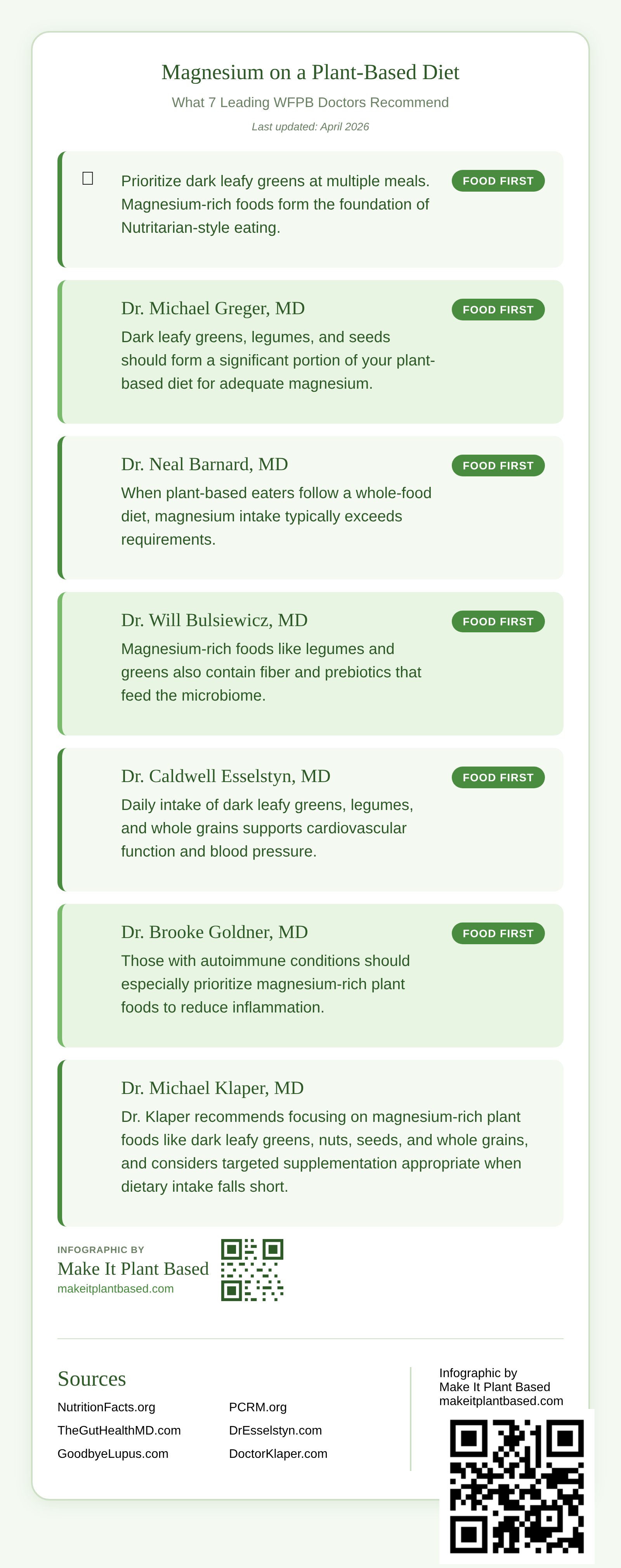
What 7 Leading Plant-Based Doctors Recommend for Magnesium
The following plant-based physicians emphasize magnesium as a key nutrient in whole-food plant-based nutrition, informed by scientific research and clinical experience with plant-based patients.

Signs You May Not Be Getting Enough Magnesium
Magnesium deficiency develops gradually with subtle symptoms easily attributed to other causes. Standard serum magnesium tests have limited usefulness because the body maintains narrow serum levels by drawing from bone stores—you can have depleted cellular magnesium while serum levels appear normal. If you experience any of the following, magnesium insufficiency may be contributing:
- Muscle tension and cramping: Persistent muscle tightness, restless leg syndrome, or nocturnal leg cramping reflect impaired muscle relaxation.
- Sleep difficulties: Difficulty falling asleep, frequent nighttime awakening, or non-restorative sleep.
- Anxiety, nervousness, or irritability: Increased neuronal excitability manifests as anxiety, nervousness, or mood instability.
- Fatigue or low energy: Persistent unexplained fatigue or exercise intolerance.
- Constipation: Sluggish bowel function from impaired intestinal contractions.
- Migraines or frequent headaches: Magnesium deficiency can trigger migraines in susceptible individuals.
- Heart palpitations or irregular heartbeat: Deficiency can cause cardiac arrhythmias.
- Elevated blood pressure: Magnesium regulates vascular tone and supports normal blood pressure.
- Poor stress resilience: Chronic stress depletes magnesium stores and impairs stress response.
If you experience multiple symptoms, increase magnesium intake through food sources first. Focus on dark leafy greens at multiple meals, legumes 4-5 times weekly, nuts and seeds as daily snacks, and whole grains at each meal. If symptoms persist after several weeks, consider supplementation and consult your healthcare provider.
How to Get Enough Magnesium on a Plant-Based Diet
Meeting your daily magnesium requirement on a plant-based diet is straightforward when you prioritize whole plant foods. Aim for 320-420 mg daily depending on your age and sex (per the RDA), or 400-500 mg if optimizing for stress, exercise, and recovery.
Use the Magnesium in Plant Foods ranking tool to find the best sources, or the Compare Magnesium Content tool to plan your meals.
Sample Day of Eating 400+ mg of Magnesium
Breakfast: Green smoothie with 2 cups fresh spinach (320 mg), banana, 2 tablespoons ground flaxseeds (150 mg), and plant-based milk. This breakfast provides approximately 470 mg of magnesium.
Mid-Morning Snack: 1/4 cup pumpkin seeds (180 mg) with an apple.
Lunch: Buddha bowl with 1 cup cooked chickpeas (130 mg), 1 cup cooked quinoa (118 mg), 2 cups mixed greens (100 mg), and tahini dressing (120 mg). Total: approximately 468 mg.
Afternoon Snack: 2 tablespoons almond butter with dates (90 mg).
Dinner: Lentil stir-fry with 1 cup cooked brown lentils (72 mg), 1 cup cooked brown rice (84 mg), and 1 cup steamed broccoli (60 mg). Total: approximately 216 mg.
Magnesium Content of Common Plant Foods
Dark Leafy Greens: Spinach raw (160 mg), spinach cooked (157 mg), kale raw (90 mg), collards cooked (110 mg), Swiss chard cooked (150 mg).
Legumes (per cooked cup): Black beans (120 mg), chickpeas (130 mg), lentils (72 mg), kidney beans (100 mg), pinto beans (108 mg).
Nuts & Seeds (per quarter cup): Pumpkin seeds (180 mg), almonds (108 mg), sunflower seeds (128 mg), hemp seeds (120 mg), sesame seeds (127 mg).
Whole Grains (per cooked cup): Quinoa (118 mg), brown rice (84 mg), millet (84 mg), steel-cut oats (68 mg), amaranth (160 mg).
Tips for Optimizing Magnesium Absorption
Prioritize food sources rather than relying on supplements alone. Magnesium in whole plant foods comes with hundreds of supporting nutrients, fiber, and phytochemicals that enhance absorption and create synergistic health effects beyond what isolated supplements can provide. Food sources also provide magnesium in forms that cells recognize and utilize efficiently.
Combine magnesium-rich foods with vitamin C sources. Vitamin C enhances magnesium absorption, so pair magnesium sources with citrus fruits, tomatoes, bell peppers, or other vitamin C-rich foods. For example, eat spinach salad with lemon dressing, or beans with tomato-based sauce.
Reduce phytate content through preparation methods. Phytates in beans, nuts, and seeds can modestly reduce mineral absorption. Soaking dried beans for 8-12 hours before cooking reduces phytate content by 20-50%, enhancing magnesium bioavailability. Soaking nuts and seeds (1-4 hours) similarly reduces phytates and activates nutrients for improved absorption.
Manage stress and prioritize quality sleep. Chronic psychological stress depletes magnesium stores and increases urinary losses. Conversely, magnesium supports better sleep, creating a beneficial cycle. Stress-reduction practices support magnesium retention, while quality sleep supports magnesium-dependent recovery.
Avoid excess sodium and refined carbohydrates. Both increase magnesium urinary losses. Plant-based diets naturally lower in sodium and refined carbohydrates help conserve magnesium stores and maintain optimal magnesium status.

Magnesium Supplement Forms Explained
While the goal should be meeting magnesium needs through whole plant foods, some individuals benefit from supplementation—particularly those with diagnosed deficiencies, high stress or athletic demands, or specific health conditions. Plant-based eaters choosing to supplement should understand the different magnesium forms, as they vary significantly in absorption and effects.
Magnesium Glycinate
Form: Magnesium bound to glycine (a calming amino acid)
Bioavailability: Excellent—among the best-absorbed supplemental forms
Effects: Well-tolerated with minimal digestive side effects; glycine may have mild calming effects
Typical Dose: 200-400 mg daily, divided into 2 doses with meals if exceeding 300 mg
Best For: General health optimization, anxiety and sleep support, sensitive digestion
Magnesium Citrate
Form: Magnesium bound to citric acid
Bioavailability: Very good—citric acid enhances absorption
Effects: Has a mild laxative effect due to citrate’s influence on intestinal fluid balance; useful for constipation relief
Typical Dose: 150-400 mg daily, starting with 150 mg and increasing gradually
Best For: Gentle digestive support and constipation management
Magnesium Oxide
Form: Magnesium combined with oxygen
Bioavailability: Poor—only 4-5% absorption
Effects: Strong laxative effect; not recommended as a nutritional supplement
Best For: Occasional bowel support only, not regular magnesium supplementation
Other Magnesium Forms
Magnesium Malate: Magnesium bound to malic acid, supports cellular energy production. Helpful for muscle pain or fatigue. Typical dose: 200-400 mg daily.
Magnesium Threonate: Designed to cross the blood-brain barrier for cognitive support. Research is preliminary but shows promise for memory and cognitive function. Typical dose: 2,000 mg daily. More expensive than other forms.
Magnesium Taurate: Magnesium bound to taurine for cardiovascular benefits. Supports heart health and rhythm. Typical dose: 200-300 mg daily. Well-tolerated without laxative effects.
General Supplementation Guidelines
If supplementing, prioritize magnesium glycinate or citrate as your primary choices. Both offer excellent bioavailability with minimal side effects. Start with 200 mg daily and gradually increase to 400 mg if needed, dividing doses into smaller amounts with meals for better absorption.
Always source supplements from third-party tested manufacturers with NSF International or USP certification, ensuring purity and accurate labeling. Avoid buying supplements from questionable online sources to ensure quality and safety.
Food sources should remain your primary magnesium source; supplements support but do not replace a whole-food plant-based diet. The synergistic benefits of whole foods—including fiber, antioxidants, and other minerals—cannot be replicated by isolated supplements alone.
Frequently Asked Questions About Magnesium
Can plant-based eaters get enough magnesium without supplements?
Yes. Plant-based eaters who consume a variety of whole foods—dark leafy greens (multiple cups daily), legumes (4-5 times weekly), nuts and seeds (daily), and whole grains (with each meal)—naturally receive adequate magnesium. Supplementation benefits some individuals but is not necessary for all plant-based eaters following a diverse whole-food diet.
Does cooking decrease magnesium content in foods?
Cooking does not significantly reduce magnesium as it is a stable mineral not degraded by heat. However, boiling vegetables and discarding cooking water may lose some minerals. Steaming, sautéing, roasting, or pressure cooking preserves magnesium fully.
Is magnesium in hard water beneficial?
Hard water contains dissolved minerals including magnesium (typically 5-15 mg), which is nutritionally beneficial but not a substitute for food sources. Rely on whole foods for the majority of your magnesium intake.
How does magnesium interact with other nutrients?
Magnesium works synergistically with calcium, vitamin D, and vitamin K to support bone health. Magnesium is essential for B vitamin metabolism and supports zinc and iron absorption. Whole-food plant-based diets naturally contain all these nutrients in balanced proportions, creating optimal nutritional synergy.
Can too much magnesium be harmful?
Magnesium from food sources is non-toxic even in large amounts. Supplemental magnesium exceeding 350 mg daily can cause digestive symptoms (loose stools) in some individuals. Stick to 200-400 mg daily for supplementation. Those with kidney disease should discuss magnesium intake with their healthcare provider.
Should I get a magnesium blood test?
Standard serum magnesium tests have limited usefulness since the body maintains narrow serum levels by drawing from bone stores. The red blood cell (RBC) magnesium test better reflects tissue status. The most practical approach is evaluating whether you’re consuming adequate magnesium-rich foods and observing whether symptoms improve with increased intake.
Key Research References
Take the guesswork out of plant-based nutrition.
Explore our evidence-based guides on the nutrients that matter most.
Browse All Nutrient GuidesRelated Nutrient Guides
Magnesium works synergistically with other minerals and nutrients to support your health. Learn more: