
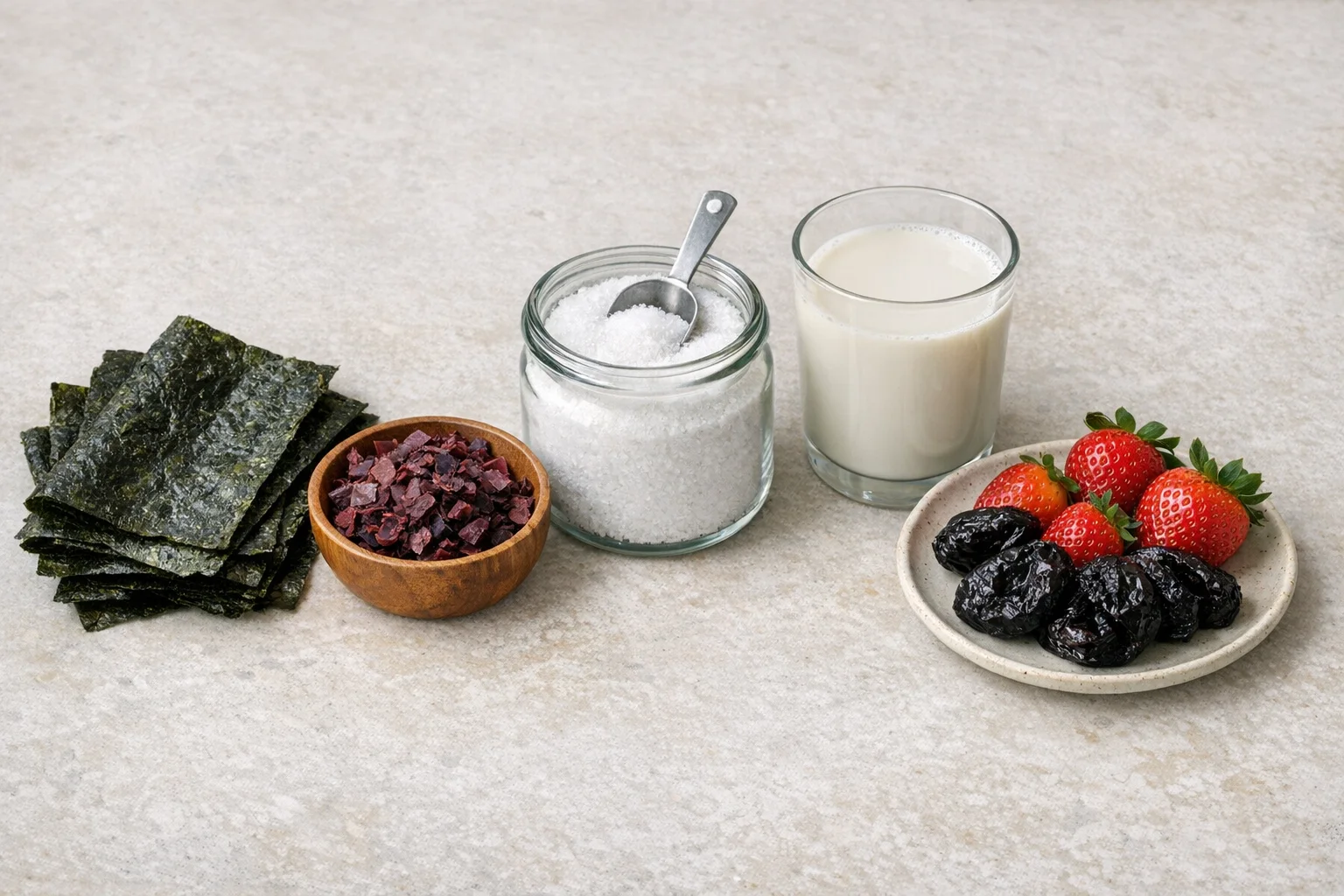
Iodine is the nutrient that flies under the radar on a plant-based diet. While B12 and vitamin D get the spotlight, iodine deficiency is quietly becoming one of the most common nutritional gaps among plant-based eaters. A 2023 meta-analysis found vegans get just 17 mcg of iodine per day — barely 11% of the recommended 150 mcg. The good news? It’s one of the simplest deficiencies to prevent.
What Is Iodine
Iodine is an essential trace mineral that your body needs to produce thyroid hormones — specifically T3 and T4. These hormones control your metabolism, growth, development, and brain function. You cannot make iodine in your body, which means you must get it from your diet.
The thyroid gland incorporates iodine directly into the amino acid tyrosine to synthesize T4 and T3 hormones. These are the master regulators of metabolic rate—determining how quickly your body burns calories and converts food into energy. At the cellular level, thyroid hormones activate mitochondria and increase oxygen consumption throughout tissues. This is why even mild iodine deficiency produces fatigue and unexplained weight gain: your metabolism cannot function at normal efficiency without adequate iodine. Beyond metabolism, thyroid hormones regulate body temperature, cardiovascular function, and the nervous system. In children, thyroid hormones are essential for normal growth and skeletal development—chronic iodine deficiency may reduce growth velocity.
Brain development is the most vulnerable window for iodine deficiency. During pregnancy and early infancy, thyroid hormones guide neural connection formation and establish brain architecture. Iodine deficiency during this period is the leading preventable cause of intellectual disability worldwide. Children born to iodine-deficient mothers show measurably lower IQ and persistent learning difficulties. A single deficient pregnancy can result in permanent neurological consequences that cannot be fully reversed by later supplementation.
The recommended dietary allowance (RDA) for iodine is 150 micrograms (mcg) per day for adults. During pregnancy and lactation, requirements increase to 200-250 mcg daily. Despite how little iodine your body actually needs, most plant-based eaters struggle to meet even the baseline 150 mcg, especially those who switched from animal products without intentionally replacing the iodine those foods provided.
Globally, iodine deficiency remains endemic in regions where soil iodine is naturally low. The WHO estimates nearly 2 billion people live in iodine-deficient areas, concentrated in Central Asia, the Himalayas, and parts of Africa and South America. Salt iodization programs launched by WHO and UNICEF throughout the 20th century successfully prevented millions of cases of goiter and intellectual disability. The success created an unintended consequence: in iodized-salt nations, people became dependent on fortification rather than dietary foods for iodine. When plant-based eaters reject iodized salt for sea salt, they lose this essential protection.
Why Vegans Are at Risk
Historically, the majority of dietary iodine has come from animal products: dairy milk, fish, and eggs. This isn’t because these foods are naturally rich in iodine — it’s because iodine was added to animal feed and used as sanitizing agents in dairy production. The iodine content of milk, in particular, rose dramatically in the mid-20th century when iodine-containing sanitizers were introduced to dairy equipment. This was an unintended public health benefit that inadvertently made dairy a primary iodine source in Western diets. When plant-based eaters remove these foods from their diet, they lose access to the iodine that was never truly intrinsic to the foods themselves. Understanding this history is crucial: iodine deficiency in plant-based eaters isn’t a failure of plant foods—it’s the loss of an accidental fortification that never came from the foods themselves.
The problem intensifies when people making the switch prioritize “natural” choices. Many whole-food plant-based followers use sea salt instead of iodized salt, wrongly assuming sea salt contains iodine. It doesn’t. Sea salt contains negligible amounts of iodine—typically less than 1 mcg per gram—despite containing various minerals from seawater. The confusion arises because sea salt contains minerals (magnesium, potassium, calcium), but iodine is not one of them in meaningful quantities. This well-intentioned switch from iodized to sea salt often removes a plant-based eater’s primary iodine source without them realizing it.
Fortified plant milks are often assumed to be reliable sources, but research tells a different story. Michael Greger’s analysis found that only 3 of 47 tested fortified plant milks actually contained any iodine. You cannot rely on reading the nutrition label and assuming iodine was added.
Additionally, the iodine content of plant foods depends entirely on the iodine content of the soil where they’re grown. This varies dramatically by region. A kale salad grown in iodine-rich soil may contain sufficient iodine, while the exact same meal prepared with kale from iodine-depleted soil provides almost none. This unpredictability makes food sources alone unreliable for meeting iodine needs on a plant-based diet.
The Research
A 2023 meta-analysis by Eveleigh and colleagues published in the British Journal of Nutrition reviewed iodine intake and status in vegans across multiple studies. The findings were stark: vegans had a median urinary iodine of just 12.2 µg/L, with actual daily intake averaging only 17.3 mcg — roughly 11% of the recommended 150 mcg. For comparison, optimal urinary iodine concentration ranges from 100-200 µg/L. To put this in daily life terms, this means most plant-based eaters are getting roughly the iodine equivalent of a few grains of salt—far below what’s needed to produce adequate thyroid hormones. The study included data from multiple continents, showing this is not a localized problem but a consistent finding across all plant-based populations studied.
A 2024 study by Nicol and colleagues also in the British Journal of Nutrition examined what happens when dairy milk is replaced with unfortified plant milk. The result: iodine intake dropped to 54 mcg per day — only 34% of the RDA. This demonstrates the cascading effect of removing dairy without intentional replacement. Even worse, many plant-based eaters assume they’re replacing the iodine adequately when they’re actually falling to critically low levels. The study showed that even if plant milk was “fortified,” most products contained no iodine, making false assumptions particularly dangerous.
A 2022 study from the University of Nottingham tracked vegan iodine levels over time. Between 2016 and 2019, median urinary iodine in vegans declined from 31.2 to 12.2 µg/L — a dramatic 60% drop in just three years, reflecting the growing popularity of plant-based eating and inadequate awareness about iodine replacement. This alarming trend suggests that as more people become plant-based without understanding iodine needs, the prevalence of iodine deficiency will continue to rise unless awareness and education improve significantly.
A 2025 review by Croce and colleagues published in Frontiers in Endocrinology warns that both iodine deficiency and excess present risks to health. Women of childbearing age are identified as most vulnerable, given the critical role of iodine during pregnancy for fetal neural development.
Doctor Recommendations
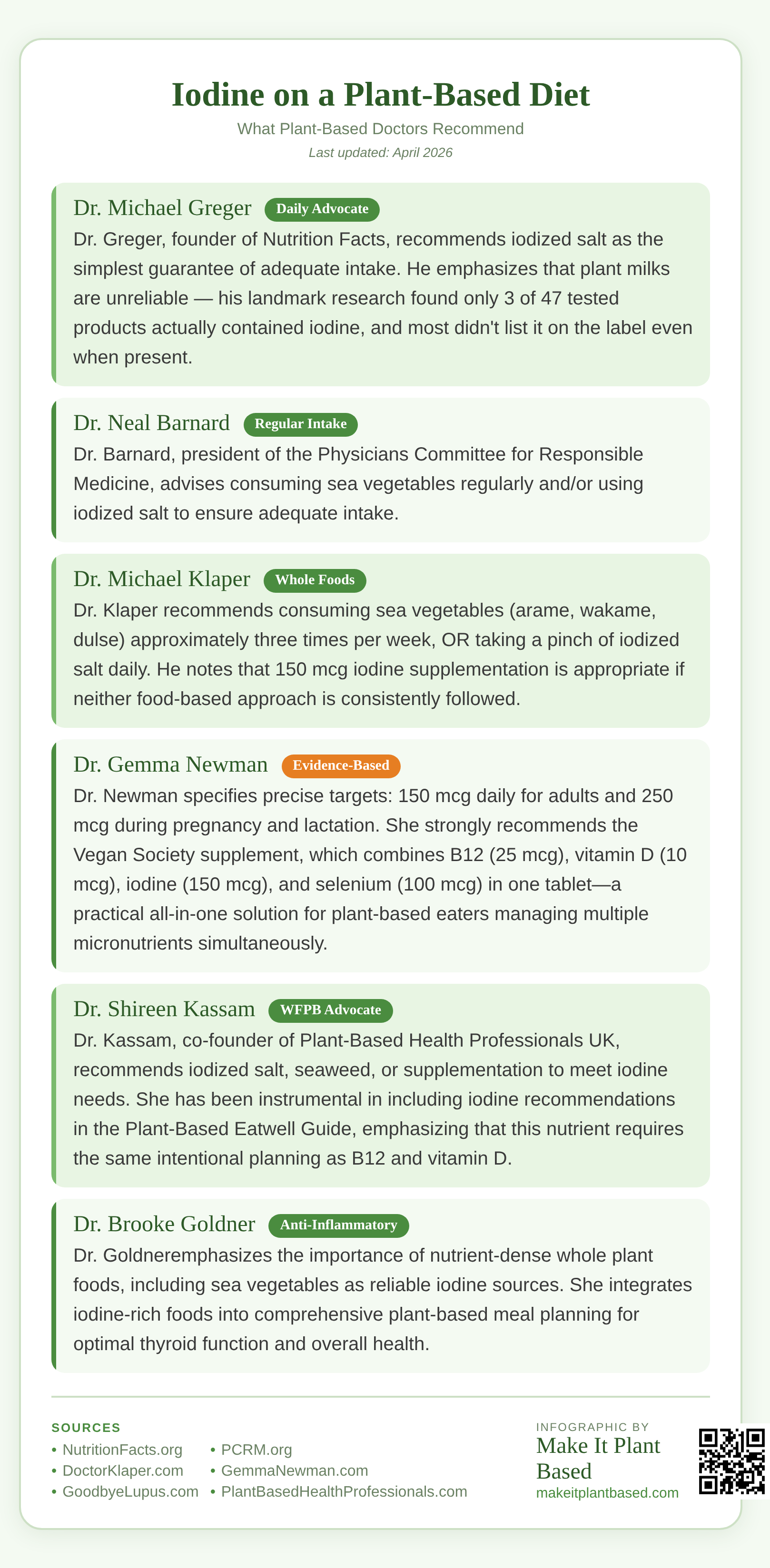
When it comes to iodine on a plant-based diet, health experts universally agree: this nutrient demands intentional attention. Here’s what seven leading plant-based doctors recommend.
Dr. Michael Greger
Dr. Greger, founder of Nutrition Facts, recommends iodized salt as the simplest guarantee of adequate intake. He emphasizes that plant milks are unreliable — his landmark research found only 3 of 47 tested products actually contained iodine, and most didn’t list it on the label even when present. He also stresses that plant food iodine content varies wildly due to soil variability and cannot be predicted or relied upon. For these reasons, he advocates for intentional sources: iodized salt, sea vegetables, or supplementation. His evidence-based approach removes guesswork and ensures all plant-based eaters can meet their iodine needs with certainty. Greger’s recommendation of one-quarter teaspoon of iodized salt provides approximately 70 mcg daily—nearly half the RDA with minimal effort.
Dr. Joel Fuhrman
Dr. Fuhrman recommends a daily multivitamin containing 150 mcg of iodine as a reliable baseline. While he originally suggested kelp granules as a whole-food approach, he now emphasizes the importance of measured supplementation due to kelp’s unpredictable iodine variability—some samples contain ten times more iodine than others depending on growing conditions and water source. Dr. Fuhrman’s pragmatic approach acknowledges that measured supplementation provides consistency and avoids the risk of accidental excess iodine. For most plant-based eaters, particularly those who live an active lifestyle or travel frequently, a daily supplement providing 150 mcg ensures predictable thyroid support without relying on inconsistent food sources.
Dr. Neal Barnard
Dr. Barnard, president of the Physicians Committee for Responsible Medicine, advises consuming sea vegetables regularly and/or using iodized salt to ensure adequate intake. He views these as practical, food-based strategies accessible to most plant-based eaters. Dr. Barnard emphasizes that combining food sources with awareness of iodine needs provides the most sustainable approach to preventing deficiency long-term. His clinical experience shows that plant-based eaters who implement a consistent strategy—whether nori two to three times weekly, dulse flakes sprinkled on meals, or iodized salt—maintain healthy thyroid function and stable energy levels without exception.
Dr. Michael Klaper
Dr. Klaper recommends consuming sea vegetables (arame, wakame, dulse) approximately three times per week, OR taking a pinch of iodized salt daily. He notes that 150 mcg iodine supplementation is appropriate if neither food-based approach is consistently followed. Dr. Klaper’s clinical experience shows that plant-based eaters who implement one of these strategies reliably maintain normal thyroid function and energy levels, while those who ignore iodine entirely frequently develop subtle symptoms of deficiency—brain fog, unexplained fatigue, and weight gain—within 12-18 months. His recommendation reflects decades of clinical observation that intentionality matters far more than the specific source chosen.
Dr. Gemma Newman
DrGemmaNewman.com — The Plant Power Doctor specifies precise targets: 150 mcg daily for adults and 250 mcg during pregnancy and lactation. She strongly recommends the Vegan Society supplement, which combines B12 (25 mcg), vitamin D (10 mcg), iodine (150 mcg), and selenium (100 mcg) in one tablet—a practical all-in-one solution for plant-based eaters managing multiple micronutrients simultaneously. This comprehensive approach addresses all critical nutrients plant-based eaters commonly lack, simplifying compliance and ensuring no essential nutrient is accidentally overlooked. Dr. Newman’s evidence-based supplementation protocol is endorsed by leading plant-based health organizations across Europe.
Dr. Shireen Kassam
Dr. Kassam, co-founder of Plant-Based Health Professionals UK, recommends iodized salt, seaweed, or supplementation to meet iodine needs. She has been instrumental in including iodine recommendations in the Plant-Based Eatwell Guide, emphasizing that this nutrient requires the same intentional planning as B12 and vitamin D. Dr. Kassam’s work integrating iodine into plant-based dietary guidelines has helped raise awareness across Europe that iodine is as critical for plant-based eaters as any other essential nutrient. Her advocacy has positioned iodine as a priority nutrient in plant-based health education and clinical practice guidelines.
Dr. Brooke Goldner
Dr. Goldner emphasizes the importance of nutrient-dense whole plant foods, including sea vegetables as reliable iodine sources. She integrates iodine-rich foods into comprehensive plant-based meal planning for optimal thyroid function and overall health. Her “intentional nutrient overdose” philosophy extends to iodine—deliberately incorporating sea vegetables into meals ensures thyroid health while building micronutrient density into every eating occasion. Dr. Goldner’s approach emphasizes that food-first strategies, when executed consistently, eliminate the need for separate supplementation and create abundant nutritional reserves that support long-term health across multiple systems.
Plant-Based Iodine Sources
The most practical plant-based iodine sources are predictable and easy to incorporate into daily eating. Understanding the nuances of each source—and critically, which ones to avoid—is essential for safe and reliable iodine intake.
Seaweed Sources: Content and Safety Profiles
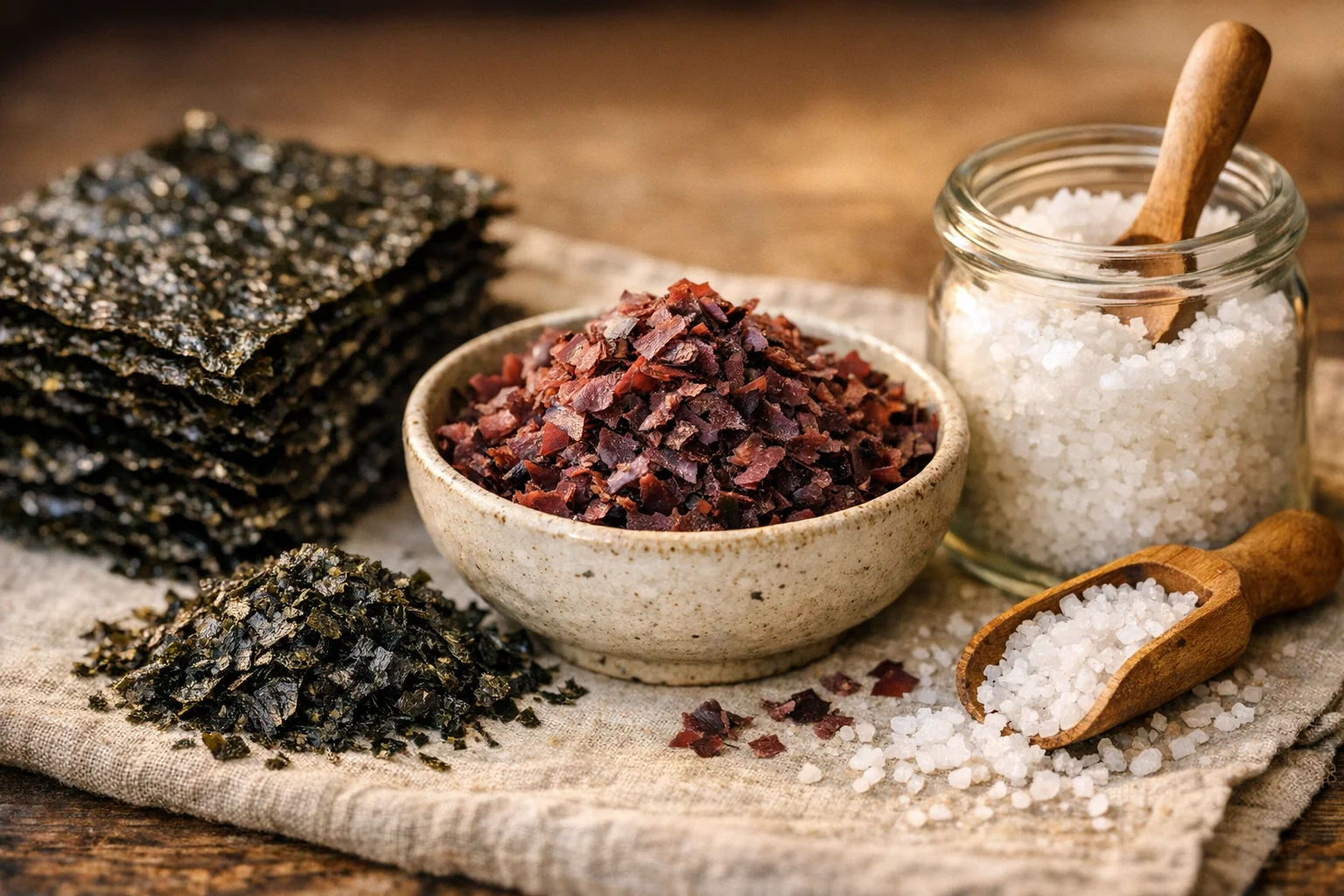
Nori sheets — the seaweed used in sushi — contain approximately 84 mcg of iodine per 2 sheets (4 grams). This makes nori the most accessible daily source for most plant-based eaters. Two sheets of nori satisfy more than half the daily iodine requirement and require no special preparation. Nori’s iodine content is relatively consistent across different harvesting regions, making it predictable and safe. One to two sheets daily is a practical and delicious way to meet iodine needs.
Dulse flakes offer another reliable option, providing approximately 180 mcg per teaspoon (1 gram). A small amount sprinkled on salads, soups, or grains delivers substantial iodine. Like nori, dulse is widely available in natural food stores and online. Dulse is a red seaweed with mild flavor that blends easily into most dishes without changing taste profile. Its iodine content is fairly stable across suppliers, though some variation exists based on growing conditions.
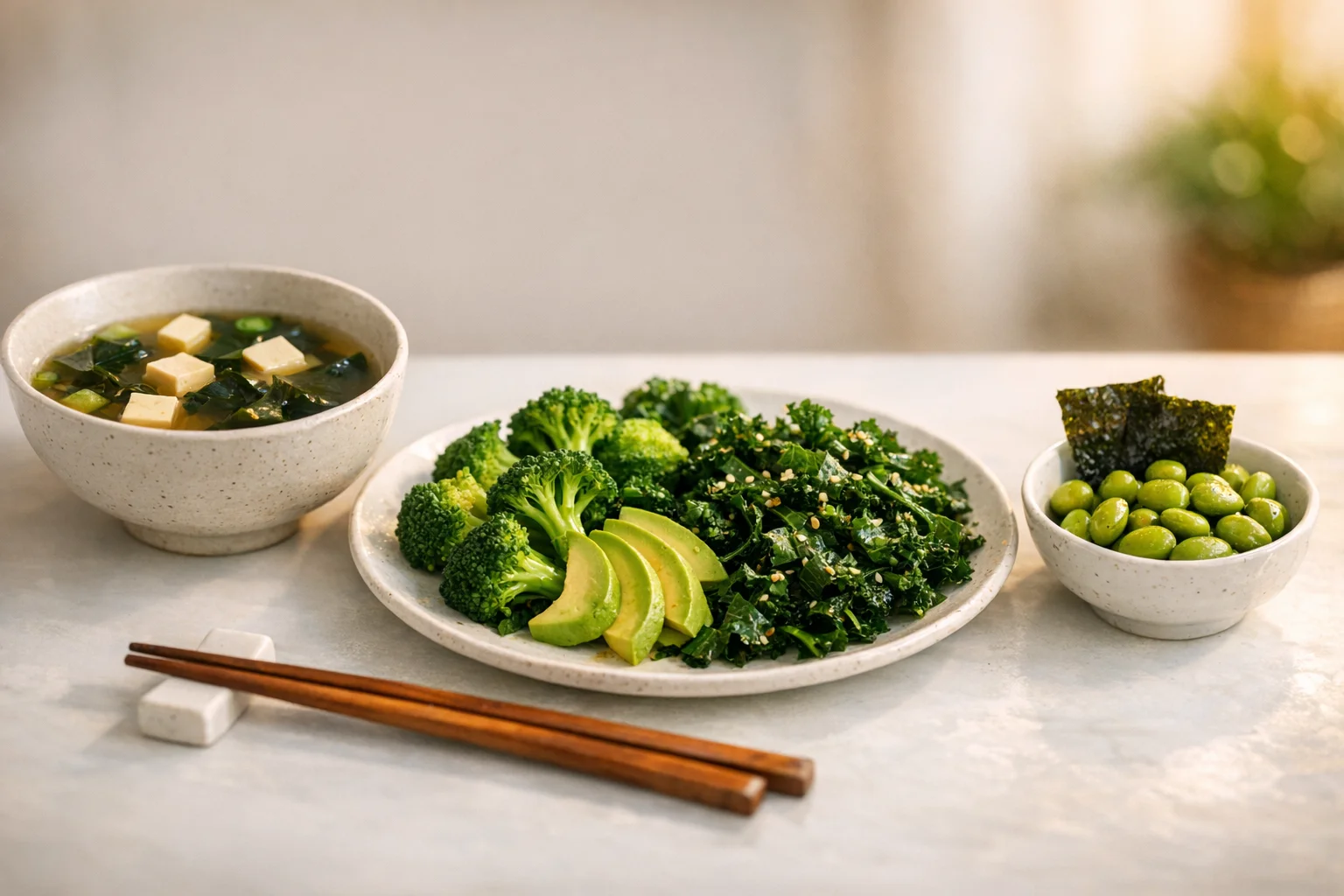
Wakame, commonly used in miso soup, provides 12-22 mcg per gram with moderate variability. One cup of miso soup with wakame delivers roughly 30-50 mcg, making it a useful daily contribution when combined with other sources.
Kelp and kombu (large brown seaweeds) present a critical safety concern. These can contain 500 to 2,000+ mcg of iodine per tablespoon—far exceeding the safe upper limit of 600 mcg per day. The variability is extreme: one sample might contain 100 mcg per gram while another contains 1,000 mcg, even from the same supplier. This unpredictability makes kelp and kombu impossible to dose safely. Even half a teaspoon daily can lead to chronic iodine excess and iodine-induced hypothyroidism. Kelp supplements are particularly dangerous because concentrated forms deliver thousands of micrograms per dose. Kelp and kombu should never be routine daily iodine sources.
Iodized Salt
Iodized salt remains the simplest and most reliable option: one-quarter teaspoon of iodized salt provides approximately 70 mcg of iodine. For perspective, this is less salt than most people consume in a single meal, making it an effortless addition to plant-based cooking. Iodized salt is inexpensive, shelf-stable indefinitely, and provides consistent iodine content across all brands certified as properly iodized. The main caution is verifying your salt is truly iodized—check the label carefully, as many specialty salts (sea salt, Himalayan salt, kosher salt) contain minimal or no iodine unless specifically fortified.
Fortified Plant Milks
Fortified plant milks are variable and unreliable as primary iodine sources. Research shows that most brands contain no iodine despite fortification with other nutrients. A few brands do include iodine, but you cannot assume any plant milk contains it without verification. If you rely on fortified plant milk for iodine, check individual product labels and verify iodine is listed in the nutrition facts panel. Do not assume fortification occurred even if the package says “fortified”—verification is essential.
Whole Plant Foods
Whole plant foods like prunes, strawberries, and legumes contain small amounts of iodine — roughly 5-15 mcg per serving — but this varies dramatically based on soil iodine content where the plant was grown. A kale salad grown in iodine-rich soil might contain 50 mcg of iodine, while identical kale from iodine-poor soil contains nearly zero. This unpredictability means food sources alone cannot be counted upon to meet iodine needs reliably on a plant-based diet.
Iodine Supplementation: Dosage and the Therapeutic Window
For plant-based eaters unable to reliably consume iodized salt or sea vegetables, supplementation is the most straightforward path to adequate iodine. Understanding proper dosing is essential because iodine has a narrow therapeutic window—the range between insufficient and excessive intake is much tighter than most other nutrients.
Recommended supplementation dosages:
- Adults: 150 mcg daily
- Pregnant women: 200-250 mcg daily (or continue with 150 mcg if that’s your baseline, but aim for 200 if possible)
- Breastfeeding women: 200-250 mcg daily (breast milk concentrates iodine, so adequate maternal intake directly protects infant)
- Children (ages 4-8): 90 mcg daily
- Children (ages 9-13): 120 mcg daily
- Adolescents (ages 14+): 150 mcg daily (same as adults)
Choose a supplement providing iodine from potassium iodide or sodium iodide (the most bioavailable forms) rather than kelp or seaweed-derived iodine, which has variable absorption and unpredictable content. Look for supplements where iodine content is clearly listed on the label—transparency matters because underdosed supplements provide false security while overdosed supplements create silent harm.
The iodine therapeutic window and toxicity risk:
The safe upper limit for iodine is 600 mcg per day—creating a 4-fold range from RDA to safe limit. This is narrower than most nutrients. Consuming four times the RDA approaches the upper limit of safety. Kelp supplementation is problematic because a single kelp capsule might contain 800-1,000 mcg, exceeding safe limits in one dose.
Chronic iodine excess (>600 mcg daily) can trigger iodine-induced hypothyroidism, where excessive iodine impairs thyroid hormone production. The symptoms—fatigue, weight gain, cold intolerance—mimic iodine deficiency, creating a dangerous cycle. Additionally, excess iodine can trigger or worsen autoimmune thyroid disease in predisposed individuals. Optimal thyroid function occurs within a specific range, and both deficiency and excess cause harm.
Standard supplementation at 150 mcg daily is safe and effective. Avoid multi-gram iodine supplements, kelp-based supplements, or claims that “high-dose iodine” provides health benefits. If you choose supplementation, keep it simple: a standard 150 mcg supplement is all that’s needed.
Thyroid Health Connection
Your thyroid gland uses iodine to produce T3 and T4 hormones, which regulate metabolism, energy production, body temperature, and cognitive function. Without adequate iodine, your thyroid cannot produce sufficient hormones, leading to hypothyroidism. The thyroid is exquisitely sensitive to iodine—even mild deficiency impairs hormone production before you notice any symptoms.
Early signs of iodine deficiency include fatigue, unexplained weight gain, cold intolerance, hair thinning, and slowed metabolism. More serious deficiency can result in goiter — visible enlargement of the thyroid gland. In children and during pregnancy, iodine deficiency impairs cognitive and neurological development. These early signs are often misattributed to other causes (stress, aging, depression) when the real culprit is simply inadequate iodine.
During pregnancy and lactation, iodine needs increase to 200-250 mcg daily. Maternal iodine deficiency is associated with reduced IQ in offspring, lower test scores, and learning disabilities. This makes iodine planning especially urgent for pregnant and breastfeeding plant-based eaters—undiagnosed deficiency can inadvertently impair the child’s lifelong cognitive potential.
One additional consideration: cruciferous vegetables like broccoli, kale, cabbage, and cauliflower contain compounds called goitrogens that can interfere with thyroid function. However, cooking deactivates these compounds, so lightly steamed or roasted cruciferous vegetables are safe to consume freely. Raw cruciferous vegetables should be balanced with adequate iodine intake.
Selenium is also essential for thyroid health, as it’s required for the conversion of T4 hormone to its active T3 form. Plant-based sources of selenium include Brazil nuts, seeds, legumes, and whole grains. Ensuring adequate iodine, selenium, and cooked cruciferous vegetables creates optimal conditions for thyroid function.
Iodine and Pregnancy: A Critical Window
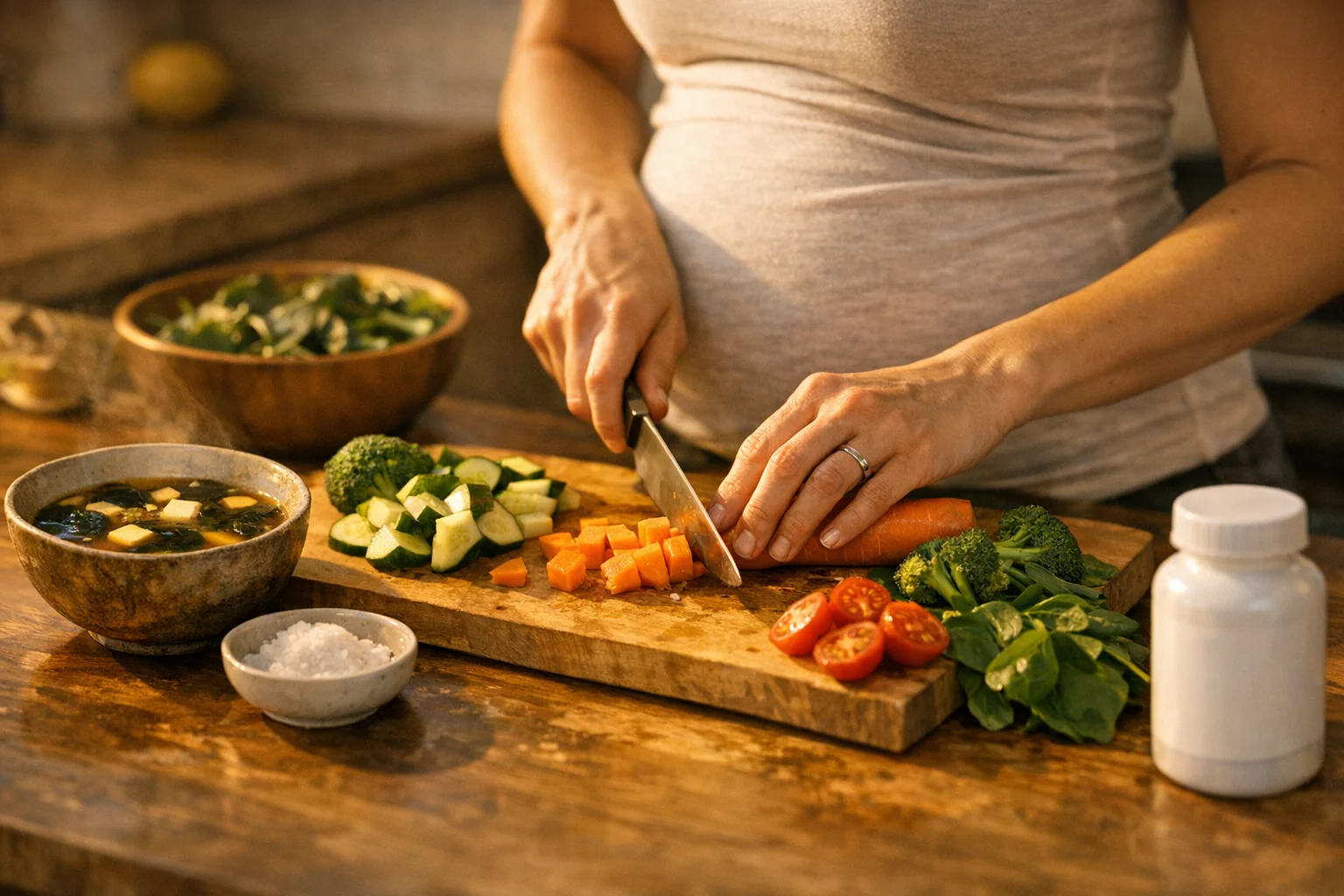
Pregnancy represents the most critical window for iodine adequacy. During pregnancy, iodine needs jump from 150 mcg to 200-250 mcg daily—a 33-67% increase necessary to protect your developing baby’s brain. The fetal brain forms its foundational neural architecture during early trimesters, entirely dependent on adequate maternal iodine.
The consequences of maternal iodine deficiency during pregnancy are measurable. Infants born to iodine-deficient mothers have reduced IQ compared to control groups—a difference of 10-15 points is not uncommon in severe deficiency. These children experience increased rates of attention disorders, learning disabilities, and developmental delays that persist into adolescence. The neural pathways formed during fetal development establish a foundation that cannot be fully remedied by postnatal supplementation.
For pregnant or planning-pregnancy plant-based women, be intentional now. If relying on unmeasured sea vegetables, switch to a reliable supplement providing 200-250 mcg daily. If using iodized salt inconsistently, become consistent. Verify your prenatal vitamin contains 150-200 mcg iodine. Additionally, increase nori or dulse intake for food-based iodine. Ensure your daily intake is trackable and reliable, not dependent on assumptions.
During lactation, iodine needs remain high at 200-250 mcg daily because breast milk concentrates iodine. An iodine-deficient mother produces iodine-poor breast milk, perpetuating deficiency into the infant’s critical developmental period. The same strategies—supplementation, sea vegetable intake, or iodized salt—remain essential during breastfeeding.
FAQ
How much iodine do vegans need?
The same as everyone else: 150 mcg per day for adults, and 200-250 mcg daily during pregnancy and lactation. The challenge is that most plant-based eaters currently consume only about 17 mcg daily — roughly 11% of the RDA — making intentional supplementation or food planning essential.
Is sea salt a good source of iodine?
No. Despite the common assumption that sea salt contains iodine, it contains negligible amounts. Sea salt is mineral-rich in many nutrients but not iodine. You need specifically iodized salt (table salt with added iodine) to meet your iodine needs through salt consumption.
Can you get too much iodine from seaweed?
Yes, absolutely. Kelp and kombu (large brown seaweeds) can contain 2000 or more mcg of iodine per tablespoon, far exceeding the established safe upper limit of 600 mcg per day. Consuming even small amounts regularly can lead to iodine toxicity. Nori and dulse are much safer options with more predictable iodine content. If you choose to use kelp, measure carefully and consume sparingly.
Should I get my iodine tested?
If you’ve been plant-based for over a year without consistently consuming iodized salt or sea vegetables, a urinary iodine test is worth requesting from your doctor. Urinary iodine accurately reflects recent iodine intake and status. A thyroid panel (TSH, free T4) can also reveal if iodine deficiency has begun affecting thyroid function. Testing removes guesswork from your supplementation strategy.
Take the guesswork out of plant-based nutrition.
Explore our evidence-based guides on the nutrients that matter most.
Browse All Nutrient Guides