Nuts and seeds
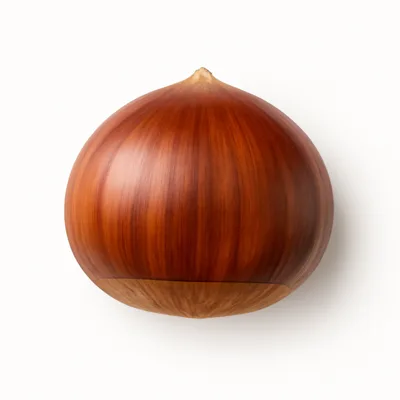
Nuts, chestnuts, japanese, raw
Per 100 g
- Calories
- 154 kcal
- Protein
- 2.3 g
- Fat
- 0.53 g
Low fat 3% of its calories come from fat. Our scale
All nutrients
Per 100 g of nuts, chestnuts, japanese, raw. % Daily Value is for an adult, US FDA values.
Macronutrients
| Nutrient | Per 100 g | % DV |
|---|---|---|
| Carbohydrates | 35 g | 13% |
| Protein | 2.3 g | 5% |
| Fat | 0.53 g | 1% |
| Water | 61 g |
Essential amino acids
| Nutrient | Per 100 g |
|---|---|
| Histidine | 0.06 g |
| Isoleucine | 0.11 g |
| Leucine | 0.14 g |
| Lysine | 0.15 g |
| Methionine | 0.05 g |
| Phenylalanine | 0.09 g |
| Threonine | 0.09 g |
| Tryptophan | 0.03 g |
| Valine | 0.13 g |
Fats
| Nutrient | Per 100 g | % DV |
|---|---|---|
| Saturated fat | 0.08 g | 0% |
| Monounsaturated fat | 0.28 g | |
| Polyunsaturated fat | 0.14 g | |
| Omega 3 | 0.01 g | |
| Omega 6 | 0.12 g | |
| Cholesterol | 0 mg | 0% |
Vitamins
| Nutrient | Per 100 g | % DV |
|---|---|---|
| Vitamin A (RAE) | 2 µg | 0% |
| Vitamin C | 26 mg | 29% |
| Vitamin D | 0 µg | 0% |
| Thiamin (B1) | 0.34 mg | 29% |
| Riboflavin (B2) | 0.16 mg | 13% |
| Niacin (B3) | 1.5 mg | 9% |
| Pantothenic acid (B5) | 0.21 mg | 4% |
| Vitamin B6 | 0.28 mg | 17% |
| Folate (DFE) | 47 µg | 12% |
| Vitamin B12 | 0 µg | 0% |
Linked nutrients open a table that ranks plant foods by that nutrient.
Portion weights
| Portion | Weight | Calories |
|---|---|---|
| 1 oz | 28 g | 44 kcal |
How we label fat
Our own scale, stricter than official labels: a food with less than 10% of its calories from fat is labelled Low fat, 10% to under 20% Medium fat, 20% or more High fat. The label describes how the food's calories are made up; official US and UK labels use other limits.
More nuts and seeds
 Nuts, coconut cream, raw (liquid expressed from grated meat)
 Nuts, coconut meat, raw
- Nuts, coconut milk, raw (liquid expressed from grated meat and water)
 Nuts, ginkgo nuts, raw
 Nuts, hazelnuts or filberts
 Nuts, macadamia nuts, raw
 Nuts, pecans
 Nuts, pine nuts, dried
All nuts and seeds · All ingredients
Source
USDA FoodData Central, SR Legacy (April 2018): Nuts, chestnuts, japanese, raw, FDC ID 169413. Daily Values: US FDA, 21 CFR 101.9.