
![Digestion, Gas, and Bloating on a Plant-Based Diet: Your Gut Adaptation Guide [2026]](https://makeitplantbased.com/images/articles/digestion-bloating-plant-based-diet/digestion-bloating-plant-based-diet-featured.webp)
Let’s address the elephant in the room — or perhaps more accurately, the noise in the room. One of the most common complaints when people switch to a plant-based diet is increased gas and bloating. It’s uncomfortable, sometimes embarrassing, and it’s caused more than a few people to abandon an otherwise healthy dietary change. The good news? It’s temporary, it’s normal, and it’s actually a sign that something good is happening in your gut.
The increased gas when transitioning to a plant-based diet is your gut microbiome adapting to a dramatically higher fiber on a plant-based diet intake. Your intestinal bacteria are literally changing their composition to match your new diet — and the transition period produces gas as a byproduct. Understanding why this happens, how long it lasts, and what you can do about it is the key to getting through the adjustment period successfully.
Why Plant-Based Diets Cause Initial Gas: The Microbiome Shift
The average person switching from a standard Western diet to a plant-based diet goes from eating about 15 grams of fiber per day to 40-50 grams. That’s a 3x increase in the primary fuel source for your gut bacteria. Your existing microbiome — adapted to a low-fiber, high-fat diet — isn’t equipped to handle this sudden change. The bacteria that thrive on fiber need time to proliferate, while the bacteria that thrived on your old diet decline.
During this transition, the fermentation of fiber and oligosaccharides (specific carbohydrates found in beans, onions, and garlic) produces gases — primarily hydrogen, carbon dioxide, and methane. This is a completely normal fermentation process. It’s the same process that makes sourdough bread rise and beer fizzy, just happening in your intestines instead of a jar.
The Oligosaccharide Factor
Beans and legumes and plant protein are the most common culprit for gas because they contain oligosaccharides (raffinose and stachyose) — short-chain carbohydrates that humans lack the enzyme to fully break down. These pass to the colon intact, where bacteria ferment them. As your microbiome adapts, the bacteria that produce less gas from these substrates become dominant, and the symptoms decrease dramatically.
The Adaptation Timeline: When Does the Gas Stop?
Research and clinical experience suggest a fairly predictable timeline for gut adaptation:
Week 1-2: Peak discomfort. Gas and bloating are at their highest as your microbiome begins shifting. About 35% of new plant-based eaters report significant gas during this period.
Week 3-4: Noticeable improvement. Gas frequency and intensity decrease as fiber-fermenting bacteria proliferate. Only about 15% still report significant symptoms.
Week 5-8: Major adaptation. Most people report minimal or no unusual gas by this point. The gut microbiome has largely adapted, with increased populations of Bifidobacteria and Lactobacilli — the “good” bacteria associated with better digestive health.
Month 3+: New baseline. Digestion is typically smoother than before the transition, with more regular bowel movements and less digestive discomfort overall. Only about 3% of long-term plant-based eaters report persistent gas issues.
Research and Statistics: The Gut Microbiome Evidence
A comprehensive review on vegetarian and vegan diets and gut microbiota found that plant-based diets promote greater microbial diversity, higher populations of beneficial bacteria, and increased production of short-chain fatty acids — all markers of a healthier gut. The transition period involves a temporary disruption, but the end result is superior to the starting point.
A study from the Baltimore Longitudinal Study of Aging confirmed that plant-based dietary patterns are associated with more diverse and beneficial gut microbiome compositions, which correlate with better digestive function and reduced inflammation and omega-3 fatty acids.
A 2023 systematic review of interventional studies found that plant-based diet interventions consistently reshape the gut microbiota toward a healthier profile, even when the transition involves temporary digestive discomfort.
 fermented foods and fiber-foods.webp” alt=”Collection of fermented plant foods including sauerkraut kimchi miso tempeh and kombucha arranged on a rustic table” width=”800″ height=”533″ loading=”lazy” style=”display:block;margin:0 auto;” />
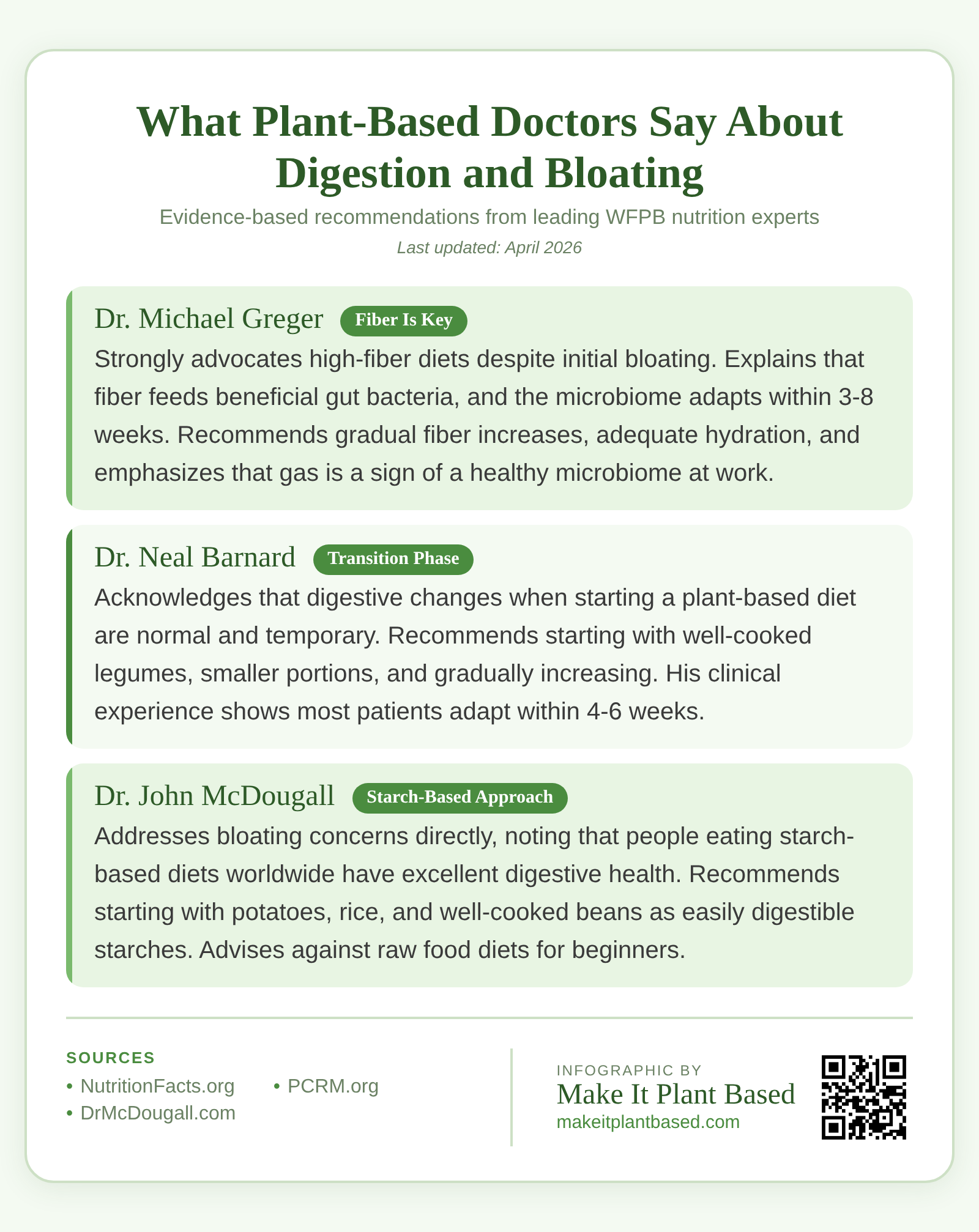
What Plant-Based Doctors Say About Digestion and Gas
Dr. Michael Greger
Dr. Greger addresses bean gas directly on NutritionFacts.org, citing research that gas from bean consumption decreases significantly within the first few weeks of regular consumption. He recommends starting with smaller portions and gradually increasing intake. He also notes that canned beans produce less gas than dried beans (the canning process breaks down some oligosaccharides), and that lentils and split peas are among the easiest legumes to digest. His key message: don’t avoid beans because of initial gas — the health benefits are too important, and the gas is temporary. (NutritionFacts.org — Beans and Gas)
Dr. Neal Barnard
Dr. Barnard and PCRM emphasize the role of gradual transition in minimizing digestive discomfort. They recommend increasing bean and fiber intake slowly over 2-3 weeks rather than switching overnight. PCRM’s digestive health resources also highlight the importance of chewing food thoroughly (which begins carbohydrate digestion in the mouth) and cooking beans well (which breaks down more oligosaccharides). Dr. Barnard notes that the digestive adaptation is a sign that beneficial gut bacteria are growing. (PCRM — Reducing Gas on a Plant-Based Diet)
Dr. John McDougall
Dr. McDougall takes a characteristically direct approach, noting that while plant-based gas may be socially inconvenient, the gas produced by fermenting fiber is actually odorless — it’s the sulfur-containing gases from animal plant-based protein digestion that produce the foul smell. He recommends embracing beans as a dietary staple and pushing through the adaptation period, which he considers a small price for the extraordinary health benefits of legume consumption. (DrMcDougall.com — Bad Farts? Meat Stinks!)
The Legume Digestibility Guide: From Easiest to Most Challenging
Easiest to digest (start here): Red and yellow lentils, split peas, mung beans. These have lower oligosaccharide content and cook quickly, breaking down more of the gas-producing compounds.
Moderate: Green and brown lentils, canned beans (any type), tofu, tempeh. Canning pre-digests much of the oligosaccharides. Tofu and tempeh have virtually no gas-producing compounds because the processing removes them.
More challenging (build up to): Dried chickpeas, black beans, kidney beans, navy beans. These have the highest oligosaccharide content. Soaking overnight and discarding the soaking water removes up to 25% of gas-producing compounds.
Practical Solutions That Actually Work
Start slow, build gradually: Begin with ¼ cup of beans per day and increase by ¼ cup per week. This gives your microbiome time to adapt without overwhelming it.
Use the Fiber in Plant Foods ranking tool to find the right fiber amounts for digestion, or the Ingredient Nutrient Lookup for any food’s full nutritional profile.
Soak dried beans: Soak for 8-12 hours, discard the soaking water, and cook in fresh water. This removes a significant portion of oligosaccharides.
Cook beans thoroughly: Well-cooked beans are easier to digest. Pressure cooking is particularly effective at breaking down gas-producing compounds.
Add digestive spices: Cumin, ginger, fennel, and asafoetida (hing) have traditional uses for reducing gas and are supported by some research. Indian and Mexican cuisines pair these spices with beans for good reason.
Try enzyme supplements: Alpha-galactosidase (the active ingredient in Beano) breaks down the oligosaccharides before they reach the colon. It’s effective and safe for occasional use during the transition period.
Eat fermented foods: Sauerkraut, kimchi, miso, and kombucha provide probiotics that support the microbiome transition. Include at least one serving daily.

IBS, FODMAP, and Plant-Based Diets
For people with irritable bowel syndrome (IBS), the transition to a high-fiber plant-based diet requires extra care. Many plant foods are high in FODMAPs (Fermentable Oligosaccharides, Disaccharides, Monosaccharides, And Polyols) — short-chain carbohydrates that can trigger IBS symptoms.
A study on FODMAP content of plant-based foods provides detailed guidance on which vegan foods are low-FODMAP and which should be limited. Good low-FODMAP plant protein sources include firm tofu, tempeh, canned lentils (rinsed), and small portions of canned chickpeas. Many vegetables (carrots, zucchini, bell peppers, spinach) are also low-FODMAP.
The key for IBS sufferers is to adopt a plant-based diet more slowly, start with low-FODMAP plant foods, and introduce higher-FODMAP foods one at a time to identify personal triggers. Working with a registered dietitian experienced in both plant-based nutrition and FODMAP management can be very helpful.
Key Research References
Frequently Asked Questions About Digestion on a Plant-Based Diet
Why am I so bloated on a vegan diet?
Bloating is caused by your gut microbiome adapting to a dramatic increase in dietary fiber. The bacteria that ferment fiber need time to proliferate, and the transition produces gas. This is temporary and typically resolves within 3-8 weeks.
How long does bloating last when going vegan?
Most people experience peak gas during weeks 1-2, significant improvement by weeks 3-4, and minimal symptoms by weeks 5-8. Long-term plant-based eaters report better overall digestion than before the transition.
Which beans cause the least gas?
Red and yellow lentils, split peas, and mung beans are the easiest to digest. Canned beans of any type also produce less gas than dried (the canning process breaks down oligosaccharides). Tofu and tempeh cause virtually no gas.
How do you reduce gas on a plant-based diet?
Start with small portions and increase gradually, soak dried beans overnight, cook thoroughly, add digestive spices (cumin, ginger, fennel), try enzyme supplements (alpha-galactosidase), and include fermented foods daily.
Does your body adapt to vegan diet bloating?
Yes. Your gut microbiome adapts over 3-8 weeks, developing larger populations of fiber-fermenting bacteria that produce less gas. Regular bean consumption leads to progressively less gas over time.
What causes gas from plant foods?
Oligosaccharides (raffinose and stachyose) in beans and dietary fiber throughout plant foods are fermented by gut bacteria, producing hydrogen, CO2, and methane. This fermentation is normal and produces beneficial short-chain fatty acids alongside the gas.
Microbiome Diversity and Plant Diversity
One of the most powerful determinants of digestive health is microbiome diversity—the number of distinct bacterial species in the gut ecosystem. Research using genetic sequencing shows that plant-based eaters have dramatically higher microbiome diversity than omnivorous eaters, and this diversity directly correlates with digestive health, immune function, and absence of bloating. The driver of diversity is plant diversity: consuming 30 or more different plant species per week (a target supported by major nutrition organizations) creates selective pressure that promotes diverse bacterial colonization. Each plant provides unique fiber structures, polyphenols, and compounds that feed specific bacterial species. A diverse microbiome with balanced populations of gas-producing, beneficial bacteria, and bacterial species that consume gases produces minimal net gas and bloating. This represents the long-term adaptation: initial bloating during transition phases yields to optimal digestion as bacterial composition rebalances.
Digestive Enzymes and Anti-Nutrient Reduction
Plant-based foods contain various compounds called anti-nutrients (phytic acid, tannins, protease inhibitors) that can inhibit nutrient absorption and enzyme function. However, simple preparation techniques dramatically reduce anti-nutrient content while increasing digestive enzyme availability. Cooking heating denatures protease inhibitors and reduces phytic acid bioavailability. Soaking legumes and grains in water for several hours or overnight reduces phytic acid content by up to 50%, improving mineral absorption and digestive ease. Sprouting takes anti-nutrient reduction further while activating enzymes and increasing nutrient bioavailability. Fermentation, through processes like tempeh making or naturally fermented vegetables, breaks down anti-nutrients and increases predigestion of starches and proteins. Understanding these simple techniques converts plant foods from potential digestive stressors to optimally digestible, enzyme-rich foods.
Fermented Foods and Probiotic Benefits
Fermented plant foods represent one of the most underutilized tools for digestive optimization on a plant-based diet. Tempeh, made from fermented soybeans, provides digestive enzymes, beneficial bacteria, and completely predigested protein that requires minimal digestive effort. Miso, a fermented soy paste, contains lactobacillus and other beneficial bacteria that colonize the digestive tract. Sauerkraut and kimchi, fermented cabbage preparations, provide both beneficial bacteria and their metabolic byproducts (short-chain fatty acids, vitamin B12 on a plant-based diets, enzymes). These foods essentially predigent a portion of plant foods and seed the digestive tract with beneficial bacteria, dramatically improving bloating and digestive function. Unlike commercial probiotic supplements that provide limited bacterial species in inconsistent potencies, fermented foods provide living bacteria in food matrices that enhance their survival through the digestive system. Including fermented foods daily represents a fundamental shift from treatment of digestive problems to prevention.
When to Seek Medical Evaluation: Distinguishing Normal Transition from Intolerances
While some bloating during transition to plant-based eating is normal and resolves within 2-4 weeks as microbiota adapt, persistent bloating warrants medical evaluation to rule out genuine food intolerances. FODMAP (fermentable oligosaccharides, disaccharides, monosaccharides, and polyols) sensitivity affects some individuals; high-FODMAP plant foods like onions, garlic, certain fruits, and legumes can trigger significant bloating, though elimination is rarely necessary—tolerance typically improves as microbiota adapt. Celiac disease or non-celiac gluten sensitivity affects approximately 1-3% of the population; if bloating accompanies digestive distress, fatigue, and skin symptoms after gluten consumption, medical testing is appropriate. Exocrine pancreatic insufficiency, though rare, can reduce enzyme production and cause bloating despite adequate plant food intake. Persistent bloating lasting beyond 4-6 weeks of plant-based eating, accompanied by other symptoms, warrants professional evaluation to ensure optimal health rather than assuming all digestive symptoms are normal dietary adaptation.
Take the guesswork out of plant-based nutrition.
Explore our evidence-based guides on the nutrients that matter most.
Browse All Nutrient Guides