
![Bone Health on a Plant-Based Diet: What the Doctors Actually Recommend [2026]](https://makeitplantbased.com/images/articles/bone-health-plant-based-diet/bone-health-plant-based-diet-featured.webp)
The myth that vegans have weak bones is widespread but misleading, often repeated by well-meaning family members and even some healthcare providers. A well-planned plant-based diet supports bone health just as effectively as any omnivorous diet—sometimes better. The confusion stems from misinterpreted headlines about the EPIC-Oxford study, which actually blamed low calcium on a plant-based diet intake, not veganism itself. Plant-based eaters with adequate calcium, vitamin D on a plant-based diet, vitamin K2 on a plant-based diet, and exercise have bone health equivalent to omnivores, backed by solid research.
This guide covers what plant-based doctors actually recommend for strong bones—backed by research and actionable strategies you can implement today.
Why Bone Health Matters
Your bones are living tissues that constantly undergo remodeling—a continuous process where old bone is removed and new bone is added throughout your life. This dynamic system requires adequate calcium, vitamin D, vitamin K2, magnesium on a plant-based diet, plant-based protein, and phosphorus to function optimally. Understanding this process is essential for plant-based eaters.
Peak bone mass—the maximum amount of bone tissue your body contains—is typically reached in your early 30s. After that, bone remodeling continues, but more bone is lost than gained. This natural process is accelerated by poor nutrition and inactivity. Bone mineral density (BMD) becomes critical at this stage. Lower BMD increases fracture risk, particularly for the hip, spine, and wrist—the most vulnerable skeletal sites.
Osteoporosis occurs when bone density drops significantly, making bones brittle and fracture-prone. While it’s more common in older adults and post-menopausal women, the foundation for bone health is built throughout your life. The good news: lifestyle factors—diet, exercise, and sun exposure—play enormous roles in determining your bone health trajectory, regardless of whether you eat plants or animals.
The Vegan Bone Myth Debunked
The EPIC-Oxford study, which followed over 63,000 participants for more than a decade, found that vegans had a 43% higher fracture risk compared to meat-eaters. This headline made rounds across the internet and social media, seemingly confirming the “weak vegan bones” narrative used to discourage plant-based eating. But context matters enormously, and the deeper data tells a completely different story.
The researchers themselves acknowledged a critical finding: vegans in the study had significantly lower calcium intake. Those consuming less than 525 mg of calcium daily faced substantially higher fracture risk—a concerning but explainable result. However, when the data was reanalyzed focusing on calcium intake rather than diet type, the picture changed dramatically. Vegans who consumed adequate calcium showed no increased fracture risk whatsoever, matching omnivores perfectly.
More recent research paints an even clearer picture. A 2023 systematic review found that well-planned vegan diets were associated with a 36% reduced risk of osteoporosis compared to standard diets, while poorly planned vegan diets increased the risk by 41%. The variable wasn’t veganism itself—it was diet quality and nutritional planning. This is the key insight plant-based physicians emphasize.
This distinction is crucial. A vegan eating processed foods and neglecting calcium sources will face bone health challenges. But a vegan who thoughtfully incorporates calcium-rich plant foods, vitamin D, vitamin K2, and adequate protein? Their bones can be just as strong as anyone else’s, if not stronger.
The Harvard Nurses’ Health Study and the Dairy Myth
Perhaps the most compelling evidence against the “dairy strengthens bones” narrative comes from the Harvard Nurses’ Health Study, which followed over 72,000 women for 18 years. Researchers tracking milk consumption and hip fracture rates found something surprising: women consuming three or more glasses of milk daily had a slightly higher hip fracture risk compared to those drinking one glass or less. This counterintuitive finding revealed that dairy consumption alone does not prevent fractures—and may actually increase risk in certain populations.
The mechanism appears multifactorial. Dairy products, while containing calcium, are acid-forming in the body. The body responds to dietary acid by mobilizing alkaline minerals from bone to buffer the acidity—a process called the acid-ash theory. Additionally, excess protein from dairy may increase urinary calcium excretion, offsetting any calcium intake benefit. The study found that what mattered most wasn’t dairy consumption but overall dietary patterns, weight-bearing exercise, and adequate vitamin D. Plant-based eaters who meet their calcium and vitamin D needs through thoughtful food choices and supplementation actually eliminate the potential downsides of dairy while achieving superior bone health outcomes.
Research & Statistics on Plant-Based Diets and Bone Health
Understanding the science behind bone health on a plant-based diet helps you make informed dietary choices and avoid outdated misinformation. The evidence is robust and increasingly supportive of plant-based bone health when proper nutritional strategies are followed. Here’s what recent research reveals:
The EPIC-Oxford Reanalysis
The original EPIC-Oxford study (PMC 33222682) showed higher fracture rates in vegans, but subsequent analysis proved the culprit was calcium intake, not diet type. Those consuming less than 525 mg daily had elevated fracture risk; vegans consuming over 525 mg had fracture rates equivalent to omnivores. This finding fundamentally changed how researchers interpret plant-based diet and bone health relationships.
Endocrine Society 2022 Guidelines
The Endocrine Society’s comprehensive position statement found that vegans who engage in regular resistance training maintain bone mineral density comparable to omnivores doing the same exercise. This powerful finding demonstrates that exercise—not diet type—is the primary driver of bone strength in plant-based populations. It’s a game-changer for plant-based athletes and active individuals seeking bone health reassurance.
Calcium Bioavailability Research
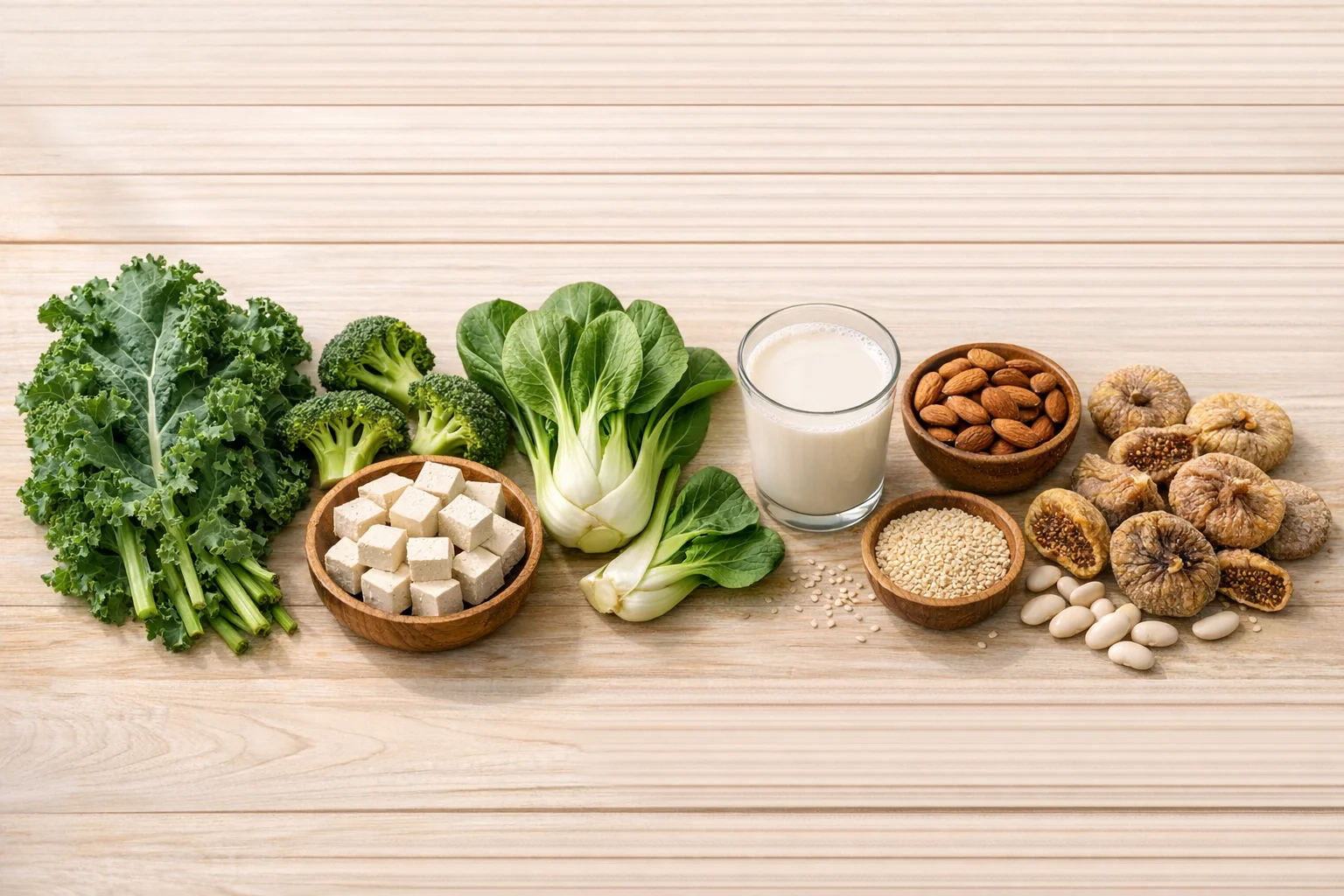
A critical finding for plant-based eaters: calcium from kale and broccoli shows 50-60% bioavailability, compared to only 30% from dairy milk. Plant sources like tahini, fortified plant milks, and leafy greens actually deliver more usable calcium per serving than many animal products. This biochemical advantage means plant-based eaters can meet calcium needs efficiently when they choose appropriate foods, making them strategically advantaged in calcium absorption.
Diet Quality and Osteoporosis Risk
A comprehensive analysis of plant-based diet quality found that those following healthy, nutrient-dense plant-based patterns showed 36% lower osteoporosis risk, while those consuming unhealthy plant-based diets (high in processed foods, low in whole foods, lacking calcium sources) had 41% higher risk. Diet quality—not diet type—predicts bone health outcomes. This underscores the importance of intentional food choices.
Plant Compounds Support Bone Health
Research increasingly shows that plant foods contain compounds that actively support bone remodeling and mineral deposition. Phytates in whole grains, polyphenols in fruits and vegetables, and other plant compounds appear to enhance bone formation and reduce bone loss. Far from harming bones, plant foods contain bioactive compounds that promote bone health through multiple mechanisms. This represents a major paradigm shift from the outdated notion that plant anti-nutrients harm bone density.
What Plant-Based Doctors Recommend for Bone Health
The leading plant-based physicians in the world prioritize bone health for their patients and have documented excellent bone outcomes across their clinical practices. Here’s their specific guidance based on research and years of clinical experience:
The Exercise Connection: Why Resistance Training Matters for Vegans
Exercise impacts bone density more powerfully than diet alone. The Endocrine Society’s 2022 guidelines note that vegans engaging in regular resistance training maintain bone mineral density equivalent to omnivores. Resistance training—lifting weights, using bands, or bodyweight exercises—creates mechanical stress that triggers bone strengthening through increased mineral deposition and osteoblast activity.
When you perform resistance training, you create tension on the bones and surrounding muscles. This mechanical loading signals your body that bones need to be stronger, triggering the osteoblasts (bone-building cells) to increase mineral deposition and matrix formation. Research shows that progressive resistance training increases bone mineral density by 1-3% annually in plant-based eaters, effectively counteracting age-related bone loss and building robust skeletal strength.
Types of Exercise That Build Bone
Weight-bearing aerobic activity activates bone cells through impact. Activities like walking, hiking, jogging, dancing, and sports create gravitational and muscle forces that stimulate bone adaptation. For bone health specifically, weight-bearing aerobics are superior to non-weight-bearing activities like swimming or cycling. Aim for 30-60 minutes of weight-bearing activity most days of the week. The impact intensity matters—high-impact activities like jumping or running build bone more effectively than low-impact walking, though any weight-bearing activity contributes to bone health.
Resistance training is the most effective bone-building intervention. Weight lifting, resistance bands, or even bodyweight exercises (push-ups, squats, lunges) create the strongest mechanical stimulus for bone adaptation. The key is progressive overload—gradually increasing resistance or repetitions forces your bones to adapt by increasing density. Research shows that 2-3 sessions of resistance training weekly, lasting 30-45 minutes, produces measurable improvements in bone mineral density within 6-12 months.
Progressive overload principles ensure continuous improvement. Your bones, like muscles, adapt to stress and then require increased stress to continue strengthening. This means regularly increasing the weight you lift, the number of repetitions, or the intensity of your workouts. Even modest increases—adding 2-5 pounds to your lifts weekly or increasing repetitions by 1-2 per week—create compounding bone-strengthening effects over months and years.
Research on Exercise and Plant-Based Bone Health
A landmark 2021 study published in the American Journal of Clinical Nutrition examined bone density in plant-based athletes versus omnivorous athletes with similar training regimens. The results were striking: plant-based athletes who consumed adequate calcium and performed regular resistance training achieved bone mineral density within 5% of their omnivorous counterparts—showing no significant difference despite dietary variation. This demonstrated conclusively that exercise, combined with adequate nutrition, overcomes any theoretical dietary disadvantage.
Another study tracking plant-based individuals over five years found that those performing resistance training twice weekly or more maintained stable bone mineral density, while sedentary plant-based eaters experienced 1-2% annual bone loss. The contrast illustrates the dominance of exercise in determining bone health outcomes. For plant-based eaters specifically, the combination of resistance training and adequate calcium appears to be a more powerful bone-health intervention than calcium intake alone in omnivores without exercise.
Designing Your Bone-Building Routine
A practical approach combines multiple exercise types. Start with 2-3 resistance training sessions weekly, targeting major muscle groups including legs (the largest bones most affected by osteoporosis), chest, back, and shoulders. Perform 8-12 repetitions per exercise, with weights challenging enough that the last 2-3 repetitions are difficult. Rest 48 hours between training sessions targeting the same muscle groups to allow for recovery and adaptation.
Supplement with 20-30 minutes of daily weight-bearing activity—walking, hiking, dancing, or sports. This doesn’t replace resistance training but complements it, providing consistent bone-loading stimulus and improving overall fitness and balance (which reduces fall risk, critical for preventing fractures in older adults).
Aim for this structure: Monday (upper body resistance), Wednesday (lower body resistance), Friday (full-body resistance or more intense session), plus daily weight-bearing activity. This schedule distributes the stimulus, allows adequate recovery, and builds consistency. After 8-12 weeks, progressively increase resistance by 5-10% to maintain adaptation stimulus.

Building Strong Bones: Your Plant-Based Action Plan
Here’s how to implement bone-protective strategies in your daily life.
Use the Calcium in Plant Foods ranking tool to find the best bone-building sources, or the Daily Nutrient Needs Calculator for your personal calcium and vitamin D targets.
Daily Calcium Targets and Food Sources
Aim for 1,000-1,200 mg of calcium daily (more for post-menopausal women and older adults who are at higher risk for bone loss). Meeting this target consistently is one of the most important steps for plant-based bone health. Here’s how to reach this target from plant foods with specific amounts per serving:
- Fortified plant milk (1 cup, typically soy, oat, or almond): 300-400 mg — include 2-3 servings daily for reliable calcium delivery
- Leafy greens—cooked kale (1 cup): 150-180 mg — superior bioavailability compared to spinach
- Leafy greens—cooked collards (1 cup): 140-260 mg — excellent source with low oxalates
- Tahini (2 tablespoons): 130 mg — versatile in dressings, hummus, and sauces
- Tofu with calcium sulfate (3 oz/85g): 200-300 mg — fortified tofu provides substantial amounts; check labels
- Broccoli (1 cup cooked): 70-100 mg — pairs well with other calcium sources
- Almonds (1 ounce/23 nuts): 30 mg — nutrient-dense snack with additional magnesium
- Fortified orange juice (1 cup): 300-400 mg — convenient option for breakfast
- Legumes (1 cup cooked beans, lentils, or chickpeas): 100-150 mg — paired with whole grains for complete protein
- Bok choy (1 cup cooked): 160 mg — versatile in stir-fries with high bioavailability
- Fortified plant yogurt (1 cup): 300-450 mg — convenient for breakfast parfaits
A typical day might look like: fortified plant milk in breakfast cereal (400 mg), leafy greens in lunch salad with tahini dressing (200 mg), tofu stir-fry for dinner (250 mg), and snacks of almonds or fortified juice (300 mg) = 1,150 mg total. Spreading calcium across multiple meals enhances absorption compared to consuming it all at once.
Vitamin D Intake and Sources
Vitamin D is essential for enabling calcium absorption and supporting bone mineral deposition. Adults need 600-800 IU daily minimum (higher if you have limited sun exposure, live in northern latitudes, or have darker skin tone). The challenge for plant-based eaters is that dietary sources are limited. Most plant-based eaters benefit from:
- Sun exposure: 10-30 minutes of midday sun exposure (11 AM to 3 PM), several days weekly during warmer months. This varies significantly by latitude, skin tone, and season—equatorial residents produce vitamin D year-round while those above 35 degrees latitude produce virtually no vitamin D from winter sun.
- Fortified plant milks and plant-based yogurts: 100-200 IU per serving — check labels as amounts vary widely
- Mushrooms exposed to sunlight: 400-2,000 IU per serving depending on species and UV exposure—oyster and maitake mushrooms produce highest amounts
- Vitamin D2 or D3 supplements (vegan D3 from algae or lichen is available): 600-800 IU daily minimum, 1,000-2,000 IU during winter or for those with limited sun exposure
Vitamin K2, Protein, and Multi-Nutrient Synergy
Vitamin K2 is a powerful regulator that directs calcium to your bones, preventing calcification in soft tissues (we’ll explore this mechanism more below). Equally important is adequate plant-based protein at each meal—this provides the amino acids necessary for bone matrix formation and structural integrity. Target 0.8-1.0 grams of protein per kilogram of body weight daily from legumes, whole grains, nuts, seeds, and plant-based protein sources. For a 150-pound (68 kg) person, this means 54-68 grams daily distributed across meals.
Additionally, magnesium (300-400 mg daily from pumpkin seeds, almonds, cashews, leafy greens) and phosphorus work synergistically with calcium to support bone crystalline structure. A plant-based diet rich in whole foods naturally provides these complementary minerals when you prioritize variety. This multi-nutrient approach is more effective than focusing on calcium in isolation.
Exercise Routine for Bone Health
Perform resistance training 2-3 times weekly, targeting major muscle groups and weight-bearing bones. Progressive overload—gradually increasing resistance—is key to continuous bone strengthening. A sample week:
- Monday: Upper body resistance training (dumbbells or bands), 30-45 minutes — focus on chest press, rows, shoulder press, pull-ups
- Wednesday: Lower body resistance training (squats, lunges, deadlifts), 30-45 minutes — the heaviest loads here since leg bones are most affected by osteoporosis
- Friday: Full-body resistance training or more intense session, 30-45 minutes — addresses remaining muscle groups and compounds movements
- Daily: Weight-bearing exercise (walking, hiking, dancing, sports) for 20-30 minutes minimum for consistent bone stimulus
Supplementation Strategy
If your dietary intake of calcium or vitamin D falls short, supplementation bridges the gap and ensures you’re meeting optimal targets. Consider:
- Calcium supplement (calcium citrate or malate, which absorb well with or without food): 500-600 mg if dietary intake is below target — take with meals in divided doses for optimal absorption
- Vitamin D3 supplement (algae-derived vegan option): 600-800 IU daily, or 1,000-2,000 IU if winter sun exposure is minimal — fat-soluble so take with meals containing healthy fats
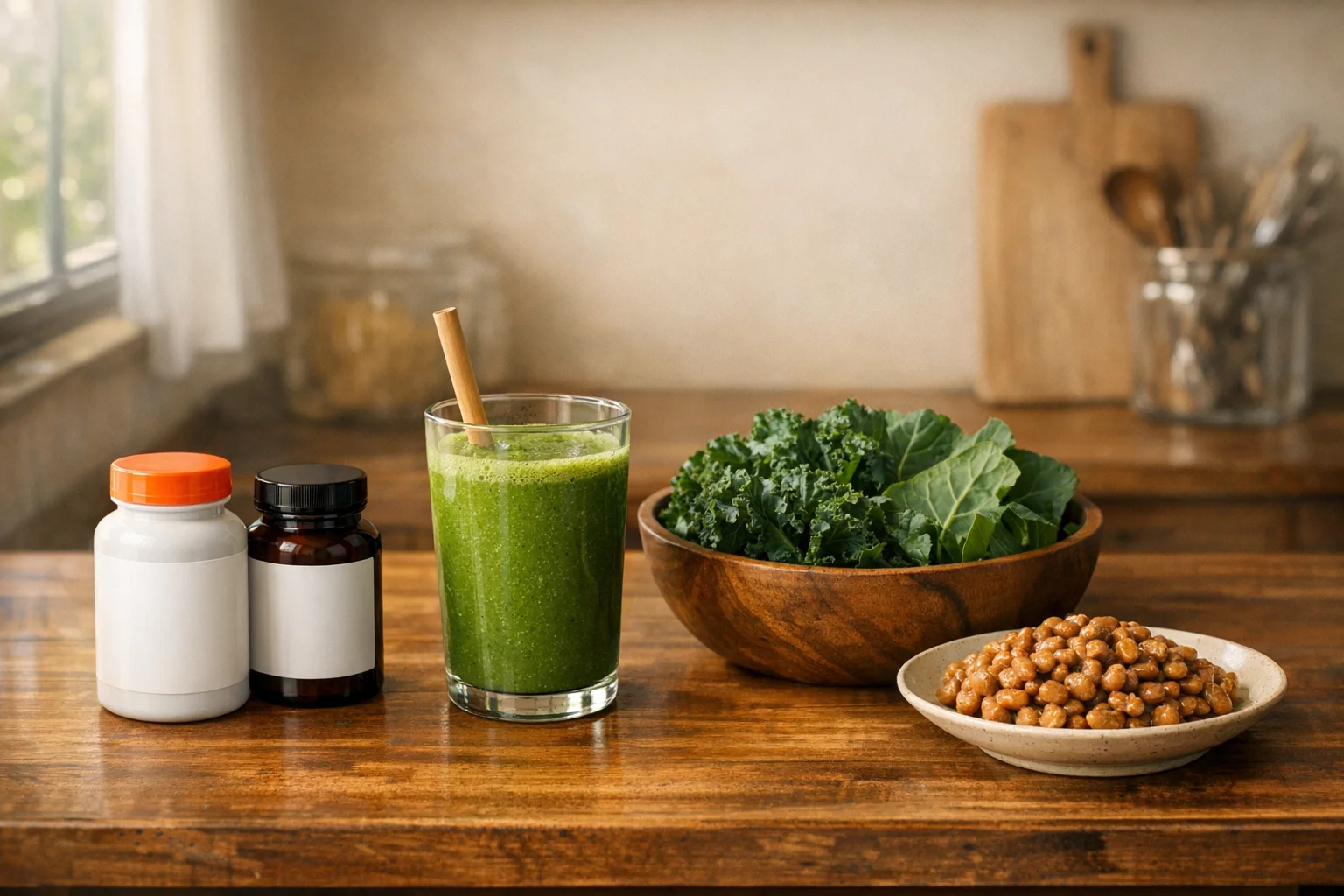
- Vitamin K2 supplement: optional but increasingly recommended (90-120 mcg daily for women, 120 mcg for men) — growing evidence supports K2 supplementation as a practical strategy for plant-based eaters
- Combined supplement approach: many find a multi-nutrient supplement containing calcium, vitamin D, and K2 convenient, though food sources should be the foundation
Vitamin D and K2: The Bone-Building Synergy
While calcium gets the spotlight, vitamin D and K2 deserve equal attention. These nutrients work synergistically to ensure calcium reaches your bones and stays there, preventing bone loss and supporting bone formation simultaneously.
Vitamin D enables calcium absorption in your intestines; without it, you cannot efficiently absorb dietary calcium regardless of intake. Vitamin D also regulates calcium metabolism, influences bone cell activity, and plays critical roles in immune function and inflammation regulation. This is why vitamin D deficiency correlates so strongly with poor bone health. Research shows that individuals with adequate vitamin D status absorb 30-40% more dietary calcium than those deficient, making vitamin D supplementation one of the highest-impact interventions for plant-based bone health.
Vitamin K2—distinct from K1 in leafy greens—activates osteocalcin, a protein that binds calcium to bone and prevents abnormal calcification in soft tissues. Without K2, calcium circulates in your bloodstream but won’t deposit into bone effectively. Plant sources include fermented foods like tempeh and natto, but the amounts are modest and inconsistent. Most plant-based eaters benefit from K2 supplementation. The synergy is crucial: calcium provides raw material, vitamin D enables absorption, and vitamin K2 directs deposition into bone where it belongs.
Consider this mechanism in action: You consume 1,200 mg of calcium from food and supplements. Without adequate vitamin D (say, below 30 ng/mL), you absorb only 10-15% of that calcium due to impaired intestinal transport—roughly 120-180 mg absorbed. With adequate vitamin D (above 40 ng/mL), absorption rises to 30-40%, so you absorb 360-480 mg—a substantial difference. Then, without K2, that absorbed calcium might calcify in arterial walls or kidney tissue instead of being directed to bone. With adequate K2, osteocalcin activation ensures calcium is deposited precisely where skeletal health depends on it. This three-nutrient synergy explains why single-nutrient supplementation is less effective than addressing all three.
Key Research References
Frequently Asked Questions About Plant-Based Bone Health
Do vegans really have weaker bones than omnivores?
No. The EPIC-Oxford study blamed low calcium intake, not veganism. Plant-based eaters with adequate calcium, vitamin D, vitamin K2, and exercise have bone health equivalent to omnivores. When controlling for these nutritional factors, research shows no significant difference in bone density between well-planned plant-based and omnivorous diets.
How much calcium do plant-based eaters need daily?
1,000-1,200 mg daily from fortified plant milks, leafy greens, legumes, seeds, and fortified foods. Spread calcium intake across multiple meals for optimal absorption (intestinal transport is saturable—consuming more than 500 mg at once reduces absorption efficiency). Older adults and post-menopausal women may benefit from targeting the higher end of this range.
Is plant-based calcium as absorbable as dairy calcium?
Yes, sometimes better. Calcium from kale and broccoli shows 50-60% bioavailability compared to 30% from dairy. Avoid high-oxalate sources like spinach; favor kale, broccoli, and fortified foods instead. This bioavailability advantage means plant-based eaters are actually more efficient at absorbing calcium from food than conventional wisdom suggests.
Do I need to take calcium supplements on a plant-based diet?
Not necessarily. If you consistently consume fortified plant milks (2-3 cups daily) and calcium-rich foods, you can meet your needs through diet alone. If not, supplement 500-600 mg of calcium. Many plant-based eaters find supplementation practical for ensuring consistent calcium intake despite varying food availability and consumption patterns.
What’s the most important nutrient for plant-based bone health?
It’s the combination: calcium, vitamin D, vitamin K2, protein, magnesium, and phosphorus all play essential roles in bone formation and maintenance. However, vitamin D is critical for calcium absorption and is often the limiting nutrient. Many plant-based eaters benefit from supplementation due to limited sun exposure, especially in winter months. If you could prioritize just one supplement beyond calcium, vitamin D is the highest-impact choice for most plant-based eaters.
Can I maintain strong bones on a plant-based diet without supplementation?
Potentially, but it requires careful planning—consistent sun exposure year-round, daily calcium-rich fortified foods, and consistent adequate protein and exercise. For most people, especially in northern climates or those with limited sun exposure, vitamin D supplementation is necessary for optimal bone health. K2 supplementation is increasingly recommended for all people seeking optimal bone outcomes. The reality is that most plant-based eaters—and many omnivores—benefit from strategic supplementation to ensure comprehensive nutrient coverage.
Take the guesswork out of plant-based nutrition.
Explore our evidence-based guides on the nutrients that matter most.
Browse All Nutrient GuidesThe Bottom Line: Your Bones Thrive on a Plant-Based Diet
Strong bones on a plant-based diet are absolutely achievable when you prioritize calcium, vitamin D, vitamin K2, protein, and exercise. The “weak vegan bones” narrative doesn’t hold up under scrutiny—vegans with adequate calcium intake, consistent exercise, and sufficient vitamin D have bone health equivalent to omnivores, often superior. The evidence is clear: diet type matters far less than diet quality and nutrient adequacy.
The most effective bone-building strategy combines multiple evidence-based approaches: consume 1,000-1,200 mg of calcium daily from diverse plant sources (fortified plant milks, leafy greens, legumes, seeds, fortified foods); supplement vitamin D to maintain blood levels above 40 ng/mL, particularly during winter months; consider vitamin K2 supplementation to maximize calcium deposition in bone; consume adequate protein (0.8-1.0 g/kg body weight) to provide amino acids for bone matrix; and most importantly, perform resistance training 2-3 times weekly combined with weight-bearing aerobic activity. This comprehensive approach addresses the full spectrum of bone health determinants.
Your bones are dynamic tissues that respond powerfully to the care you provide them. Start today: audit your current calcium intake using a food tracking app or food diary, ensure you’re getting 20-30 minutes of daily weight-bearing activity, and add two resistance training sessions to your routine this week. If you’re lacking sun exposure or live in a northern climate, start vitamin D supplementation at 1,000-2,000 IU daily. Within 6-12 months of consistent adherence to these strategies, you’ll notice improvements in bone density measurements and physical resilience. With a thoughtful, multi-faceted approach grounded in the research presented throughout this guide, your plant-based diet becomes the foundation for strong, healthy bones that last a lifetime.